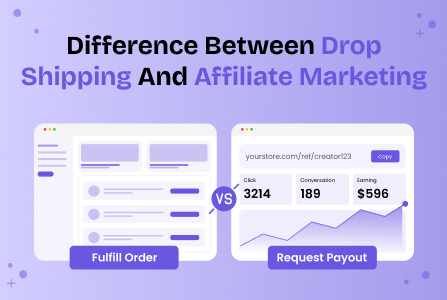





How to build a referral-based membership business? Asking such a question, you’ve already done a good forward-looking reflection: a membership business will grow much faster with a referral program!
Start with a clear understanding of who should promote your membership, what motivates them, and how you want to reward them. And we will help you to deeper understand these points with this guide.
To make it even more hands-on, we’ll walk through the realistic process of creating a referral-based membership website using top-notch solutions – ARMember and AffiliatePress for WordPress.
TL;DR: Build a referral-based membership business by creating a valuable membership offer, setting up an affiliate program and recruiting partners who genuinely understand your audience.
Step 1. Define Your Membership Site Goals And Ideal Affiliates
Well, before any referral program and software decision, your ideas and goals should be set.
It’s all very different because everyone has different growth goals and wants to attract different types of affiliates – based on the membership business type.
If you are aiming to create online courses, coaching academies, certification programs, or learning communities, you might consider existing students or course graduates as the best target audience. Because, well, who will trust a random blogger who never enrolled in your course that it’s the best of the best? In this case, your goals might be lowering customer acquisition costs, increasing membership registrations, and building trust through student success stories.
For professional communities like freelancer communities, real estate groups, marketing communities, etc. typical goals are expanding an industry influence. You might want to grow the member network and attract qualified professionals. Who are potential affiliates? Existing members, consultants, agencies, industry speakers, and strategic partners.
You get the idea – every type of site requires a different plan. A few examples of the referral program-related goals:
- Generate new paying members
- Reduce customer acquisition costs
- Increase brand awareness
- Reach new audiences and niches
- Improve trust through recommendations
- Drive webinar registrations
- Generate free trial signups
- Increase recurring monthly revenue
- Expand internationally
- Create predictable growth channels.
The important thing to understand is that a referral program is not about finding random affiliates. It is about designing a program specifically for the audience most likely to recommend your membership.
If you already have a few members, start by analyzing them and identifying who already trusts your product.
To validate your membership offer, here are a few helpful questions:
- What problem does membership solve?
- Why would someone pay monthly or annually?
- What makes your membership different from competitors?
- What transformation or outcome do members get?
Affiliates are just an amplifier of a compelling offer (if membership doesn’t convert visitors into members, even the best affiliates won’t help).
Step 2. Design Your Referral Program Rules & Calculate Referral Economics
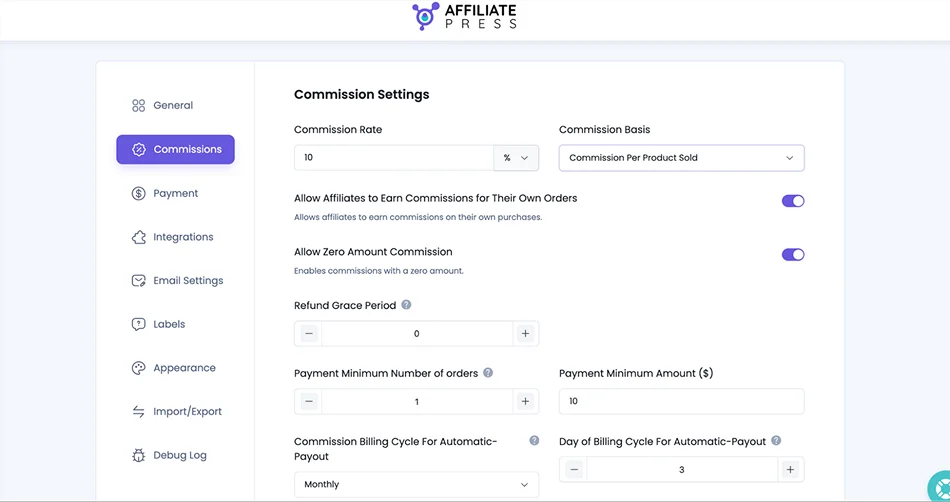
Once you understand who you want to recruit as affiliates, define the rules of your referral program. It normally takes understanding of:
- Membership price
- Customer lifetime value (LTV)
- Refund rate
- Profit margin
- Maximum acquisition cost
Let’s put that into an example:
- Membership = $29/month
- Average retention = 10 months
- LTV = $290
This means paying a recurring 20% commission makes sense. Without this calculation, you may end up either paying too much and losing money, or paying too little and failing to attract affiliates.
These rules will later be translated into your referral software settings.
Next, how do you define your referral commission structure? Heads up – what you calculate in theory might not always be easy in the referral software you will use. So try sticking to simple models first and then pivot when you have a real software screen and settings in front of your eyes.
So, you need to decide how affiliates should be rewarded; for example, automated affiliate software options quite often include:
- Fixed amount per membership sale
- Percentage-based commissions
- Recurring commissions for subscription renewals
- Lifetime commissions
- Multi-level commissions
The type of your audience will also highly influence the methods that you might use, such as
- Referral links
- Coupon codes
- Dedicated landing pages
- QR codes
- Banner creatives
- Email templates
For example, text and video bloggers often prefer referral links, while coaches and influencers may find coupon codes easier to share during webinars, podcasts, or social media promotions.
Normally, you might also want to have reward tiers because they can truly motivate affiliates not to forget about you after the first interaction.
You may also want to reward your top-performing affiliates by unlocking larger commissions, bonuses, exclusive resources, or special promotions.
When you have calculated the economics and decided on rewards, don’t forget to set what counts as a conversion:
- Should commissions be paid on trial signups?
- On paid memberships only?
- After a refund period?
- On renewals or upgrades?
Don’t worry if you don’t have every detail planned immediately. Modern affiliate software like AffiliatePress gives you the flexibility to adjust and optimize your program the way you want.
Step 3. Build Your Membership Website
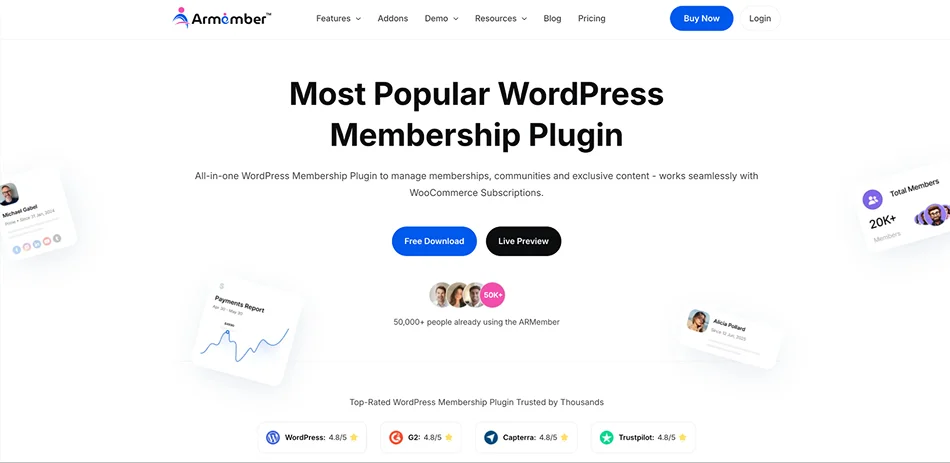
What’s the typical process of distributing your member-only content? The modern world gives you many opportunities, from external platforms where you upload your content to fully self-operated websites. We’re fans of the latter approach, that’s why in our example we suggest building a site with WordPress and ARMember – the dedicated plugin for making your content accessible only to members and subscribers. Needless to say, it can be easily extended with the referral program for affiliates.
So, ARMember allows you to create your own membership platform, where visitors can register, purchase plans, and access content.
It will literally help you create a complete membership website on WordPress, including the options you will 100% need:
- Create unlimited membership plans with varying pricing (and free/free trial options)
- Offer recurring subscriptions
- Protect premium content with different rules, whether it’s the entire site or individual pages
- Simplify and manage user registrations
- Restrict content access
- Build membership directories
- Create drip content schedules
- Accept online payments with the best range of methods
- Manage member accounts
- Enable affiliate and referral promotion.
In addition to the member-only content, you will need to deal with many other functional pages, including your services, testimonials, contact info, team, etc.
One of the most important pages will also include legal and program policies, which will need to cover affiliate terms and conditions, commission payment rules, prohibited promotional methods, refund policies, cookie duration, and disclosure requirements.
Once your membership structure is ready, your website becomes the foundation that affiliates will promote.
Step 4. Connect Your Affiliate Program
Let’s continue our hands-on guide and see whether you can connect a referral system to ARMember. The answer is yes! AffiliatePress integrates directly with ARMember, making it easy to create a fully automated affiliate and referral program for your membership website.
All the steps we’ve described before – building your commission types and choosing referral types – can be fully realized with AffiliatePress.
Using the ARMember and AffiliatePress integration, you can create affiliate rules for:
- Membership plan purchases (and exclude individual plans from affiliate programs).
- Create discount coupons with tracking parameters for affiliate links.
Overall, AffiliatePress provides the tools needed to manage and scale your program:
1. Affiliate tracking (track every referral from click to conversion).
- Referral links
- Coupon code tracking
- QR code tracking
- Landing page tracking
- Marketing creatives
2. Commission models to fit your business (percentage commissions, fixed commissions, recurring commissions, lifetime commissions, and multi-level commissions).
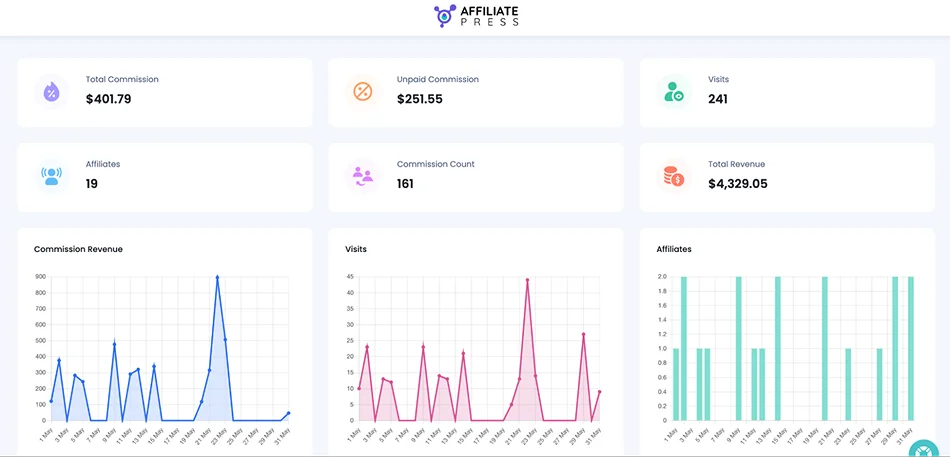
3. Monitor affiliate performance through the analytics charts right in the dashboard (real-time charts, performance reports, conversion tracking, revenue reports, top affiliate rankings). It will make it easier to know your top-performing affiliates, best-converting campaigns, and highest-performing membership plans.
4. Easy payout management (AffiliatePress simplifies payouts with options for manual payouts, bulk payouts, and automated mass payouts via PayPal and Stripe).
5. Multiple integrations with other plugins and services.
All you need to do is to install and configure AffiliatePres once your ARMember plugin already has content and access rules in place.
Step 5. Recruit People And Promote Your Affiliate Program
It’s usually the most challenging step – you need to actually prove it’s worth it to be your affiliate partner.
It takes creating a basic affiliate recruitment plan. A dedicated step could include:
- Invite existing members by email
- Add “Become an Affiliate” links
- Reach out to industry creators
- Contact agencies and consultants
- Offer launch bonuses.
Who will most likely recommend your membership? You need these people first! Happy clients can explain – and sell – best. They already understand the value of your membership.
You can also reach out to industry partners and rely on their expertise, authority, and media influence. Consider partnering with consultants, agencies, coaches, industry experts, and community leaders.
Here are a few more traditional things you can do:
- Create a dedicated affiliate page
Explain your benefits, commission rates, promotional resources, payment schedules, and program requirements.
- Provide marketing materials
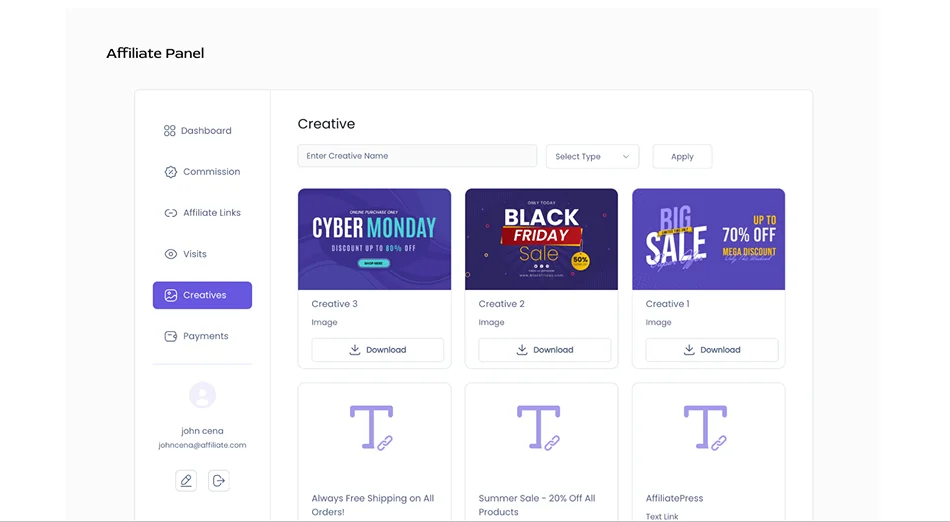
With AffiliatePress, you can easily upload banners, graphics, landing pages, email templates, and social media content. Partners will access them immediately in their own accounts.
- Create affiliate leaderboards
Affiliate leaderboards are a great motivational booster you can place on the affiliate program page, partners dashboard, or inside logged-in membership site areas (e.g. if you want to turn your course students into affiliates).
Concluding: How To Build a Referral-Based Membership Business?
Understanding your goals and identifying the right affiliates for your niche are the baselines you should carefully prepare. Next, the more routine and strategic task – design commission rules, promotional methods, and reward structures that align with their motivations.
From there, create your membership platform (if on WordPress, we suggest using ARMember), connect your referral program with AffiliatePress, and provide affiliates with the tools they need to promote your membership – build a transparent, reliable, and truly supportive platform.
All in all, get your strategy, software, and partnerships! Then a working referral program can become a predictable and scalable source of recurring membership growth.
Related articles: