



5 Affiliate Marketing Mistakes Businesses Must Avoid and How to Fix

How do you know if your affiliate marketing program is actually working the way it should? If you’ve noticed steady signups but little to no consistent revenue coming in, it’s time to take a closer look.
At that point, many businesses make costly mistakes. They try to grow faster. Do you also feel like bringing in more affiliates will fix the problem? In reality, most affiliate programs don’t struggle because of volume, but how they’re built.
In this article, we’re exploring the most common affiliate marketing mistakes businesses make, and how to fix them with smarter & more effective strategies.
Let’s get started!
TL;DR: Affiliate marketing programs mistakes happen from poor execution. Fix your affiliate recruitment process, affiliate commissions and optimize your affiliate program to drive consistent revenue.
Why Most Affiliate Programs Fail (Even With Good Products)
At first glance, affiliate marketing looks simple.
You build a solid product, launch an affiliate program, bring people in, and expect revenue to follow. But that’s not how it plays out.
Many businesses assume that once affiliates sign up, promotion will naturally happen. Those good products will “sell themselves.” Those affiliates just need access and a link.
In reality, none of that is guaranteed.
Affiliates don’t promote based on product quality alone. They promote based on clarity, confidence and earning potential. If those pieces are missing, even a great product gets ignored.
This is where most affiliate program mistakes happen. And you end up with:
- Affiliates who sign up but never take action.
- Partners who try once, see no results, and quietly drop off.
- A growing database that looks active, but contributes very little revenue.
And the worst part?
It doesn’t feel like failure at first. The affiliate program keeps growing. New affiliates keep joining. But performance stays inconsistent.
That’s because the problem isn’t visibility, but the structure of the program itself.
Without a clear system for:
- Attracting the right affiliates
- Helping them get their first win
- Keeping them motivated to continue
Now your affiliate program turns into a passive list instead of a growth channel.
Thus, below are the most common affiliate marketing mistakes, and what you need to change to fix them.
Mistake 1. Recruiting Everyone Instead of the Right Affiliates

At the early stage of an affiliate marketing program, growth feels like a numbers game.
More affiliates = more reach = more sales.
At least, that’s how it looks. So businesses start approving almost everyone. Bloggers, coupon sites, random signups or anyone willing to join.
On paper, the program grows fast. Yet, in reality, performance doesn’t. Because not all affiliates are built to drive revenue, and bringing in the wrong ones creates more noise than results.
In most scenarios, we’ve seen businesses end up with:
- Affiliates who don’t have a relevant audience.
- Partners who sign up but never promote.
- Low quality traffic that doesn’t convert.
- A system that looks active, yet isn’t producing meaningful outcomes.
And over time, this creates a bigger problem.
It becomes harder to identify who’s actually valuable. Your communication gets diluted. Your resources get spread thin trying to “activate” affiliates who were never a good fit to begin with.
This is where most programs quietly lose efficiency.
What Actually Works Instead?
High-performing affiliate programs don’t focus on more affiliates. They focus on the right affiliates.
That means looking beyond signups and asking:
- Do they create content in your niche?
- Do they have an audience that matches your ideal customer?
- Have they successfully promoted similar affiliate products before?
- Are they active and consistent in their content or platform?
Because one aligned affiliate who understands your audience will almost always outperform dozens of random signups.
Fix The Approach: Qualify Before You Grow
Do not open the doors to everyone.
- Set clear approval criteria.
- Prioritize relevance over reach.
- Find the right types of affiliates who are already promoting similar solutions.
- Focus on affiliate relationships , not just registrations.
When you start filtering for fit rather than volume, your affiliate program becomes easier to manage, and far more likely to generate consistent revenue.
Mistake 2. Ignoring Affiliate Activation (Focusing Only on Signups)

Getting affiliates to sign up feels like progress.
Your numbers go up. Your dashboard looks active. It feels like the affiliate marketing program is gaining traction. But here’s what most businesses overlook:
A signup is not an active affiliate. And without activation, your program isn’t really growing. It’s just collecting names.
This is one of the most costly yet killer affiliate marketing mistakes that businesses make.
Affiliates join, take a quick look around, and then…nothing happens. No promotion, no content, no clicks. Not because they weren’t interested, but because they didn’t know what to do next, or didn’t see a quick path to results.
So they move on.
Over time, this creates a silent drop off:
- A large percentage of affiliates never generate a single click.
- Mid-tier affiliates try once, see no traction, and stop.
- Only a small fraction ever becomes consistently active.
And the mistake?
Most businesses keep focusing on bringing in more affiliates, rather than activating the ones they already have.
What Actually Drives Activation?
Most new affiliates need direction and momentum.
If the first few steps feel unclear or overwhelming, they won’t invest time figuring it out.
That’s why successful affiliate programs and your competitor affiliate programs are built around a clear activation path:
- What should they promote first?
- Where should they place links?
- What kind of content works best?
- How can they get their first click or sale quickly?
Fix The Approach: Design For The First Win
Never stop at affiliate signup only.
- Create a simple onboarding flow. (first steps, not full documentation)
- Provide ready-to-go affiliate creatives. (links, examples, templates)
- Show what’s already working for similar affiliates.
- Guide them toward a quick & achievable first result.
Because once an affiliate gets their first win, everything changes.
- They understand the potential.
- They gain confidence.
- And they’re far more likely to keep promoting.
Activation is the point where your affiliate program actually starts working.
Mistake 3. No “Path to First Revenue” for Affiliates

One of the most common mistakes to avoid in affiliate marketing is showing no clear path to affiliate’s first revenue.
Even when affiliates sign up, and even when they start promoting, many never make it to their first sale. And that’s where most of them drop off.
Because in affiliate marketing, effort without results doesn’t last long.
Affiliates might publish a blog, place a link or test a campaign. But if nothing converts, or if it takes too long to see results, they lose confidence and shift their focus elsewhere.
This isn’t about motivation. It’s about friction.
Most affiliate marketing programs expect affiliates to figure things out on their own:
- What kind of content actually converts
- Which pages or offers to promote
- How to position the product
- Where their first sale is most likely to come from
Without that clarity, affiliates are guessing. And guessing rarely leads to revenue.
What Actually Works?
High-performing programs don’t leave the first sale to chance. They engineer it.
They make it obvious:
- What to promote first.
- Which angle to use.
- Where conversions are already happening.
Because the faster an affiliate earns their first commission, the faster they become consistent.
Fix The Approach: Shorten The Path To The First Win
Now it’s time to give your affiliates some direction:
- Recommend 1–2 proven starting strategies. (not 10 ideas)
- Share real examples that are already converting.
- Point them to high-intent pages. (comparisons, use-case content, landing pages)
- Highlight quick win opportunities. (low competition keywords, ready audiences)
Your goal isn’t to educate affiliates fully.
It’s to help them make their first dollar as quickly as possible.
Because once that happens, they stop being inactive affiliates, and start becoming partners.
Mistake 4. Static Commission Strategy That Fails to Motivate Affiliates

Commission is one of the biggest drivers in affiliate marketing, but most businesses treat it as a fixed setting.
They decide on a percentage, set it once and leave it there.
However, they don’t get that affiliates don’t evaluate programs in isolation. They’re constantly comparing:
- Which programs convert better
- Which ones pay more (or feel more rewarding)
- Where their effort generates the highest return
If your commission structure stays static while everything else evolves, you slowly become less competitive. And affiliates respond to that…quietly.
They never complain. They just shift their attention to programs that feel more worth their time.
Here’s the deeper issue:
It’s not always about paying more. It’s about making the opportunity feel worthwhile and dynamic.
A flat commission gives no reason to:
- Try harder.
- Scale content.
- Prioritize your product over others.
One of the best examples is our own affiliate program. We’ve used a tiered-based commission structure that motivates affiliates to sell more and earn more.
Further, you can try:
- Performance bonus.
- Limited-time boosts.
- Bonuses for hitting specific milestones.
- Higher rewards for high converting traffic or content types.
This way, affiliates start to see a clear upside to putting in more effort.
Fix The Approach: Make Commissions Part Of Your Growth Strategy
Never make your affiliate commission structure static. Instead, you can:
- Introduce tiers that reward performance.
- Run short-term incentives to drive action.
- Highlight real earning potential. (not just percentages)
- Align rewards with behaviors you want to encourage.
Because affiliates don’t just look at what they earn today. They look at what they can earn if they scale. And when that potential is clear, your program becomes much harder to ignore.
The best part? If you want to create multiple smart commission structures like recurring, tiered-based, multi-level affiliate commission structures, and many more, AffiliatePress has got your back.
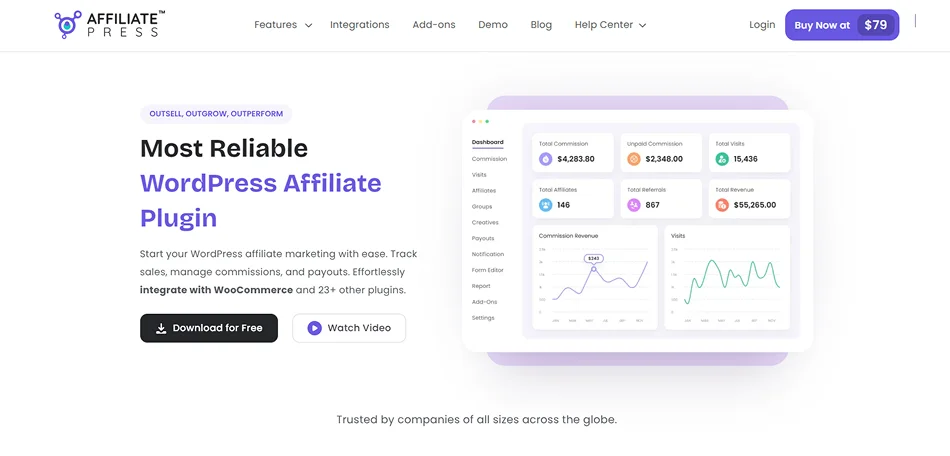
AffiliatePress is the industry-leading affiliate plugin for WordPress that lets you create your own affiliate program, with zero coding. You can track sales in real time, manage multiple smart commission structures and automate payouts, all from one place.
Mistake 5. Treating Affiliate Marketing as a Side Channel (Not a Growth Engine)

Here’s another one of the most costly affiliate marketing mistakes businesses make – treating affiliate programs as a side channel.
Many businesses set up an affiliate program, but never fully commit to it.
It sits in the background. Running, but not really managed. Available, but not actively optimized.
Plus, when we say affiliate marketing tools (like AffiliatePress) automates everything, it doesn’t mean you get to ignore your affiliate campaign. Most WordPress affiliate plugins like AffiliatePress can automate commissions, payouts and tracking. Yet, from there on, it’s your responsibility to keep an eye on it.
Fix The Approach: Build And Manage It Like A Core Channel
Never let your affiliate marketing program run passively:
- Assign ownership. (even if it’s not a full time role)
- Set clear revenue targets for the channel.
- Communicate with affiliates consistently.
- Test and optimize like you would with ads or funnels.
Because when affiliate marketing is treated seriously, it doesn’t just “add” revenue. It compounds it. And that’s when it starts behaving like a true growth engine, not just a side project.
Advanced Affiliate Marketing Mistake: Not Reverse-Engineering What Top Affiliates Are Doing

The biggest and most overlooked affiliate marketing mistake for intermediate affiliate marketers looking to grow is trying to invent the wheel instead of simply reverse-engineering the winning formula of top affiliates.
In simple words, You’re ignoring what your top affiliates already proved works.
What Does “Reverse-Engineering Top Affiliates” Mean?
Most businesses look at their top affiliates and think:
“Great! They’re performing well.”
And then…. they move on.
That’s a missed opportunity.
Because your top affiliates aren’t just driving revenue. They’re showing you EXACTLY what’s working. And the problem is, most affiliate programs never take the time to break that down.
This is where the real leverage is.
Top affiliates leave patterns behind:
- The type of content they create.
- The keywords or traffic sources they focus on.
- How they position your product.
- Where they place links and calls-to-action.
- Which pages or offers they prioritize.
None of this is random.
It’s tested, refined and optimized, mostly through trial and error you didn’t have to pay for.
But if you don’t study it, you can’t scale it.
What actually happens in most programs?
- High performers keep growing quietly.
- Mid-tier affiliates struggle without guidance.
- New affiliates have no idea what “good” looks like.
So everyone operates in isolation.
What Actually Works? Reverse-Engineer And Redistribute Success
Rather than guessing what affiliates should do, start with what’s already working:
- Identify your top-performing affiliates.
- Analyze their content, traffic sources and positioning.
- Look for repeatable patterns. (formats, angles, keywords)
- Turn those insights into clear guidance for others.
Then take it one step further:
- Share real examples. (not theory)
- Break down why something works, not just what.
- Package it into simple and actionable starting points.
How To Reverse-Engineer in 3 Simple Steps:
- Spot your Top 10% affiliates: You can use AffiliatePress to track your top 15% of affiliates who are generating 80% of your sales.
- Act Like a Customer: Click their affiliate link. Where do they send you? Read their content (blogs, articles), watch their videos and study their affiliate landing page.
- Model, Don’t Copy: At last, replicate the structure of their success. (e.g. if they have a great “Product X vs. Product Y” comparison, share the same data to all your new affiliates)
If you don’t know why your top affiliates are successful, you cannot teach new affiliates how to be successful. You rely on luck, while your affiliate program competitors (who are reverse-engineering) are actively stealing your best partners by providing better tools and strategies.
Conclusion: Fix Affiliate Systems, Not Just Symptoms
Most affiliate marketing programs don’t fail overnight. They underperform over time.
A few tweaks here, a few signups there… but no real, consistent growth.
That’s because the problem is rarely one affiliate marketing mistake. It’s the system behind it.
When you fix who you recruit, how you activate affiliates, how quickly they see results, and how you motivate your affiliates – everything starts to change.
Affiliate marketing stops being unpredictable. And starts becoming a channel you can actually grow.
Related Blogs:
- How To Optimize High-Traffic Affiliate Websites (Tips & Tricks)
- Beginner’s Guide to Affiliate Marketing (For Brands & Creators)
- Self-Hosted vs SaaS Affiliate Software: Pros, Cons & Hidden Costs
FAQs
Here are the common mistakes to avoid in affiliate marketing:
– Recruiting everyone instead of the right affiliates.
– Ignoring affiliate activation and focusing only on signups.
– No clear “Path to First Revenue” for new affiliates.
– Having a static commission structure.
– Treating affiliate marketing as a side channel.
The biggest problem in affiliate marketing for business is managing affiliate quality and avoiding affiliate fraud. However, WordPress affiliate plugins like AffiliatePress come with smart fraud detection that safeguards your entire affiliate program.
Yes, affiliate marketing is still one of the most profitable marketing strategies in 2026, with roughly over $37.3 to $48 billion market size globally.
For businesses, affiliate marketing is a low-risk and high-return marketing strategy because you only pay when affiliates drive a sale or conversion.
However, there are some key risks for businesses using affiliate marketing are:
– Reputational damage.
– Affiliate fraud.
– Limited brand control.
– Misconfigured tracking links.
But if you are using a modern affiliate system like AffiliatePress, you don’t have to worry about any of these. AffiliatePress, the most modern affiliate WordPress plugin, comes with smart fraud detection, and accurate real time tracking to keep your affiliate program running smoothly.