



How Website Owners Can Control Affiliate Promotions


Many website owners launch an affiliate marketing program expecting affiliates to promote their products exactly the way they would.
Then reality sets in.
Affiliates write their own reviews, create their own content, choose their own promotional angles, and speak to their audiences in ways that fit their personal brand. And to some merchants, that freedom can feel uncomfortable, which often leads to an important question:
How much control should website owners actually have over affiliate promotions?
The answer surprises many business owners. Successful affiliate programs are rarely built on strict oversight. In fact, the most successful affiliate programs thrive because their merchants understand:
- What they can control
- What they should influence
- What they should leave alone
Once you understand where your real leverage exists, managing affiliate promotions becomes way more predictable than you ever knew.
Let’s explore what WordPress website design owners can actually control, how to improve affiliate promotion performance and why alignment is mostly more effective than restriction.
Let’s get started!
TL;DR: Website owners can influence affiliate promotion by recruiting affiliates carefully, creating incentive based commissions, and providing clear promotional guidelines. You can also supply better marketing resources and remove any non-compliant affiliates to have full control over your affiliate promotions.
What Does “Controlling Affiliate Promotions” Really Mean?

Controlling affiliate promotion means actively managing how partners (affiliates) promote your products.
The reason for doing this is simply to protect your brand’s reputation and integrity as many times affiliates unintentionally (or intentionally) promote wrong messages, use unauthorized ads and fake claims – just to get more clicks or visits for more commission. And this is exactly why many affiliate managers and website owners try to control affiliate promotions.
But how far can they control affiliate promotions?
Many website owners assume that controlling affiliate promotions means approving every piece of content an affiliate publishes. Yet in reality, that’s not how affiliate marketing works.
When someone joins your affiliate marketing program, they are still an independent marketer, not your employee. Affiliates have the right to decide how to create content, communicate with their audience and promote your products.
After all, even you can’t realistically review each and every blog post, video, email campaign or social media update they create.
In simple words, You never fully control affiliates.
Because successful affiliate management is less about controlling every action, and more about creating an environment that encourages the right behavior.
Common Affiliate Promotion Myths vs Reality
Many website owners enter affiliate marketing with assumptions that sound logical but just lead to frustration.
Understanding the difference between perception and reality is where you can actually make a difference.
| Common Belief | Reality |
| “I should approve every affiliate article.” | Most successful affiliate programs provide guidelines and resources rather than reviewing every piece of content. |
| “I can control how affiliates promote my products.” | You can influence affiliate behavior through incentives, support, and policies, but affiliates remain independent marketers. |
| “More rules create better affiliate promotions.” | Better communication, stronger incentives, and useful resources often produce better results than excessive restrictions. |
| “Bad affiliate behavior is the biggest threat to my program.” | Recruiting the wrong affiliates is often the root cause of most affiliate management problems. |
| “Affiliates determine whether my program succeeds.” | Affiliates drive traffic, but your product quality, pricing, conversion rates, and customer experience have a major impact on results. |
| “Top affiliates need constant supervision.” | Top-performing affiliates typically need support, exclusive opportunities, and incentives rather than micromanagement. |
This mindset shift explains why the most successful affiliate programs focus on alignment, and never on trying to control every affiliate action.
The 4 Things You Can Actually Control

Here’s what mature affiliate programs actually do.
No one spends their time policing every affiliate promotion. They just focus on a few core activities. So you should do the same by controlling the 4 core aspects of affiliate marketing to control affiliate promotion indirectly:
Who You Recruit
The quality of your affiliates decides the quality of your promotions.
Every affiliate brings their own audience, reputation, marketing style and promotional standards into your affiliate program. Affiliates who already serve the right audience and share the same values need less oversight and typically generate higher quality traffic as well.
In short, successful affiliate programs are built through careful affiliate recruitment. Bringing in the right partners from the beginning leaves less many of the problems website owners later try to solve through restrictions and enforcement.
What You Reward
Commission structures and incentives shape affiliate behavior.
Why? Because affiliates pay close attention to incentives.
Commission rates, performance bonuses, and recurring commissions, all influence where affiliates invest their time plus effort. Affiliates naturally focus on the products and programs that create the best return for their work.
This gives website owners the biggest influence over affiliate promotion.
Let’s say:
- Product A = 10% commission
- Product B = 30% commission
Then it’s obvious which product affiliates will promote more.
When rewards align with your business goals, affiliates are more likely to prioritize the behaviors and campaigns that drive the best growth.
What You Allow
Clear guidelines establish which promotional methods are acceptable and which are not. While affiliates should have creative freedom, your program should clearly prohibit misleading claims, spam tactics, trademark bidding and other practices that could harm your brand.
What You Remove
Every affiliate program eventually encounters partners who fail to meet expectations. And removing poor quality or non compliant affiliates protects your program and brand.
Every affiliate program eventually encounters partners who fail to meet expectations.
Some affiliates become inactive. Others generate low quality traffic, violate program rules or engage in promotional practices that damage trust. Allowing these affiliates to remain in the program does nothing but create bigger problems over a period of time.
Thus successful website owners regularly review affiliate performance and remove partners who no longer contribute positively to their affiliate program. Maintaining a high quality affiliate network protects both your brand and your top performing affiliates.
Master these four areas, and you’ll influence affiliate promotions far more effectively than trying to control every piece of content your affiliates create.
Quick Comparison: What Website Owners Can And Can’t Control In Affiliate Promotions
| Factor | Can You Directly Control It? | How to Influence It Indirectly |
| Affiliate content style | ❌ No | Provide brand guidelines, product information, and examples of high converting content. |
| Affiliate opinions and reviews | ❌ No | Deliver a quality product and strong customer experience that naturally earns positive reviews. |
| Promotional angles | ❌ No | Share winning use cases, customer success stories, and campaign suggestions. |
| Social media posts | ❌ No | Give affiliates ready-to-use creatives and promotional assets they can adapt. |
| Audience trust | ❌ No | Help affiliates maintain credibility with accurate information and transparent offers. |
| Traffic sources | ❌ No | Set clear rules on prohibited traffic methods and reward high-quality traffic. |
| Commission structure | ✅ Yes | Use recurring, tiered, product-specific, or performance-based commissions to shape behavior. |
| Affiliate recruitment | ✅ Yes | Carefully select affiliates whose audience and values align with your brand. |
| Program rules and policies | ✅ Yes | Establish clear terms regarding compliance, advertising methods, and brand usage. |
| Promotional resources | ✅ Yes | Provide banners, landing pages, email templates, videos, and product assets. |
| Affiliate incentives | ✅ Yes | Offer bonuses, exclusive promotions, contests, and higher commission tiers. |
| Affiliate removal | ✅ Yes | Regularly review performance and remove inactive or non-compliant affiliates. |
| Landing page conversions | ✅ Yes | Optimize messaging, design, CTAs, and checkout flow. |
| Product quality | ✅ Yes | Improve customer satisfaction, onboarding, and retention. |
| Customer experience | ✅ Yes | Deliver excellent support, fulfillment, and post-purchase engagement. |
The Biggest Mistake Website Owners Make: Trying To Control Everything

Many website owners assume that more control leads to better affiliate promotions.
So they try to approve every piece of content, dictate promotional angles, restrict how affiliates communicate with their audiences and closely track every campaign.
While the intention is understandable, this approach mostly creates the opposite result.
Top affiliates value independence. They understand their audiences better than anyone else and know which content formats, messaging styles and promotional strategies get the best results. And if affiliates feel micromanaged, they simply move on to programs that offer greater flexibility.
All you have to do is understand one simple thing: The most successful affiliate programs don’t try to control every action. They just set clear rules, reward desirable behavior and remove affiliates who fail to meet program standards.
Think about the relationship from both sides.
- From the website owner’s point of view, you’re responsible for the product, pricing, customer support, refunds and brand’s reputation as well as commission payouts.
- From the affiliate’s point of view, you’re investing your time, audience trust, content creation efforts, advertising budget and personal reputation.
Neither side truly controls the other.
The partnership works because both parties benefit when customers get value and sales boosts.
Thus the best affiliate programs focus on alignment rather than control. When your incentives and your affiliates’ incentives point in the same direction, you need fewer restrictions, fewer approvals, and far less enforcement to achieve consistent results.
The Smartest Website Owners Control Incentives, Not Creativity

Affiliate marketing works best when affiliates have enough freedom to connect with their audiences in their own way.
However, freedom doesn’t mean having no standards. While you shouldn’t control every promotion, you absolutely should control activities that expose your business to legal, compliance or reputation risks.
This is why the smartest website owners create an environment where affiliates naturally choose behaviors that benefit both parties. They achieve this by controlling incentives and boundaries rather than creativity itself.
Commission Structures Shape Behavior
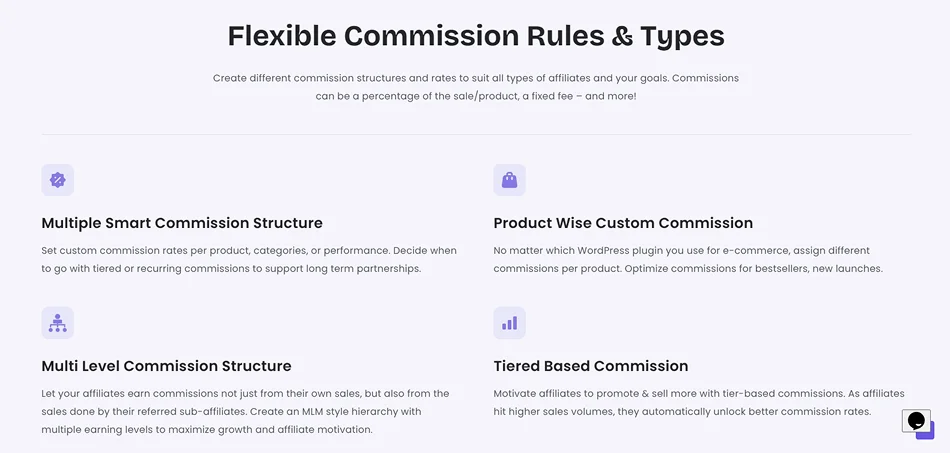
Every affiliate program creates incentives, whether website owners actively design them or not.
Affiliates constantly evaluate where to invest their time, content creation efforts, advertising budgets and audience trust. So the programs that offer the best earning potential naturally get more attention.
This is exactly why commission structures have such a big impact on affiliate promotion performance. A flat commission model can work for some businesses, but growth focused affiliate programs need to create extra incentives for high performing affiliates.
For example,
- If you run a SaaS company, offering recurring commissions to reward long term customer retention is the best way.
- If you run an eCommerce store, offering product-wise commissions is the best way to sell specific high margin products.
- If you run any WordPress-based store, offering performance bonuses once affiliates reach specific sales milestones sounds a great idea as well.
- If you want consistent higher volume sales, creating tiered-based commission structure rewards creates a fair motivation.
These incentives encourage affiliates to invest more effort into promotion because their success becomes directly connected to your success.
For this, you can use tools like AffiliatePress – one of the most powerful affiliate plugins for WordPress that integrates with over 25+ integrations. Means whether you run an eCommerce store, service business or manage online courses, you can create your own affiliate program with flexible commissions structures.
AffiliatePress allows all website owners to create:
- Product specific commissions
- Group-wise commissions
- Recurring commissions
- Lifetime commissions
- Tiered commission structures
- Performance based rewards
- Signup bonuses
- Multi-level affiliate commissions
And the list goes on and on.
Exclusive Offers Create Loyalty
Top affiliates rarely promote dozens of products with equal enthusiasm. I mean sure they sign up for more than one affiliate program, but the motivation and priority they give each offer are never the same. Most will naturally focus on the products they trust most and expect to perform best.
That’s why you have to make sure you are on their top priority list by offering exclusive offers.
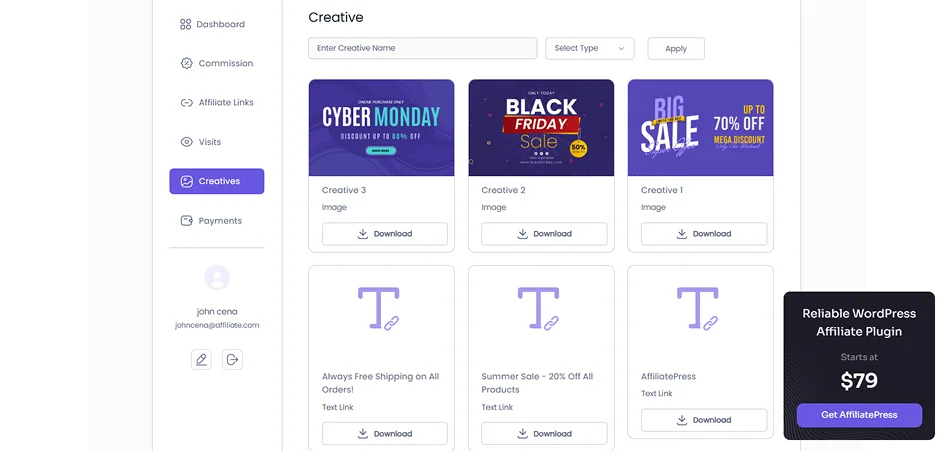
Exclusive discounts, special promotions, early access offers, bonus content and limited time incentives give affiliates something unique to share with their audience.
These offers boost conversion rates while improving your affiliate loyalty and relationship.
Consider two affiliate programs that pay identical commissions.
- One program simply provides a referral link.
- The other provides exclusive discounts, dedicated landing pages, promotional assets and periodic campaign opportunities.
The second program mostly gets more attention because affiliates get better brand assets to drive results.
Website owners who regularly support affiliates with exclusive opportunities mostly see greater engagement, better affiliate relationships and more consistent affiliate promotion activity.
Give Affiliates Freedom In Content Creation

Experienced affiliates understand their audiences better than anyone else.
A YouTube creator, niche blogger, newsletter publisher and social media influencer all communicate differently. Each audience responds to different content formats, messaging styles and promotional approaches.
The highest performing affiliate programs recognize this reality right away. Thus they make sure their affiliates have the access to accurate product information, brand guidelines, approved assets and promotional resources.
Beyond those needs, creative flexibility mostly produces better conversions.
Some affiliates may create detailed product comparisons. Others may publish tutorials, case studies, customer stories or educational content. Each approach can generate excellent results when it aligns with audience expectations.
Because as we said before, the goal is consistency in facts and brand standards, not uniformity in content.
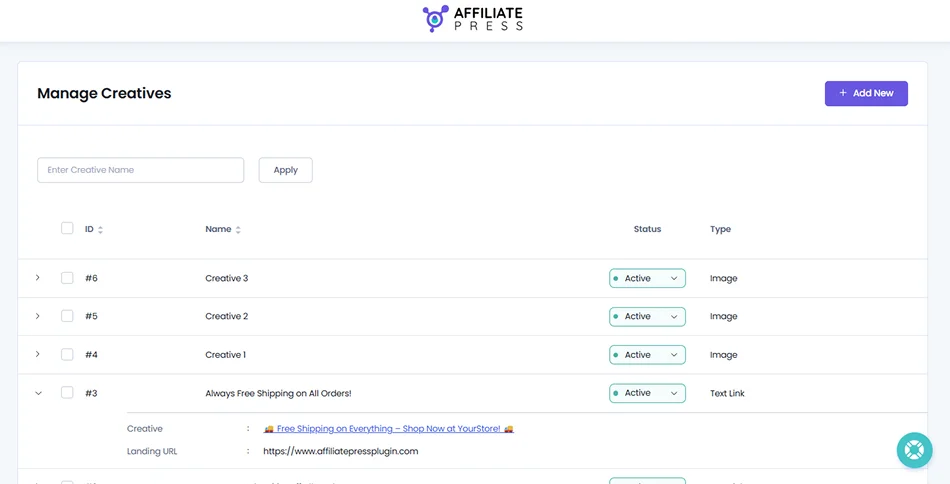
AffiliatePress supports this approach through its unlimited creatives feature, allowing website owners to provide banners, promotional materials, links, and other resources while giving affiliates the freedom to decide how to use them.
Maintain Control Over Brand Assets And Promotions
Giving affiliates the freedom is the best approach, but with limits.
Every affiliate marketing program should publish terms and policies which cover the brand usage, advertising practices, promotional claims and compliance. These guidelines protect both the business and its affiliates.
For example website owners can decide to restrict:
- Misleading earnings claims.
- Fake reviews or testimonials.
- Unauthorized coupon distribution.
- Trademark bidding on branded keywords.
- Misrepresentation of pricing or offers.
- Spam-based promotional methods.
Clear expectations leaves less room for confusion, and also helps affiliates promote products more confidently.
At the same time, effective management needs visibility. Website owners need reliable reporting, accurate tracking and fraud prevention tools to maintain their affiliate program quality as affiliate networks grow.
Thus AffiliatePress addresses these all operational challenges through real time commission tracking, smart fraud detection, coupon based tracking, advanced reporting, affiliate management tools and customizable approval workflows. All of these features help you maintain your affiliate program standards while keeping admin work manageable.
Why Top Affiliates Need Less Management

One of the biggest mistakes website owners make is assuming that every affiliate needs the same level of attention.
They don’t.
The reality is that affiliate promotion and performance is heavily concentrated among a small group of partners. Even the industry benchmarks confirm the 80/20 rule in affiliate marketing, where only a small percentage of affiliates generate the most affiliate driven revenue.
Some studies even suggest the top 1% of affiliates can drive 60% to 80% of total program revenue, while the top 10% account for most affiliate sales.
This creates an important lesson for website owners.
Top affiliates rarely need constant supervision because they already understand:
- Their audience.
- Their content strategy.
- Their traffic sources.
- Their conversion process.
Let’s say you have 200 affiliates.
- 120 are inactive.
- 60 occasionally promote your products.
- 15 generate regular sales.
- 5 drive most of your affiliate revenue.
Those 5 affiliates deserve a completely different relationship than the other 195.
As an affiliate manager, you must focus on supporting your best affiliates rather than monitoring them. This support can also include:
- Faster payouts.
- Higher commission tiers.
- Early access to promotions.
- Dedicated account management.
- Custom landing pages.
- Performance bonuses.
The goal is simple. Protect your relationship with the affiliates who consistently deliver results.
And if you really wanna identify your top performer, AffiliatePress is the best tool we will recommend. It lets you identify these top performers through real time reports, commission tracking, affiliate analytics and performance monitoring tools.
Once you know who drives results, making smarter management decisions becomes much easier.
How To Improve Affiliate Promotion Without Becoming Overly Restrictive

Many website owners just assume on their own (Without any data backup) that better affiliate promotion comes from stricter rules.
Yet in reality, better affiliate promotions always come from better support. Affiliates perform best when they have clarity, resources and confidence in the offer they’re promoting.
Provide Better Promotional Resources

Affiliates cannot effectively promote products they don’t fully understand. Thus you must give them:
- Product information.
- Feature breakdowns.
- Competitive advantages.
- Sales angles.
- Customer success stories.
- Ready to go creatives.
The less time affiliates spend searching for information, the more time they spend promoting.
This is one reason why you’ll see mature affiliate programs maintain dedicated affiliate resource centers containing banners, promotional assets, landing pages, videos and email templates.
Improve Affiliate Communication

Many affiliate programs become inactive because affiliates hear nothing after joining.
Regular communication keeps your program visible.
Monthly newsletters, product updates, promotional calendars and campaign announcements remind affiliates that opportunities exist.
Even a simple monthly email highlighting such as these can truly boost affiliate engagement:
- Top performing products.
- Seasonal promotions.
- New commission opportunities.
- Success stories.
Reward Progress, Not Just Results

Many affiliates never reach their full potential because they receive recognition only after generating large sales volumes.
For example:
- First sale bonus: $25
- First 10 sales bonus: $100
- Monthly performance reward: $250
- Quarterly growth bonus: Custom reward.
The good news is AffiliatePress also supports this strategy by letting you offer performance bonuses, tiered commission structures, signup bonuses, recurring commissions and custom affiliate rewards.
Furthermore, you can also create affiliate leaderboards to showcase your top 10 or top 20 affiliates to spark a friendly competition.
Make Success Easier To Track
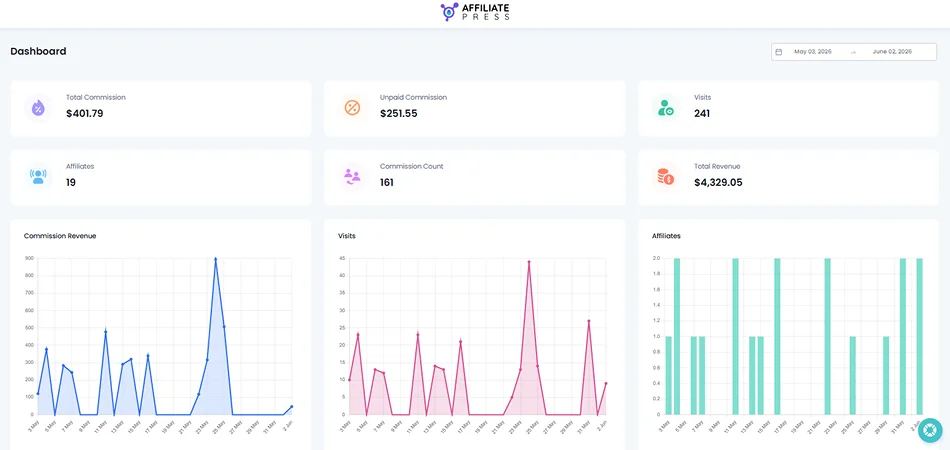
Affiliates are far more likely to stay active when they can clearly see progress. And this is where reporting becomes important.
Affiliates should always know:
- Clicks generated.
- Leads referred.
- Commissions earned.
- Pending payouts.
- Conversion performance.
That’s exactly why you can offer dedicated affiliate panels to each of your affiliates via AffiliatePress, so they can track their earnings, access all creatives at one place and see the real time data.
Focus On Building Partnerships

The highest performing affiliate programs treat affiliates as business partners.
A website owner who helps affiliates succeed earns way more loyalty than a website owner who only focuses exclusively on enforcement.
The best affiliate promotion strategies are built on:
- Better communication.
- Better incentives.
- Better resources.
- Better reporting.
- Better relationships.
These improvements improve affiliate growth without adding any kind of unnecessary restrictions or admin workload.
Why Website Owners Already Have More Control Than They Think

Many website owners spend a lot of time thinking about the parts of affiliate promotion they cannot control. They worry about affiliate content, reviews, social media posts, videos, promotional angles and marketing strategies.
Although those concerns are understandable, they also distract you from a more important reality.
Affiliates primarily influence how potential customers discover your business. Once visitors arrive on your website, most of the buying experience is under your control.
This means website owners have far more influence over affiliate program success than they realize. So let us show you who controls what:
| Affiliates Control | Website Owners Control |
| Content and reviews | Product quality |
| Traffic generation | Pricing strategy |
| Promotional angles | Landing pages |
| Social media content | Checkout experience |
| Email recommendations | Customer support |
| Audience relationships | Customer onboarding |
| Referral traffic | Commission structure |
| Personal opinions | Affiliate program rules |
| Product comparisons | Conversion optimization |
| Brand exposure | Customer retention and upsells |
Looking at the table, the pattern of who has more control over affiliate promotions is clear.
Affiliates can help generate attention, interest and traffic. However, they have very little influence over what happens after a visitor reaches your website.
Suppose, let’s say two businesses attract the same number of affiliate referrals each month.
Business A
- Converts 1% of visitors.
- Has confusing pricing.
- Provides poor onboarding.
- Takes days to respond to customer questions.
Business B
- Converts 4% of visitors.
- Has a clear value proposition.
- Provides a smooth checkout experience.
- Got excellent customer support.
Even with identical affiliate traffic, Business B will generate way more revenue than Business A.
Let’s put numbers behind it.
If both businesses receive 5,000 affiliate referred visitors per month:
- Business A converts 1% = 50 customers.
- Business B converts 4% = 200 customers.
That’s a difference of 150 additional customers without recruiting a single new affiliate.
Thus that’s the reason why successful affiliate programs always focus on optimizing the customer journey – never on controlling every affiliate action.
Even the best affiliate cannot compensate for:
- A weak offer.
- Poor conversions.
- Complicated pricing.
- Slow websites.
- Bad onboarding experiences.
- Low customer satisfaction.
Likewise, a strong business can thrive even when affiliates promote it using different content formats, messaging styles and promotional approaches.
The most successful website owners understand that affiliate management is only one part of growth. Product quality, customer experience, conversion rates, retention and commission structures also have a great impact on the long term affiliate program performance.
After you recognize how much of the customer journey you already control, the conversation shifts from:
“How do I control my affiliates?”
to
“How do I improve the parts of the business that are already under my control?”
That shift alone leads to smart decisions, good affiliate relationships, and 10X better results.
Final Words: The Best Affiliate Programs Focus On Alignment, Not Control
Many website owners begin their affiliate journey searching for ways to control affiliate promotions. But over a period of time, they discover that control is rarely the goal.
Affiliate marketing works because affiliates bring their own audiences, perspectives and promotional styles. That independence is not a weakness of the model; it’s one of its greatest advantages.
Thus the real opportunity lies in creating alignment.
When you recruit the right affiliates, reward the right behaviors, set clear guidelines and remove partners who don’t meet your standards, you create an environment where affiliates naturally move in the same direction as your business goals.
At the same time, it’s important to remember how much influence you already have. You control the product, pricing, customer experience, landing pages, commission structure and overall affiliate program strategy. These factors also got a greater impact on results than trying to manage every piece of affiliate content.
Just remember even the most successful affiliate programs are built on alignment, not strict control.
Related Articles: