


12 Smart Affiliate Program Strategies For Online Course Sellers


Selling an online course is one thing. Getting other people to consistently promote it for you is another.
That’s where an affiliate program can become a powerful growth channel. But simply launching an affiliate marketing program doesn’t mean affiliates will automatically start generating sales.
You need the right partners, a commission structure that makes sense, a tracking system you can trust, useful promotional brand assets, and a simple experience for your affiliates.
Otherwise, you are gonna end up with plenty of clicks but very few sales.
We’ve put together 12 affiliate program ideas and strategies that can help online course creators build a more organized and scalable affiliate program.
Let’s take a look at them one by one.
TL;DR: To create a successful affiliate program, some of the best affiliate program ideas for online course creators include finding the right partners, strategic commission structure, useful promotional resources, reliable real time tracking, engaging creatives, and consistent communication.
1. Start With The Right Affiliates

Not every person with a large audience is going to be a good affiliate for your online course.
A creator with 100,000 followers sounds impressive, but if their audience has no interest in what you teach, those followers may not bring you many sales.
For example, just yesterday I was scrolling through Instagram, and hopped on an account with 250K+ followers. It even has that “Dm me for paid collab” description. But the problem? When I went through each of their posts and reels, the engagement was so low. Some of the posts barely have 10 likes. This is one of the influencer affiliate types you should stay away from.
On the other hand, someone with a smaller but highly relevant and engaging audience can bring much better results.
For example, if you sell a Content Marketing course, a SEO blogger, YouTube educator, or creator who already teaches SEO and content marketing can be a much better fit than a general lifestyle influencer with thousands of followers.
And there is data to support this.
Affiliate and referral traffic for online courses can convert at around 4% to 7% on average. Top-performing affiliates, on the other hand, can reach 10–15%. Warm, niche audiences can also perform considerably better than generic traffic.
Thus instead of asking, “How many followers does this affiliate have?. Start asking:
“How relevant is their audience to my course?”
Here are a few things and affiliate program ideas for you before you pick an affiliate:
- Audience relevance: Do their followers actually care about your course topic?
- Trust: Does their audience listen to their recommendations?
- Niche alignment: Are they already creating content around your industry?
- Engagement: Do people interact with their content instead of simply following them?
- Customer fit: Are their followers likely to become your students?
- Promotion history: Do they already promote similar products or courses?
- Content quality: Can they explain your course naturally to their audience?
For instance, you are selling a $300 SEO course.
A general influencer with 50,000 followers can generate plenty of clicks but very few sales. On the other side, a smaller SEO creator with 8,000 engaged followers can bring fewer visitors but much more relevant traffic.
That is the kind of affiliate you have to handpick.
Keep Your Affiliate List Organized
Once you start finding potential partners, managing them manually can quickly become a pain.
You need to know who has joined your program, who is approved, which affiliates are active, and how each partner is performing.
With AffiliatePress, an all-in-one affiliate program plugin, you can manage your affiliates from one place and organize them based on your program needs. Plus, you can also use Affiliate Groups when you need to separate different types of partners or create different rules for them.
This becomes especially useful when your program starts moving beyond a handful of affiliates.
Afterall, the goal is to build a group of affiliates whose audience already has a reason to trust, consider and buy your course.
And once you have the right partners, the next question becomes even more important — how much should you actually pay them?
2. Create a Commission Structure That Fits Your Course Economics

Now that you have finally handpicked the right affiliates, it’s time to design a commission structure. You, as an online course creator, need to learn the art of balancing attractiveness of rewards with healthy profit margins for your online course business.
The right structure completely depends on how you align your affiliate commission with your course economics. So, let us dive you a little more into the world of Maths (in a simple way, of course):
| Commission Model | Payout Rate | Best Used For | Pros & Cons |
| Standard Percentage | 30% to 50% of sale price | Single-payment flagship online courses | Pro: Easy to grow. Con: Higher upfront cost per sale. |
| Flat Fee | Fixed amount, e.g., $50 to $150 | Premium-priced, fixed-cost signature courses | Pro: Simple for affiliates to market. Con: Less flexible if you change course pricing. |
| Tiered Performance | Starts at 30%, scales up to 50% after 20+ sales | Rewarding high-volume partners and creators | Pro: Encourages extra effort. Con: More complex to track. |
| Recurring / Hybrid | 30% for 3 to 6 months | Courses with ongoing community access or cohort models | Pro: Attracts long term promoters. Con: Slower cash flow return. |
The statistics show most course programs pay 20% to 50% commissions, with 30% to 50% seen as competitive; thus median commission for digital courses sits around 35%.
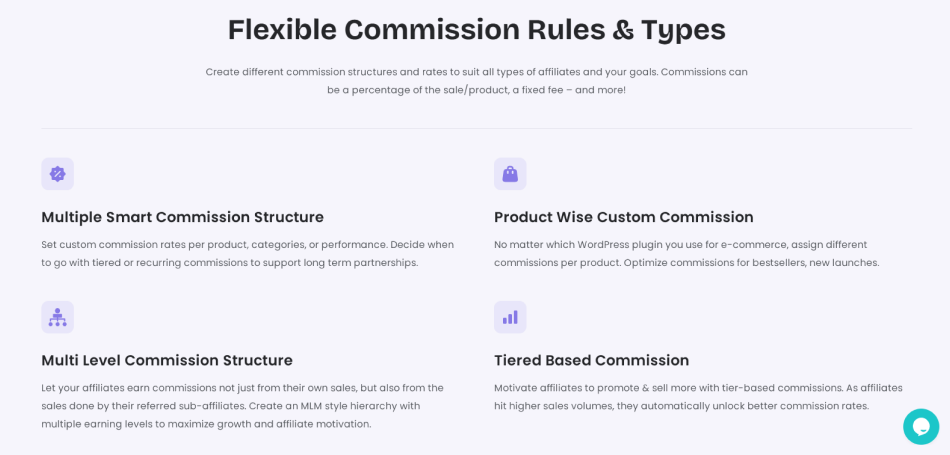
Worth mentioning if you’re using or planning to get AffiliatePress to create your own in-house affiliate program. You can create flexible commission structures with zero coding. This WordPress affiliate program plugin lets you create:
- Recurring Commission Models – Use this model if you want to build better affiliate relationships.
- Tiered-based Commission Models – Opt for this model if you want to encourage affiliates for more sales. Plus it’s easy to track with AffiliatePress (getting rid of its cons).
- Lifetime Commission Models – Although not much helpful for online course creators, but if you run membership-based online course, it can be a good way to grow sales
- Group-wise Commission Models – If you wanna divide affiliates based on their skills or your marketing strategy, you can create this.
- Product-wise Commission Models – If you have more than 1 course, then you can set different commission rates for all.
- Multi-level Affiliate Commissions – If you want to grow your affiliate network quickly, then this one is the best commission structure.
Well, if you still don’t get how to set the commission rate, no worries! Below we’ve put some proven key steps to fit your online course economics.
Calculate your margins first. We all know online courses have near-zero marginal delivery costs, meaning you can afford higher commission rates (up to 50%) than physical goods.
Protect your ad spend. Make sure your net margin per sale after paying the affiliates still covers your own target profit and operational expenses.
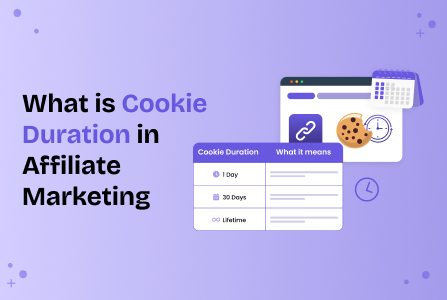
Last but not the least, you have to set a cookie window for this commission structure.
3. Set a Cookie Window To Match The Buying Cycle

Now you know who your affiliates are and how much you are going to pay them. But there is one more important thing you need to decide – how long should an affiliate get credit for a referral?
This is where your cookie window comes into the picture.
Imagine this:
A student clicks your affiliate’s link today, visits your course page, checks the syllabus, compares your course with two other options and says, “I’ll think about it.”
Then they come back 45 days later and finally buy your course.
Now, if your cookie window is only 30 days, your affiliate may not get the commission for that sale. And honestly, that can be frustrating for both you and your affiliate.
Thus one of the best affiliate program ideas is to have a longer buying cycle. Afterall, students want to compare courses, read reviews, watch free lessons, check the instructor’s experience and think about whether the course is worth the investment.
Most affiliate programs use cookie windows somewhere between 7 to 90 days, with 30 days being a common choice. For higher-ticket products and courses, longer windows such as 60 or 90 days can better match a longer research process.
So, don’t just pick a cookie duration because “30 days is standard.”
Match it with your actual buying cycle.
Here is a simple way to think about it:
- Low cost courses: 7–14 days will do for low priced courses.
- Mid priced courses: 30 days gives students more time to decide.
- High ticket courses: 60–90 days can make more sense when the buying process is longer.
- Membership or subscription courses: 90 days or lifetime attribution may be worth considering.
Suppose you are selling a $49 self paced course and most students buy within a few days. In this scenario, the best affiliate marketing idea is to not have a very long cookie window.
But if you are selling a $1,000 career focused course, expecting someone to make a buy within seven days is just realistic. Thus before setting your cookie window, one of the best affiliate marketing strategies is to check your own sales data.
How long does it normally take someone to go from their first visit to becoming a student?
That number should have a big influence on your affiliate cookie duration. And when your affiliates know they can still receive credit for a sale that happens weeks later, it can also make them more comfortable putting real effort into promoting your course.
4. Build a Simple Affiliate Portal
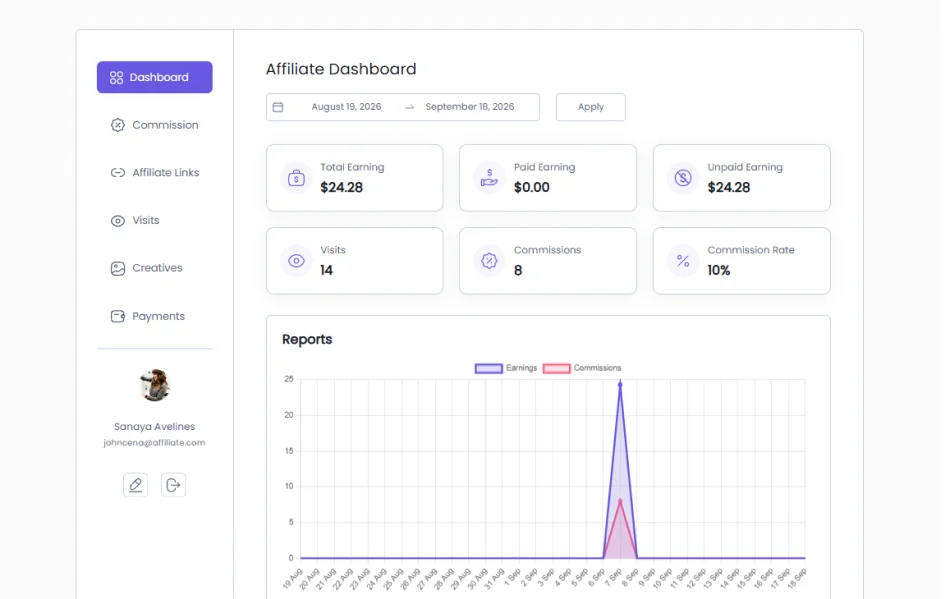
Now imagine you have successfully recruited 50 affiliates. Great!
But then one affiliate asks, “Where can I find my affiliate link?”
Another asks, “How much commission have I earned?”
Someone else wants to download a banner. And another affiliate wants to know how many people clicked their link.
If you are answering all of these questions manually via emails, WhatsApp or messages, your affiliate program will be a full time job. So our next affiliate program idea is to answer all these problems is to create an affiliate panel, portal, or dashboard.
Your affiliates should be able to log in and find everything important from one place. At the very minimum, your affiliate portal should include:
- Affiliate links
- Visits and clicks
- Referrals
- Commission information
- Payout information
- Promotional creatives
- Affiliate performance data
- Important program info
The idea is simple. Don’t make your affiliates search for things.
More than 80% of brands run affiliate programs, which means many affiliates already are working with multiple programs and dashboards. A clean and organized portal can make it easier for them to find links, creatives and earnings without wasting their time.
This is where AffiliatePress comes to the rescue. This affiliate marketing tool gives each of your affiliates a dedicated affiliate panel where they can access their affiliate links, track visits and check their commissions.
Afterall, your affiliate shouldn’t need to send you an email every time they want to know something as simple as “How much did I earn?”
5. Give Affiliates a Complete Launch Asset Pack
Okay, you have recruited the right affiliates and given them a simple place to manage everything. But now comes another big question:
What exactly are they going to promote?
Don’t just send your affiliate a referral link and say, “Go promote our course.”
That’s not enough! Sure, your affiliates know their audience better than you do, but they shouldn’t have to spend hours creating every promotional banner, video, or link from scratch.
Give them a complete affiliate launch asset pack which includes promotional material or brand assets such as:
- Ready-to-use email templates
- Social media captions
- Banners
- Images
- Text links
- Course descriptions
- Key course benefits
- Student testimonials
- Frequently asked questions
- Promotional offers
- Unique coupon codes, if applicable
For example:
- Instead of telling an affiliate to write an email about your SEO course, give them a ready-made email that they can personalize and send.
- Instead of asking them to create a banner, give them multiple banner sizes.
- Instead of making them search through your website for course details, give them a short document explaining what the course teaches, who it is for and why students should consider it.
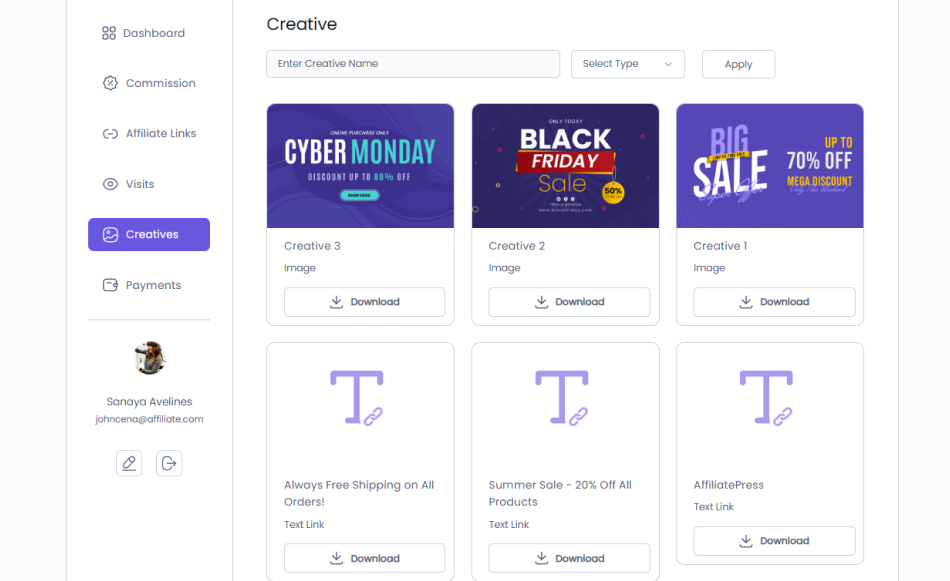
This is where AffiliatePress Creatives can make things much easier. You can create and manage endless, different promotional creatives for your affiliates including text links, banners, images and HTML creatives.
Your affiliates can then choose the asset that works best for their audience and promotional channel, right from their affiliate panel.
For example:
- A blogger might prefer a text link.
- A YouTuber might use a course banner or link in the video description.
- An Instagram creator might need a promotional image and caption.
- An affiliate running an email newsletter might want ready-to-use email copy.
And when affiliates already have the right materials in front of them, they can spend less time preparing and more time actually promoting.
Remember: The more you prepare beforehand, the less work your affiliates need to do before their first promotion. And that is an affiliate marketing strategy which can make a big difference.
6. Recruit Affiliates In Waves

Now comes the part every online course creator wants to know about:
Where do I find affiliates?
Well, you don’t have to recruit hundreds of affiliates on day one. In fact, starting smaller can help you understand what is actually working before you grow the program.
Thus one of the most used affiliate program ideas is to recruit your affiliates in waves.
Wave 1: Start With People Who Already Know You
Your existing students, customers, professional network and business contacts can be your first group.
They already know your course or your brand, so you don’t have to explain everything from zero.
Wave 2: Move Into Your Niche
Next you have to look for creators, bloggers, educators and content publishers who already talk about your course topic. For a content marketing course, this could include:
- SEO bloggers
- Content creators
- Marketing YouTubers
- Newsletter owners
- Marketing educators
The reason it works is because these affiliates already have an audience that could be interested in what you sell.
Wave 3: Find Complementary Partners
You can look for course creators who serve the same audience without directly competing with you.
Wave 4: Expand Your Recruitment
After you understand your commission structure, conversion rate, promotional assets and affiliate performance, you can start expanding recruitment further.
This gives you enough time to test your affiliate marketing program before bringing hundreds of affiliates into it.
And the affiliate marketing industry is already becoming highly competitive. The global affiliate marketing market was estimated at $19.6 billion in 2025, and is projected to reach $24.7 billion in 2026.
So yes, there’s a lot of potential partners out there. But don’t make the mistake of thinking:
More affiliates = better affiliate program.
You want the right affiliates first. As your affiliate list grows, AffiliatePress can help you keep all those affiliates organized and manage their activity from one place.
7. Choose Between Evergreen And Launch-Based Promotions

Not every online course should use the same affiliate marketing strategies.
Some courses are available all year. Some courses open only a few times every year. And some courses have a limited enrollment period.
Thus, before planning your affiliate promotions, decide whether you want an evergreen or launch-based approach.
Evergreen Affiliate Promotions
An evergreen online course is available for students to purchase at almost any time. Thus your affiliates can promote it throughout the year without waiting for a specific launch date.
The benefit? You can keep your affiliate program running continuously.
Launch-Based Affiliate Promotions
Launch-based promotion works differently. You create a specific promotional period around your course launch, enrollment opening or limited-time offer.
This can work well for cohort-based courses, live programs and limited-enrollment offers where urgency is naturally part of the buying process.
Course sales pages can average around 1% to 3% conversion, while affiliate and referral traffic has been reported around 4% to 7%, with top-performing affiliates reaching 10% to 15%.
That doesn’t mean an affiliate launch will automatically produce higher conversions. But it does show why affiliate traffic is worth tracking separately from your general website traffic.
All in all, if your course is evergreen, build an evergreen promotion system.
If your course only opens four times a year, give your affiliates a proper launch campaign with dates, offers and ready-to-use assets.
AffiliatePress can support the management side of both approaches by giving you one place to manage affiliates, links, creatives, referrals and commissions.
8. Track Affiliate Quality, Not Just Clicks
Let’s say Affiliate ABC sends you 5,000 clicks. Affiliate XYZ sends you 500 clicks. So, who is your better affiliate?
At first glance, you might say Affiliate A. But what if those 5,000 clicks generate only two course sales? And Affiliate B’s 500 clicks generate 25 sales?
Now the picture looks very different. This is why you should never judge an affiliate only by the number of clicks they generate.
One of the top affiliate marketing business ideas we give to everyone is to look at the quality of the traffic. Some important numbers to track such as:
- Visits and clicks
- Leads
- Checkout starts
- Course purchases
- Conversion rate
- Commission generated
- Revenue generated
- Refunds
- Repeat purchases
- Revenue per affiliate
Apart from this, industry estimates suggest that around 17% of affiliate traffic can be non-human, and other estimates put invalid affiliate traffic as high as 24% in certain situations.
The exact number can vary depending on the network, industry and traffic source. But the lesson is simple:
A click isn’t a customer. You need to follow what happens after the click by using affiliate software like AffiliatePress. This affiliate system gives you an analytics dashboard with detailed insightful reports and charts.
You can track affiliate visits, referrals and commissions and get a clearer picture of which affiliates are actually contributing to your course sales.
That is the type of affiliate data you need before deciding which affiliates deserve more attention, better incentives or additional promotional opportunities.
9. Add Fraud Controls Before Scaling
After your affiliate program starts generating more sales, there is one thing you definitely don’t want to ignore: Affiliate fraud.
You may think fraud is something you can deal with later when your program becomes really big. But that can be a costly mistake.
Some common affiliate fraud problems are:
- Self-referrals
- Fake leads
- Suspicious traffic
- Duplicate transactions
- Coupon abuse
- Click manipulation
- Last-click hijacking
- Unusual conversion patterns
And affiliate fraud isn’t exactly a small problem.
Some 2026 industry statistics put affiliate fraud at around 8 to 15% of gross program spend, although the exact impact can vary by program and vertical.
Thus before you start scaling your affiliate recruitment, create some basic rules.
Delay Commissions Until the Refund Period Ends
If your course has a 30-day refund policy, you may not want to pay the affiliate immediately after the sale. Otherwise, a refunded purchase could leave you paying a commission on a customer who didn’t remain a customer.
Track Unusually High Traffic
If one affiliate suddenly sends thousands of clicks from a suspicious source, take a closer look before assuming it is a success.
Check for Self-Referrals
An affiliate shouldn’t be able to simply buy their own course through their affiliate link and earn a commission from themselves.
Create Clear Affiliate Terms
Tell affiliates what promotional methods are allowed and which ones aren’t.
Don’t Wait Until There Is a Problem
Fraud protection works better when it is part of the program design from the beginning.
If you are using AffiliatePress, its Advanced Fraud Protection adds an extra layer of security to your affiliate program. This automatically flags any suspicious traffic and monitors your affiliate program automatically. If you have doubts about someone, you can also block them by their IP address.
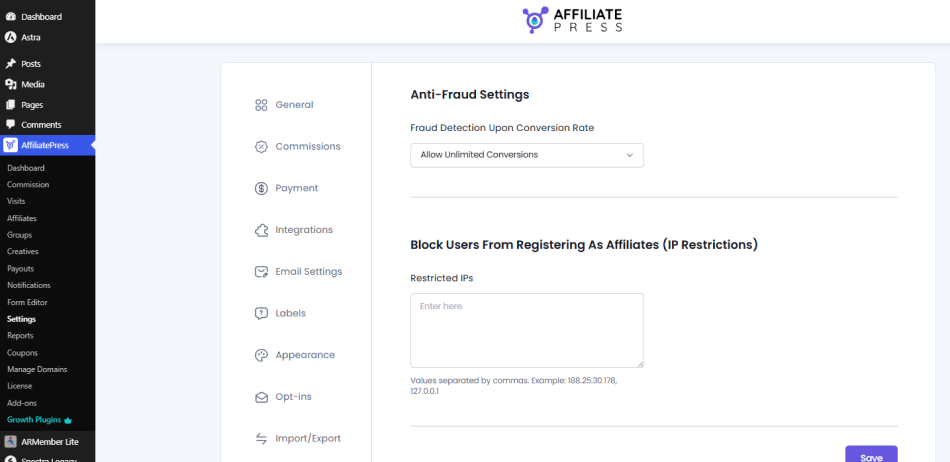
Overall, generating more affiliate sales is great. But generating sales that you later have to refund, reverse or investigate? Not so much.
10. Pick The Right Affiliate Management Tool For Your Course
You can have the right affiliates. The right commission structure. A 90-day cookie window. Great promotional assets. And a well-planned onboarding process. But if you are still tracking everything manually in spreadsheets, emails and random dashboards, managing your affiliate program can quickly become difficult.
This is where picking the right affiliate management tool becomes important. Yet before picking a tool, don’t just look at the number of features listed on its pricing page.
You have to make sure the tool you pick actually handles the way your online course business works.
Here are some of the things you should check.
- Does It Support Your Course Platform?
- Can You Create Flexible Commissions?
- Does It Give Affiliates Their Own Dashboard?
- Can You Track More Than Clicks?
- Who sent the traffic?
- Does It Help With Affiliate Management?
This is where an all-in-one WordPress affiliate plugin can save you from managing several different systems.
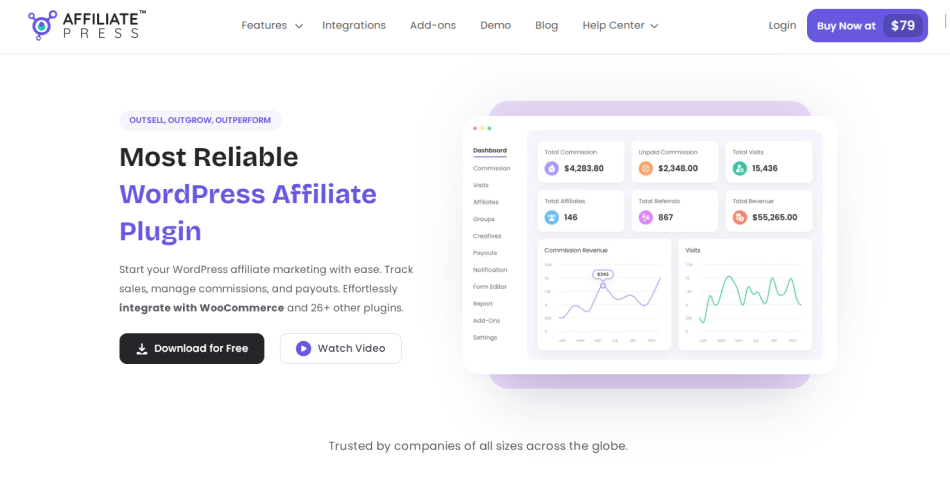
For course creators running their affiliate program directly from WordPress, AffiliatePress brings many of these things together.
Integrating with 26+ WordPress platforms and LMS plugins, it allows you to manage an unlimited number of affiliates, create different commission structures, track visits and referrals, provide promotional creatives, manage payouts and monitor your affiliate program from your WordPress dashboard.
And because the system is built around WordPress, you don’t need to move your entire course business to a separate affiliate platform just to start managing referrals.
Of course, the right tool depends on your course platform, pricing model, affiliate strategy, and the level of control you need. But don’t choose an affiliate management tool only because it is too hyped.
Go for the one that removes the most manual work from your actual affiliate program. Because when your affiliate program grows, the goal is to spend more time growing it.
Conclusion
In a nutshell, these are the top affiliate program ideas for online course creators.
A successful course affiliate program comes from combining the right partners, strategic commission structure, useful promotional resources, reliable real time tracking, engaging creatives and consistent communication.
For WordPress course sellers, AffiliatePress brings these affiliate-management capabilities into one place. So you can build and grow your in-house affiliate program alongside your online course business.
So what are you waiting for? Implement these affiliate marketing strategies one by one, and see how it turns out for you.
Related articles: