



How To Increase Course Sales Without Spending More On Ads

“$50,000 burned on ads.”
That’s what entrepreneur Pete Roscoe shared after running ad campaigns that brought him no ROI and no growth. And it’s not an isolated story.
One of the most painful regrets I hear from businesses is spending heavily on paid ads before figuring out what actually makes people buy.
More budget = more results, right? Wrong.
If your course isn’t converting at $500 in ad spend, spending $5,000 won’t magically fix the problem. It just makes the problem more expensive.
Now don’t get me wrong – paid ads can be an important growth channel.
But if your course offer isn’t clear, your sales page doesn’t build trust or your audience isn’t familiar with your brand, you still have a bigger problem to solve.
Your sales process isn’t ready to turn that extra traffic into customers.
That’s exactly why before increasing your ad budget, it makes sense to look at what you already have.
- Your existing audience.
- Your email list.
- Your past students.
- Your current website traffic.
- And even your happiest customers who may be willing to recommend your course.
In this article, we’ll explore practical ways to increase online course sales without continuously increasing your advertising budget.
TL;DR: Want to increase online course sales without spending more on ads? Start by improving your offer, sales page, email funnel, and existing customer relationships. You can also turn happy students into affiliates and give them the tools and incentives they need to bring in new course sales.
Why More Traffic Doesn’t Always Mean More Course Sales

More ad spend isn’t always the answer.
More ads = more traffic, but more traffic ≠ more sales.
Let’s now understand this. More traffic sounds like the obvious answer when course sales are slow.
If 1,000 visitors bring you 10 sales, then 10,000 visitors should bring you 100 sales, right? Well, not always.
You can have thousands of people visiting your course website and still struggle to make regular sales. The problem may not be how many people are seeing your course but what happens after they arrive.
Think about it.
You might be attracting people who are interested in the topic but aren’t ready to buy. Or your online course offer may not clearly explain what they will get. Your sales page might not build enough trust. Your visitors may have questions that are never answered. Or people simply aren’t familiar enough with your brand to hand over their money.
And this is where many businesses make costly mistakes.
They see low sales and immediately think, “We need more traffic“. This leads to them increasing their ad budget. But if your sales process is leaking potential customers, more traffic only sends more people into the same leaky funnel.
Thus we’d suggest you look at the traffic you already have.
- Are visitors reaching the right course page?
- Do they understand what they will get?
- Are you showing real student results?
- Do you follow up with people who don’t buy?
- Are you making it easy for existing students to recommend your course?
- Are you giving affiliates and partners a reason to promote it?
There are plenty of ways to increase course sales without simply buying more clicks.
In fact, some of your best opportunities are already sitting inside your existing audience, website, email list, students and customer relationships.
So before you spend more on ads, fix what happens after the click.
That’s where we’ll start. Here’s how to increase online course sales without spending more on ads.
1. Improve Your Course Offer Before Driving More Traffic
Before trying to get more people to buy your course, make sure there is a really good reason for them to buy it in the first place.
More traffic won’t help much if visitors don’t immediately understand what your course helps them achieve, who it is for and why it is worth paying for.
Start by looking at your offer from a student’s perspective:
- What specific problem does the course solve?
- What result can students realistically expect?
- Who will benefit most from taking it?
- What makes your course different from similar options?
- Why should someone choose it now rather than later?
Moreover you can also improve the perceived value of your online course without simply lowering the price.
Consider adding useful resources such as templates, checklists, practical exercises, bonus lessons, community access or live Q&A sessions.
All in all, the goal is to make the value of the online course easier to understand. And a strong offer is what gives your marketing something concrete to communicate.
Before spending more to bring people to your online course, make sure the offer gives them a compelling reason to stay and consider buying.
2. Optimize Your Course Sales Page For Conversions
After your offer is good, make sure your sales page does a good job of turning interest into action.
A visitor shouldn’t have to scroll through the entire page to figure out what the course is, who it is for, what they will learn or what they should do next.
Start with a clear headline that communicates the primary outcome of your online course. Then use the rest of the page to answer the questions a potential student is likely to have before purchasing.
Your course sales page should clearly say:
- What students will learn.
- Who the course is designed for.
- What outcomes they can expect.
- What is included in the course.
- How the lessons are delivered.
- How long the course takes to complete.
- What support or resources are included.
- How much the course costs.
- Why should students trust you.
Furthermore, you can also lower friction by making the next step obvious. Use clear calls to action such as Enroll Now, Start Learning or Get Instant Access.
Don’t forget about mobile users, either. If your page is difficult to read or the checkout process feels complicated on a phone, potential students will leave before completing their purchase.
Thus the objective is to make your online course sales page clearer, more persuasive and easier to act on.
3. Use Student Success Stories To Build Trust
People considering an online course want to know that it actually works for people like them.
That’s exactly where student success stories can make a real big difference.
You can start by collecting feedback from students who have completed your online course. Look for stories that show a clear before-and-after transformation such as:
- What problem the student had before joining
- Why they decided to take your course
- What they learned
- How they applied that knowledge
- What changed after completing the course
For instance instead of a testimonial that simply says, “Great course! I learned a lot,” a better, more powerful story might explain how the student used what they learned to launch a project, improve a skill, get a new client or achieve a specific professional goal.
You can then repurpose these success stories across your marketing:
- Add testimonials to your course sales page
- Share student results on social media
- Include success stories in email campaigns
- Create short student interview videos
- Turn detailed experiences into case studies
- Feature student wins in webinars or course promotions
Your happiest students can also become more than testimonials.
4. Build An Online Course Sales Funnel That Follows Up
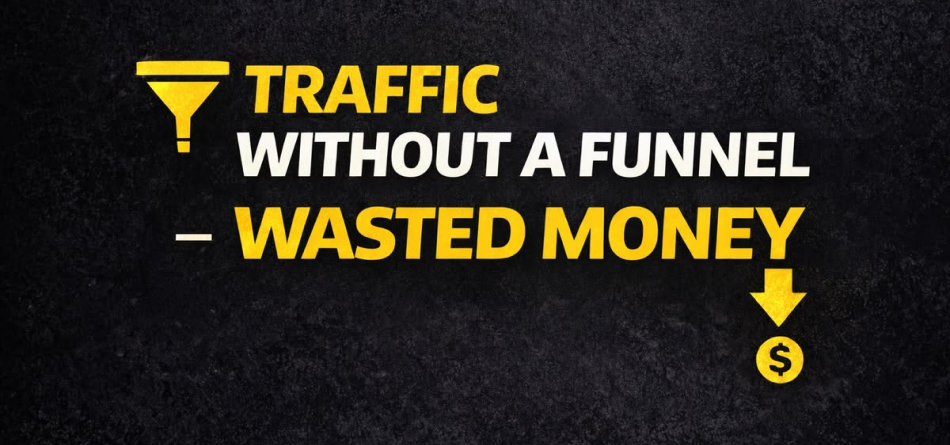
Not everyone who visits your course sales page will be ready to buy right away.
Some visitors may be interested but need more info. Others may compare your course with alternatives, get distracted or simply need more time before making a decision.
Thus your online course sales funnel shouldn’t end when someone leaves your sales page. You can create a simple journey that keeps potential students engaged and gives them multiple opportunities to return.
For example your funnel could look like this:
Free content → Lead magnet → Email sequence → Course sales page → Purchase.
Thus start by offering something useful that relates directly to your online course. This could be a free checklist, mini-course, webinar, template, guide or short email course.
Once someone joins your email list, don’t immediately send them a series of sales pitches. Use the opportunity to build familiarity and demonstrate your expertise.
Your follow-up sequence could include:
- Educational content that solves a smaller version of the problem your course addresses
- Common mistakes your target students should avoid
- Student success stories and case studies
- A preview of what students will learn
- Answers to common objections
- A clear explanation of who the course is best suited for
- A limited-time bonus or enrollment opportunity
This way your potential students get a reason to stay with you. And when they stay engaged, they always have YOUR online course in the back of their minds.
On top of that, you can also segment your audience based on their behavior. Someone who downloaded a beginner’s guide may need different messaging from someone who visited your pricing page three times.
The goal isn’t to pressure people into buying. It’s to stay relevant, and they move from awareness to consideration to purchase.
And when someone does buy, your funnel shouldn’t stop. Post purchase emails can encourage course completion, introduce relevant products, request feedback and eventually turn successful students into referral sources.
5. Increase Sales From Your Existing Audience

What if you already have potential course buyers than you realize? Yes, this happens to a lot of businesses.
Even though the leads are in front of our eyes, we sometimes blind eye them. So let us ask you: have you considered the following as your potential buyers:
- Email subscribers
- Blog readers
- Social media followers
- Webinar attendees
- Free course students
- Previous customers
- Community members
- People who downloaded your resources
- Visitors who previously viewed your course
These people have already shown some level of interest. So you don’t have to start from zero with them.
Plus, your existing students are another valuable audience. Someone who has already purchased one course may be interested in an advanced course, certification, coaching program or related bundle.
Overall, the key is relevance.
You don’t need to constantly promote to get more online course sales or everyone on your list. Just match the right offer to the right audience segment and give them a clear reason to take the next step.
Sometimes the easiest course sale to generate is the one you don’t have to pay to acquire.
6. Use Course Bundles And Upsells To Increase Revenue
For those wondering how to increase online course sales, you don’t need to find more customers.
Because for more course sales, you already have your existing customers. Just help them discover your other products or learning resources that genuinely complement what they already enrolled for.
Course bundles are one way to do this.
This bundles individual courses together, putting a group related course into a package that gives students a more complete learning path. On top of that, you can even use upsells at strategic points in the customer journey. For instance someone buys a beginner course, then you could offer:
- An advanced course
- A certification program
- A practical project course
- Downloadable templates
- A coaching session
- Community access
- A related workshop
The important thing is to keep the recommendation relevant. An upsell should feel like a useful next step, not an unrelated product being pushed simply to increase course sales or the order value.
Digging a little deeper, you can even try experimenting with different bundle structures like:
- Starter bundle : Basic course + essential resources
- Complete bundle : Multiple courses + bonuses
- Premium bundle : Courses + coaching + community access
- Learning path : Several courses designed to be completed in sequence
Thus when your online courses are subscription based or include recurring access, complementary offers can also help increase customer lifetime value.
7. Turn Your Students Into Affiliate Partners
Your happiest students can be some of the most convincing people to promote your online course.
Just think about it: they already have taken the course, experienced the learning process and can even explain the value from a current student’s perspective. All of these make their recommendation far more authentic than a generic promotional message.
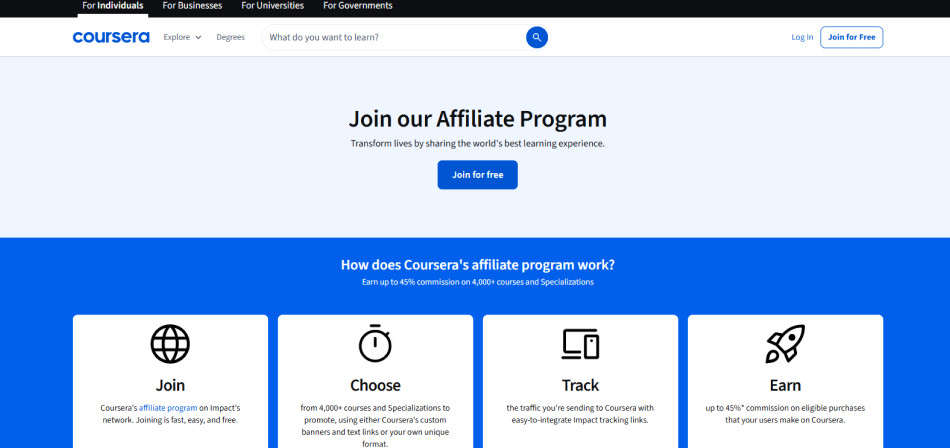
But no one is gonna sell your online courses for nothing, even though they are your students. So the best way to solve this problem and motivate students to promote your online course is to make an in-house affiliate program.
Why an in-house affiliate program when you can just sign up to any affiliate networking platform? Because in-house online course affiliate marketing programs can become a powerful growth channel.
No middle man commission
No platform fees
Complete control over your data
Builds real ties with your partners
Set your own payout terms
This also gives your students a structured way to earn commission when their recommendations generate or increase course sales.
You can start by identifying students who:
- Completed your course successfully
- Regularly engage with your content
- Have an audience in your niche
- Share their learning experience online
- Work with people who could benefit from your course
- Already recommend your course informally
Then give them a simple affiliate program with clear commission rules, tracking, promotional resources and payouts.
For WordPress course websites, AffiliatePress is a most reliable option for creating and managing this type of affiliate program. It lets you track referrals, manage affiliates, create different commission structures, provide marketing creatives and monitor affiliate performance from within WordPress.
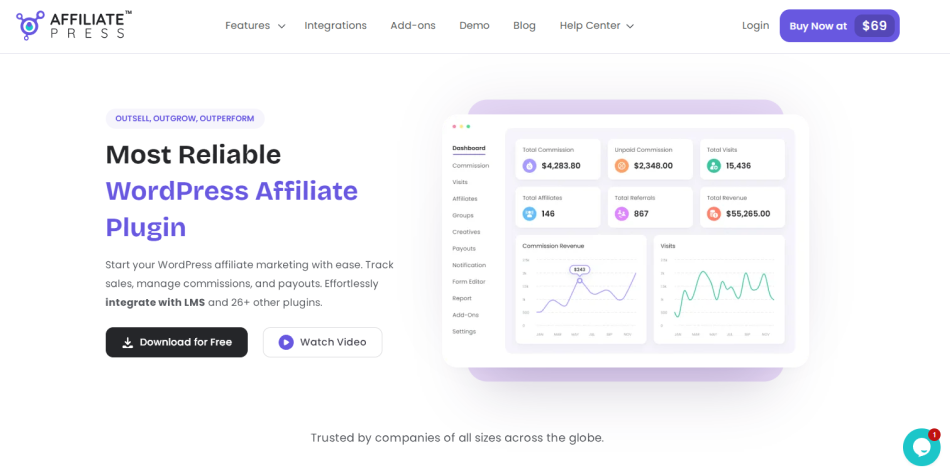
Best of all, AffiliatePress integrates smoothly with 26+ WordPress plugins including LMS such as LearnDash, LifterLMS, Masteriyo LMS, LearnPress, MasterStudy LMS, Tutor LMS and more.
Apart from that, you can structure your program around the way your course business actually works. Using AffiliatePress, you can even offer:
- Percentage based commissions on course purchases
- Fixed commissions for specific courses
- Recurring commissions for subscription-based courses
- Lifetime commissions for long-term customer relationships
- Different commission rates for different affiliate groups
- Coupon-based affiliate tracking
- Referral links for content creators and bloggers
You can also create separate affiliate rules for different types of partners.
For example a student who recommends your beginner course to friends may have a standard commission rate, while an established educator or creator who regularly promotes your courses could receive a higher rate.
The important thing is to make participation easy.
Your students shouldn’t have to manually track referrals or send you screenshots of every sale. With affiliate tracking software, each partner can receive their own referral link and have conversions attributed automatically.
That turns word-of-mouth into a measurable acquisition channel. And unlike paid advertising, you generally pay affiliates when their promotion generates the sale you’re looking for.
8. Give Affiliates More Than Just An Affiliate Link

Giving someone an affiliate link and expecting them to generate sales is rarely enough as your affiliates must know what to promote, how to promote it, and why their audience should care.
This is even more important for online courses affiliate marketing programs because different affiliates promote the same online course in completely different ways.
- A YouTube creator may want a course walkthrough.
- A blogger may need a detailed review and comparison points.
- A coach may want a presentation or webinar offer.
- A student may simply want a personal referral link and a discount code to share with friends.
Thus give your affiliates a ready-to-go promotional toolkit that can comes loaded with:
- Affiliate links
- Coupon codes
- Course banners
- Social media graphics
- Email templates
- Product descriptions
- Course screenshots
- Landing pages
- Webinar materials
- Suggested social media posts
- Key course benefits and talking points
The best part? You can offer unlimited creatives to your affiliates with AffiliatePress. All it actually takes is a WordPress business site where you can place your affiliate dashboard using a simple shortcode. That’s all!
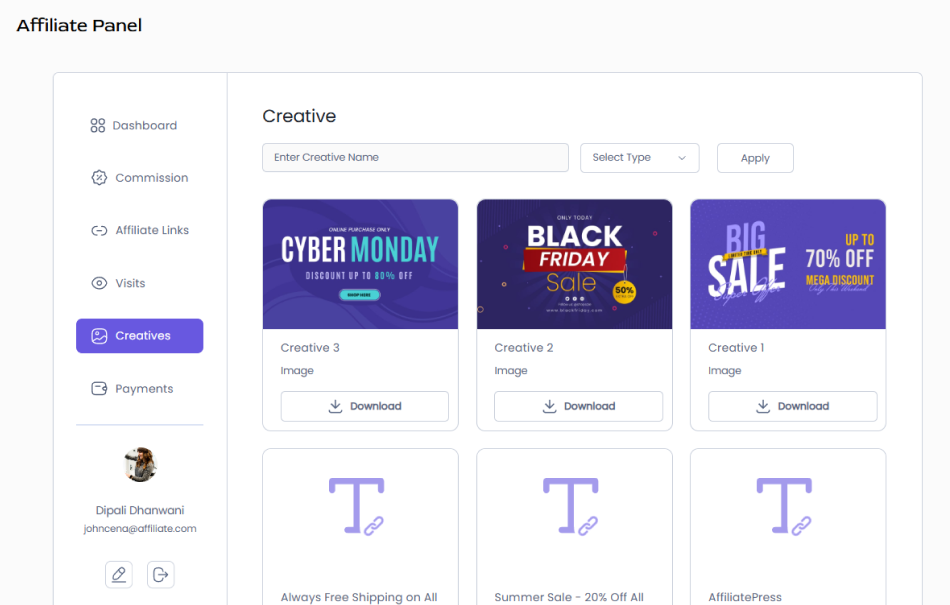
Affiliates now can access their all creative banners, text links, coupon codes, QR codes, and affiliate landing pages right from their dedicated affiliate dashboard.
You can also give affiliates different materials depending on their audience.
For example a career coach could receive messaging focused on career outcomes, and a content creator could get creative assets designed for social media promotion.
Don’t stop at providing assets, either. Tell affiliates what is currently working.
Share your best performing landing pages, seasonal promotions, new course launches, special bonuses and important product updates. Plus, you can even highlight successful promotional approaches used by your top affiliates.
This turns your affiliate program from a collection of referral links into an actual sales channel with support behind it.
And remember: your affiliates are putting their reputation behind your online course. So give them enough info to promote it accurately and confidently.
9. Create Affiliate-Exclusive Offers For Your Course
Your affiliates have already done the hard work of building an audience and earning its trust.
Now it’s your turn to give their audience a reason to take action by an offer they can’t get from every other visitor.
Affiliate-exclusive offers helps your affiliate partners create a solid reason for their audience to buy through their referral. For this, you can give your affiliates access to:
- Exclusive discount codes
- Limited time bonuses
- Free templates with enrollment
- Bonus lessons
- Extended course access
- Free consultation sessions
- Special course bundles
- Early access to new courses
- Launch-only pricing
For instance rather than an affiliate simply saying:
“Check out this online course.”
They can say:
“Enroll through my link this week and you’ll also get the exclusive bonus workshop.”
See the difference. The second one sounds much better, and persuasive to act.
Besides, you can make different offers for different campaigns. A creator launching a YouTube video might have a unique coupon code, and an affiliate hosting a webinar could offer a bonus lesson to everyone who enrolls through their link.
For all of these, using WordPress affiliate plugins like AffiliatePress can turn out to be way more useful. You can use affiliate tracking and coupon based promotions to connect these offers back to each and every of your affiliates. This makes it easier to see which partners and promotions are actually generating course sales.
Just make sure the offer doesn’t become a race to discount your course as the goal isn’t to train your audience to wait for a lower price, but to use exclusive bonuses, added value, limited launch incentives or carefully controlled discounts to give affiliates something meaningful to promote.
10. Create Urgency Without Discounting Your Course All The Time

Urgency can encourage people to take action, but you don’t need to always lower your course price.
Thus we’d suggest you give people a genuine reason to enroll now. You can use:
- Limited-time bonuses
- Enrollment deadlines
- Live cohort start dates
- Early-bird access
- Limited seats for coaching or Q&A
- Seasonal course launches
The key is to make the deadline real. Artificial countdowns and constant “last chance” offers can quickly lower trust, and lead customers thinking like,” uh, this will come again. They always give discounts. Not a big deal.” attitude.
Create urgency around added value or availability, not endless discounts.
11. Recover People Who Almost Bought

Some potential students will reach your checkout page, consider the purchase and…..leave without completing it.
But don’t assume the sale is lost.
Use follow-up emails to remind them about the course and address the reason they may have hesitated.
On top of that, you can also review your checkout process for unnecessary steps, confusing pricing or unexpected costs that might have caused people to abandon their purchase (Looks like you gotta find out!).
12. Find And Fix Your Biggest Conversion Leak
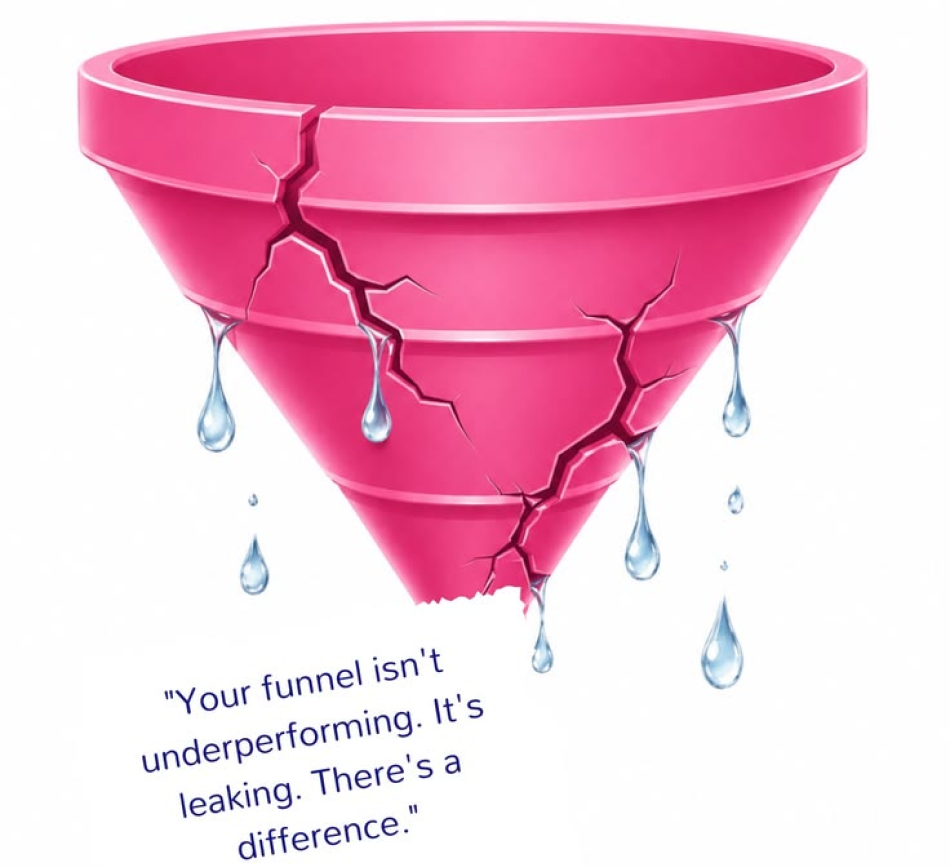
Want to know how to increase online course sales? Fix your conversion funnel. Simple.
If you’re getting traffic, leads and course page visits but sales aren’t increasing, don’t immediately assume you need more traffic.
Find where people are dropping out. Look at the journey:
Traffic → Course Page → Checkout → Purchase → Course Completion.
Then ask where the biggest gap is.
For example:
- Lots of traffic but few course page visitors → improve targeting and content.
- Course page visitors but few checkouts → improve your offer and sales page.
- Many checkouts but few purchases → simplify the checkout experience.
- Plenty of purchases but low completion → improve onboarding and course delivery.
Fixing one big conversion problem can be more valuable than adding another traffic source.
Before spending more to fill the funnel, make sure the funnel you already have isn’t leaking
In Conclusion: Increase Online Course Sales Without Spending More On Ads
To increase course sales without spending extra money on ads, you have to focus on people you already have.
One of the best and proven ways to do it is to create an online course affiliate marketing group. Simply use your past students and turn them into affiliates. Easy onboarding, 10 minute setup, and advanced features all in one system – AffiliatePress, one of the most well-known WordPress affiliate plugins in the WordPress ecosystem.
Apart from this, you can always segment your email list, ask for reviews, fix your sale page and host free events to show people what you know before you ask for a sale.
Related Articles: