


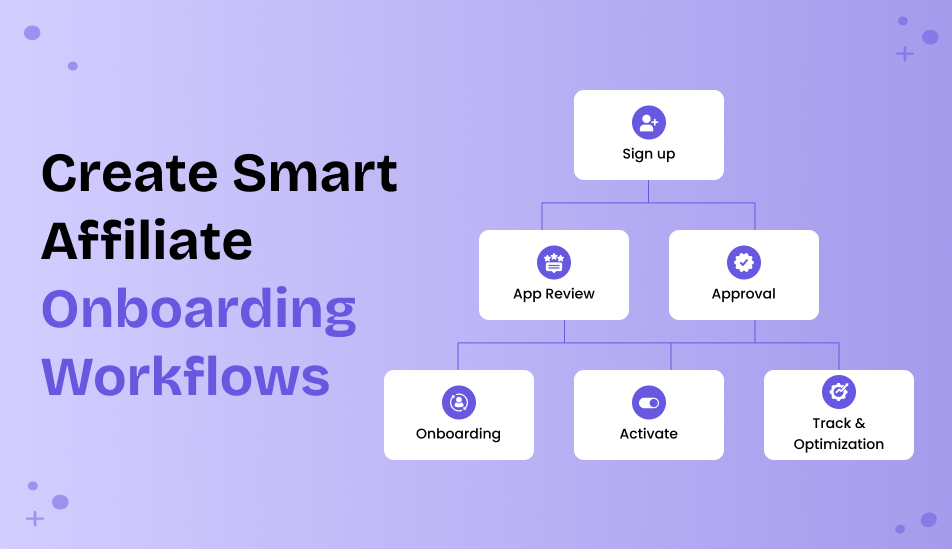
How to Create Smart Affiliate Onboarding Workflows That Actually Drive Sales

Recruiting affiliates is easy. Getting them to actually promote your business is the hard part.
We’ve seen almost all beginner-level and growing affiliate marketing programs struggle with the same issue. New affiliates sign up, grab their referral links….and then disappear without generating a single sale.
At times like this, many affiliate marketers and business owners assume they recruited the wrong affiliates. And starts looking for some high-quality affiliates.
Little did they know the problem is in their affiliate onboarding workflow, not affiliate recruitment.
Without a proper affiliate onboarding process, even highly motivated partners can lose momentum real quick. They may not understand your product, know what content to create or even where to find promotional resources. Due to this, inactive affiliates pile up over time while your affiliate program growth slows down.
Wanna solve this problem before it snowballs out of control? Introducing: Smart Affiliate Onboarding Workflows.
Affiliate programs using this smart onboarding workflow guide their affiliates from signup to first sale much more effortlessly. From welcome emails and marketing assets to performance incentives and personalized promotions, every step plays a big (or small) role in helping affiliates stay engaged and start promoting faster.
This post will show you how to create affiliate onboarding workflows that actually drive sales, boost affiliate engagement and help you build a stronger affiliate program.
TL;DR: Affiliate onboarding workflows turn new signups into active promoters by guiding them from recruitment to first sale in a smart structured step-by-step process. Done right, it lowers affiliate drop offs and drives long term sales growth.
What Are Affiliate Onboarding Workflows?

Affiliate onboarding workflow is a step by step process companies and brands use to welcome, educate and equip new partners (affiliates), so they can start promoting products and driving sales as soon as possible.
The reason you as an affiliate program or business owner have to welcome and help affiliates understand your product/s is simple:
Almost no affiliates already know what makes your product special.
Afterall, why should they? If it’s your product, no one will know it better than you. Thus it is your responsibility to give your affiliates the context of your product/s.
Now no need to go overboard and give them a whole lone sales script. Just simply explaining a few points:
- Why customers choose this product
- Examples of what successful affiliates do
- Messaging that resonates
- The problems it solves
- The pricing quirks
…. is more than enough for them to understand your product.
Think of it as an affiliate activation system.
A smart affiliate onboarding process usually includes:
- welcome emails
- affiliate dashboard access
- promotional resources
- commission details
- onboarding instructions
- performance incentives
- ongoing communication
The goal here is pretty simple: help affiliates start promoting as quickly and confidently as possible.
Why Most Affiliate Programs Struggle With Inactive Affiliates

One of the biggest misconceptions in affiliate marketing is thinking more affiliate signups automatically mean more sales.
Unfortunately, that’s rarely how things work.
For over a decade we’ve been seeing almost all growing affiliate programs recruit dozens or even hundreds of affiliates, only to discover that a huge percentage of them never generate a single conversion.
Do you know some affiliates never even share their referral links once? And the reason for this happening? Businesses mostly focus only on affiliate recruitment but completely overlook affiliate activation.
The reality is, most affiliates need guidance before they become active promoters. They need:
- Clarity.
- Direction.
- Promotional resources.
- Motivation.
- Easy-to-use tools.
In some cases, the onboarding experience itself creates the problem. Long signup forms, delayed approvals, confusing dashboards, poor communication or missing promotional assets can discourage affiliates almost immediately.
Even highly motivated creators can struggle if they don’t know:
- What audience converts best
- What type of content to create
- How payouts work
- Where to access banners or coupon codes
This is where many affiliate programs unintentionally create “dead affiliates” inside their system.
The good news? Most of these problems are fixable.
Businesses that create structured affiliate onboarding workflows usually see faster affiliate activation, better engagement and more promotions alongside stronger long term affiliate relationships
So stop treating affiliate onboarding as a one time setup step, while all successful businesses making real sales treat their onboarding workflow as an important part of their ongoing affiliate growth strategy.
And that’s where the affiliate activation funnel becomes important.
The Affiliate Activation Funnel Behind High-Converting Affiliate Programs
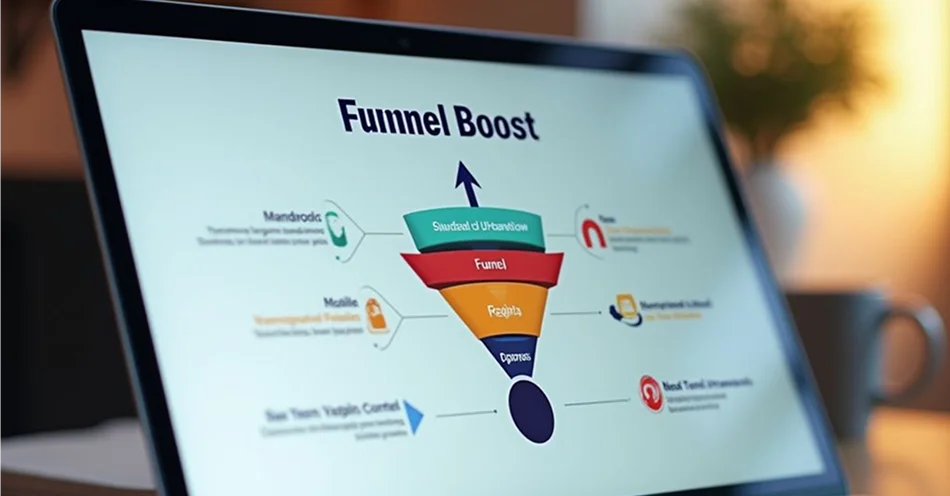
High converting affiliate programs rarely rely on luck.
Behind most successful affiliate programs is a structured system that guides affiliates from signup to long-term promotion. Want to know how a typical affiliate activation funnel looks like? Here you go:
Affiliate Recruitment → Affiliate Onboarding → Affiliate Activation → First Affiliate Sale → Long Term Affiliate Retention
Each stage shown inside plays a much important role in turning new signups into high performing affiliates. Let’s break it down.
Stage 1: Affiliate Recruitment
The first and most important stage for any affiliate program manager is to recruit high-quality affiliates, whether they be creators, bloggers, influencers, educators, and niche marketers into their affiliate program.
But this does not stop here. Effective affiliate recruitment means you have to attract affiliates who are ACTUALLY aligned with your product and audience; don’t just go out and pick anyone.
Stage 2: Affiliate Onboarding
After affiliates join in, onboarding starts right away.
You gotta make affiliates understand how everything works, write a formal welcome email, so they can start promoting your products. A smooth and smart affiliate onboarding process helps affiliates:
- Understand your products.
- Access their affiliate dashboard.
- Learn commission structures.
- Understand tracking and reporting.
- Find promotional resources.
Stage 3: Affiliate Activation
An affiliate may sign up successfully but still remain inactive. Why? Because the activation process can have friction, and honestly speaking – no one likes a process that takes hours or even a day.
That’s why activation should focus on lowering friction and helping affiliates take their first promotional step as soon as possible.
Programs improve activation by providing affiliates with:
- Ready-to-use creatives.
- Coupon codes.
- Personalized landing pages.
- QR-based promotions.
- Instant access to marketing resources.
The good news is you can (again) use WordPress affiliate plugins like AffiliatePress that lets you offer unlimited creatives like banners, text links, as well as Coupon Codes, QR codes, affiliate landing page and a dedicated affiliate dashboard too.
Stage 4: First Affiliate Sale
The first affiliate sale is a key milestone in the journey.
The moment your affiliates achieve their first conversion, their motivation and confidence goes to cloud nine, making them more likely to continue promoting consistently.
To encourage this moment, many businesses introduce early-stage incentives such as:
- Signup bonuses.
- Performance rewards.
- Tiered commission structures.
- Milestone-based bonuses.
These are all the motivator booster for affiliates we could find, and will discuss more in the upcoming section that help affiliates stay active even during the important early phase.
Stage 5: Long Term Affiliate Retention
Successful affiliate programs never stop at activation or first sale.
They focus on creating long term relationships that keep affiliates engaged and consistently promoting. For long term affiliate retention, you can use:
- Recurring or lifetime commissions.
- Regular communication and updates.
- Performance tracking dashboards.
- Ongoing rewards and incentives.
Thus far, this creates better affiliate relationships and a more predictable revenue stream for the business, leading to a win-win situation for both sides involved.
Now that you understand how the affiliate activation funnel works, let’s look at how to build affiliate onboarding workflows that actually drive sales.
How To Create Affiliate Onboarding Workflows That Drive Sales
If the funnel is the strategy, the onboarding workflow is the execution.
Over 99% of affiliate programs we’ve seen never failed because of bad recruitment, but because new affiliates are left alone right after signup. No direction, no assets, no clarity on what to do next.
Across digital and SaaS products, nearly 68% of partners (affiliates) churn due to poor, confusing or nonexistent onboarding experiences.
A strong onboarding workflow fixes that by turning “new signups” into “first time promoters” ASAP (As soon as possible)
Thus here’s how to build affiliate onboarding workflows that actually drive sales.
Step 1: Build a Smooth Affiliate Signup Process

This is where the journey either starts perfectly…or crumbles right away.
A high converting onboarding workflow starts even before onboarding even begins – at signup page. As we discussed earlier this is the first stage of affiliate funnel so let’s make it perfect.
At this stage, you must focus on:
- Keeping the registration process simple and fast
- Avoiding unnecessary fields that delay entry
- Setting clear expectations upfront (what they get + what is expected)
- Ensuring instant or near-instant approval where possible
The goal is to lower friction so affiliates don’t lose momentum before they even join. And to fix it, your affiliate solution is AffiliatePress.
This is one of the most reliable WordPress affiliate plugins that we can personally vouch for. Wondering why I’m so confident? Because this plugin ensures your affiliates onboard smoothly using custom signup form and automated approval system inside, so affiliates don’t feel stuck waiting.
Step 2: Send Instant Welcome Emails And Onboarding Instructions
The first 10 minutes after signup are more important than you think.
This is where most affiliate programs either build momentum or lose attention completely. A perfect welcome flow should immediately:
- Confirm approval and access details
- Share login instructions for the affiliate dashboard
- Set expectations for first steps
- Point them to key resources
Keep it short, clear and action driven. Never overwhelm affiliates with everything at once. Guide them toward one goal:
“Get your first link and explore your dashboard.”
This single direction improves activation dramatically.
Step 3: Give Affiliates Ready-To-Go Marketing Assets
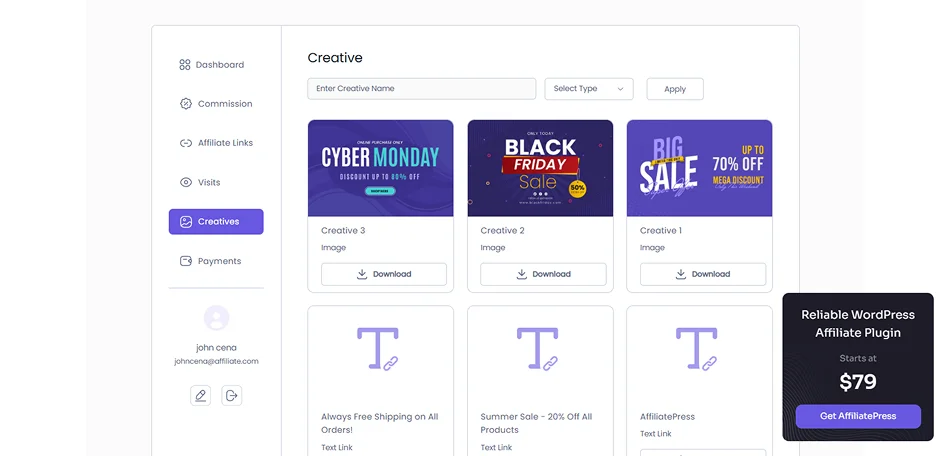
Affiliates join the affiliate program because they are already confident they can bring in the sales. So, the only thing they are struggling with is execution clarity.
If they don’t know what to post, they won’t post anything.
That’s why your onboarding workflow must include a ready to use asset library such as:
- Banner creatives for websites and blogs.
- Pre-written social media captions.
- Email swipe copy.
- Product positioning snippets.
- Coupon codes or deal based creatives.
The easier you make it to promote, the faster affiliates start driving traffic and sales. And as we discussed before, if you are using AffiliatePress, you can offer your affiliates endless creatives, coupon codes, and unique QR codes.
Step 4: Help Affiliates Reach Their First Sale Faster

This is the most important step in the entire affiliate onboarding lifecycle.. why? Right after an affiliate gets their first sale, everything changes for good- their confidence level, motivation and consistency.
Your affiliate onboarding workflow should actively guide them toward that moment by:
- Suggesting “first promotion ideas” based on their niche.
- Highlighting best-performing landing pages.
- Offering limited-time bonuses for first conversions.
- Sharing simple “copy-paste” promotion formats.
As said before, the idea is not to overwhelm them with strategy but to get them to act right away.
Step 5: Use Personalized Promotions To Increase Conversions

Not every affiliate promotes the same way. And you as an affiliate program manager should know it by now. Some are bloggers, some are influencers, some rely on email lists or paid ads.
A smart onboarding workflow starts by…
- Segmenting affiliates based on traffic type or niche
- Sending tailored promotional suggestions
- Offering niche specific creatives
- Highlighting relevant use cases or audiences
This is where affiliate management becomes less “broadcasting” and more “guidance.”
The more relevant your suggestions are, the faster affiliates convert their audience.
Step 6: Keep Affiliates Engaged Long-Term
Onboarding doesn’t end after the first sale. In fact, that’s where real growth begins.
The goal here is consistency, not just activation. So, to keep affiliates engaged, your workflow should include:
- Regular performance updates (what’s working, what’s not)
- Monthly or weekly promotional updates.
- New campaign announcements or seasonal offers.
- Reward systems for consistent performance.
- Clear visibility into earnings and growth.
This is what transforms affiliates from “one time promoters” into long-term partners. You can also track your complete affiliate program from AffiliatePress’s centralized dashboard.
Expert Insight: A high performing affiliate onboarding workflow is not a checklist. It’s a guided experience.
Final Thoughts On Building Better Affiliate Onboarding Workflows
An effective affiliate onboarding workflow is the bridge that fills the gap between affiliate signup and long term revenue generation. Thus far, what it takes for building an smart affiliate onboarding workflow.
Anyone can create an affiliate onboarding workflow, but building a SMART affiliate onboarding workflow changes the experience. So if you are truly serious about creating your own scalable and partner-friendly affiliate system, consider the key points below:
- Shift from “Manual” to “Automated”.
- Automate affiliate payouts.
- Offer custom signup forms.
- Create flexible commission structures using AffiliatePress.
- Centralized affiliate portal for housing all creatives, links and real time tracking.
- Celebrate milestones with tiered-based commission or performance bonus.
- Measure “Time to First Action”
Remember every step in your affiliate boarding workflow should be clear. And if you’re planning to create your own partner-friendly affiliate program, AffiliatePress can help you.
Integrating with over 25+ WordPress plugins, this plugin tracks affiliate sales in real time, manages multiple commissions and automates payouts.
So what are you waiting for? Create an affiliate onboarding experience your partners will actually love with AffiliatePress.
Related articles:
- Top 7 Reasons to Choose AffiliatePress Over Other Affiliate Plugins
- How to Use AffiliatePress Analytics for Smarter Decisions?
- How AffiliatePress Affiliate Plugin Boost Business Sales
FAQ
For onboarding affiliates, you can start by having a custom signup form that only asks what is needed and looks professional. The next thing to ensure a smooth affiliate onboarding is to send welcome email right away, followed by tips and tutorials. At last, equip them with approved brand assets and ensure they understand your product.
Here’s how to onboard new affiliates:
– First, create a custom yet simple signup form
– Next use a WordPress affiliate plugin to automate the registration and approval process so affiliate can get started without waiting
– Make sure to set automated welcome emails including guides and tips
– Now it’s time to equip them with creative assets and offer them a dedicated affiliate panel
– At last, you have to make sure to track everything accurately from AffiliatePress centralized dashboard
Here are the 5 stages of the affiliate onboarding process:
– Stage 1: Affiliate recruitment
– Stage 2: Welcome email and program overview
– Stage 3: Affiliate activation by giving ready to go brand creatives
– Stage 4: Training & Support
– Stage 5: Activation & Feedback
An onboarding workflow is a structured, mostly automated, sequence of steps used to get new affiliates, clients or users into a program or platform.