





Managing affiliates sounds simple when you have 10 partners in your program.
You know who is promoting, who needs help, and where your affiliate revenue is coming from. A quick email or message is more than enough to keep things moving.
But…things change when your affiliate program starts growing. And suddenly, you are dealing with dozens or even hundreds of affiliates.
So what happens now? Questions pile up, performance becomes harder to track and it gets increasingly difficult to give every partner the attention they need. What worked for 10 affiliates never works for 100.
The good news for you is that successful affiliate management was never about working harder. Building systems that help affiliates succeed without creating more work for you is how smart affiliate managers operate (And you can too).
In this guide, we’ll look at how to manage affiliates efficiently, no matter whether they are 100 or 10,000. You’ll also learn:
- Which processes should be automated
- What metrics actually matter
- How to scale your affiliate program without sacrificing growth
So let’s jump in!
TL;DR: If you are also thinking, “How to manage affiliates at scale?”, then you simply need to combine automation, affiliate segmentation, and focused partner management using tools like AffiliatePress. This way you can support more than hundreds of affiliates without increasing your workload.
Why Managing Affiliates Gets Harder As Your Program Grows

Managing an affiliate program gets way harder as it grows because it turns from cozy, one-on-one partnership into a chaotic number game.
When more than 100 of new affiliates join in, you quickly realize that herding cats is easier than aligning varied types of affiliates, tracking data accurately and keeping every affiliate motivated.
Growing an affiliate marketing program introduces multiple specific bottlenecks such as:
The 80/20 Rule Chaos
If you’ve been in affiliate marketing for some time, you must have heard of the 80/20 affiliate marketing rule. Well, if you didn’t, then allow us to do the honor:
In most affiliate programs, 80% of your sales comes from just 20% of your affiliates.
Thus as your headcount grows, you have to spend more time managing the remaining 80% of affiliates who generate little-to-no traffic and drain resources away from your top earners.
Quality Control And Brand Risk
More affiliates means less control.
Since you didn’t approved nor were able to personally communicate with each and each affiliates, chances are that some new partners might try to use spammy marketing tactics, outdated pricing or unauthorized discounts just to get clicks,
Let’s say even if someone buys through these spammy ways, and later has issues. That’s only gonna damage your brand’s reputation.
Support And Onboarding Overload
Those over hundreds of affiliates sure are going to have endless questions. Whether it be about tracking links, payout timelines or marketing assets.
Thus if you were unable to manage affiliates properly, your inbox gets swamped; leaving you reacting to complaints rather than proactively growing your affiliate marketing program.
Payout Nightmares
Accurately attributing exactly who drove a sale becomes a nightmare.
Even if you think you have everything under control, disputes inevitably arise, especially when multiple affiliates claim the same lead.
This just eats up your time and risks payment trust.
We have seen many affiliate programs facing the same situations. They never counted measures nor even though their affiliate program will have hundreds of affiliates. Thus when that happened, they panicked – inaccurate tracking, missed payouts, deadlines stretched and commissions lost. The result ? Some of them lost more than commissions – their top affiliates who used to bring thousands of sales every month.
At a certain point, managing affiliates efficiently becomes less about working harder and more about building a scalable affiliate system.
That’s exactly what we’ll cover next. Let’s look at practical strategies that help you manage affiliates efficiently without sacrificing growth.
How To Manage Affiliates Efficiently Without Sacrificing Growth
As your affiliate program grows, adding more affiliates is rarely the problem; managing them efficiently is.
Many affiliate managers fall into the trap of trying to do everything manually. They answer every question individually, track every affiliate personally and spend hours reviewing performance reports.
That approach may work when your program was small(under 100 affiliates), but now it’s not (Of course, otherwise you wouldn’t be reading this till here)
The most successful affiliate programs rely on systems, automation and smart prioritization.
Here are the strategies that make that possible.
Start With Affiliate Segmentation

One of the biggest affiliate management mistakes is treating all affiliates the same.
Not because it’s inefficient. But because it makes you spend time in the wrong places.
As your affiliate marketing program grows, you’ll quickly discover that affiliates contribute value in very different ways. Some drive consistent revenue every month. Some are just getting started but show strong potential. Others join your program and never become active.
This is why affiliate segmentation should be one of the first systems you build.
If you’re one of those affiliate managers who organize affiliates by signup date or activity level, then stop!
Segment all your affiliates based on business value. Such as:
- Revenue driving affiliates.
- Growth potential affiliates.
- New affiliates.
- Inactive affiliates
The first group deserves the majority of your attention because they are already generating results.
The second group is where future growth mostly comes from.
Many affiliate managers focus only on their current top performers. Smart affiliate managers also invest time in affiliates who are steadily growing their audience and influence.
A blogger generating a handful of sales today could become one of your top affiliates next year. And segmentation is exactly what helps you identify where revenue is coming from today and where it is likely to come from tomorrow.
Create An Automated Affiliate Onboarding System

Every affiliate joins your affiliate program with a certain level of motivation. And that’s for sure.
Thus the only problem is that motivation fades quickly when affiliates don’t know what to do next.
Many affiliate managers simply just assume affiliates will figure things out on their own. Yet in reality, most new partners need direction.
That’s exactly why an automated onboarding system is one of the highest leverage investments you can make.
A smooth affiliate onboarding process should answer questions such as:
- What products should I promote?
- What content converts best?
- Where can I find marketing assets?
- How do commissions work?
- What do successful affiliates do differently?
The faster affiliates reach their first referral or commission, the more likely they are to stay engaged.
Remember, the goal isn’t simply onboarding affiliates, but to activate them.
For this, you can use tools like AffiliatePress that allows you to not only create and launch a complete affiliate program with zero coding, but also offers your affiliates a smooth onboarding via custom signup form. You can even set automatic email notification with custom messages to add a touch of personalization.
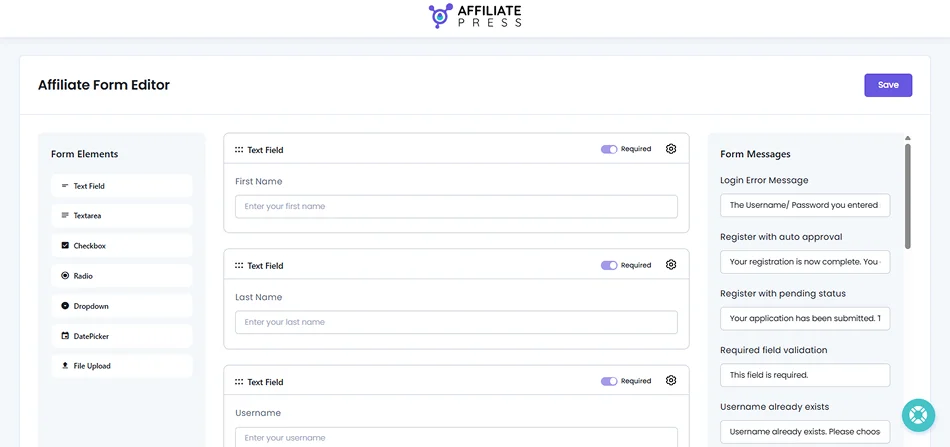
In the end, there is a big difference between having 500 registered affiliates and having 500 affiliates who are actively promoting your products
Centralize Affiliate Resources

If affiliates always need to contact you before they can promote your products, your program won’t grow efficiently, nonetheless to say effortlessly.
Thus the easiest way to lower friction is by creating a centralized affiliate resource hub.
Think about the questions affiliates ask most often:
- Where can I get banners?
- Do you have email templates?
- Which products convert best?
- Are there promotional guidelines?
- What should I say about the product?
Rather than answering these questions individually, make the answers easy to find. A resource hub can include:
- Marketing creatives
- Product information
- Brand guidelines
- Frequently asked questions
- Promotional examples
- Conversion tips
The easier it is for affiliates to create content and launch campaigns, the more likely they are to promote better with consistency.
The good news? Centralizing affiliate creatives, coupon codes, and referral links is automated thanks to tools like AffiliatePress. This WordPress affiliate plugin lets you offer each of your affiliates a dedicated affiliate panel where they can access all your brand creatives, referral links and even track their earnings and performance for building trust.
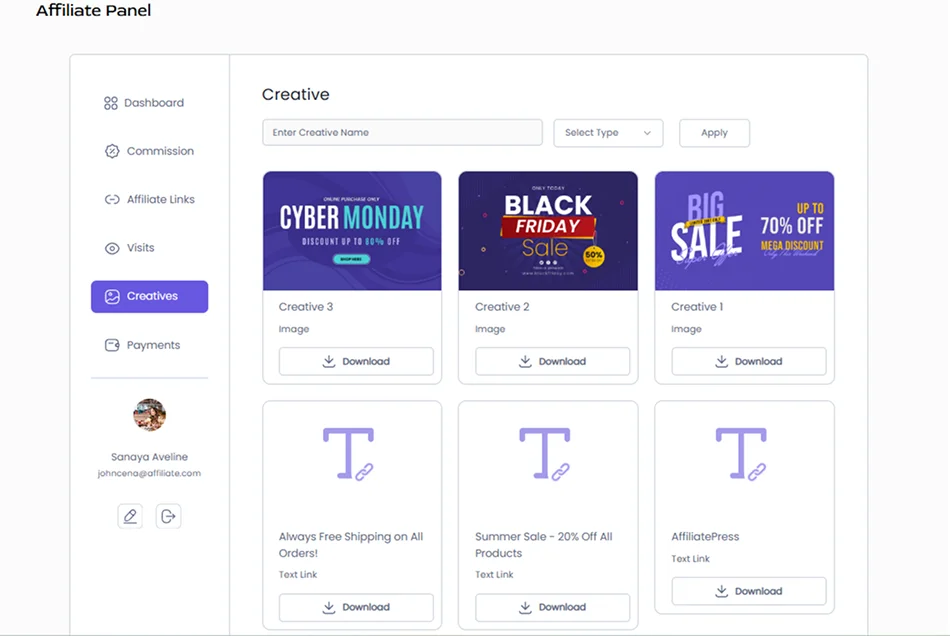
After all, successful affiliate management is less about motivation and more about removing obstacles.
Prioritize Your Time When Managing Affiliates

As your affiliate marketing program grows, your time becomes your most limited resource.
You cannot personally support every affiliate at the same level. Nor should you.
One of the biggest mindset shifts in affiliate management is realizing that equal attention does not produce equal results.
Your highest performing affiliates mostly generate a disproportionate share of revenue. At the same time, future top affiliates may be hiding among smaller partners who are also consistently growing.
This means your time should be spent on activities that directly influence revenue growth. You can spend your time on:
- Supporting top performing affiliates.
- Identifying emerging affiliates.
- Improving promotional assets.
- Solving conversion bottlenecks.
- Recruiting strategic partners.
The objective is simple: spend more time on activities that increase affiliate-generated revenue.
Make Data-Driven Management Decisions

Many affiliate managers spend too much time tracking affiliates, but not enough time tracking revenue sources.
Affiliate counts, registration numbers and email engagement can be useful. But they rarely tell you where growth is actually coming from.
Thus you must step up and focus on questions like:
- Which affiliates generate the most revenue?
- Which traffic sources convert best?
- Which content formats drive sales?
- Which promotions always perform?
- Which affiliates are gaining momentum?
For example:
- If review articles generate most of your affiliate revenue (with a conversion rate of 1.5% to 5%), your next step is obvious: Help affiliates create more review content.
- If comparison pages convert best: Offer resources that make building comparison content easier such as data or cheat sheets.
- If resource or “tools” pages are your top referrers: Reach out directly to those affiliates and negotiate a slightly higher commission tier or a temporary promo code.
- If email newsletters account for the bulk of commissions: Your affiliates need pre-written email swipe files and high converting subject lines so they can simply plug and play.
- If video tutorials drive the most sign ups: Create a “b-roll library,” offer a master list of talking points. Or even a free video editing template can do.
You have to understand what drives revenue and then help affiliates do more of it. And that’s where affiliate management becomes a growth engine rather than just another admin task that even AI do these days.
Track The Right Affiliate Metrics For Better Decisions

If your affiliate program crosses hundreds of affiliates, now it’s time to move beyond clicks and total revenue metrics.
After all, it’s not like all affiliate metrics deserve equal attention.
We’ve met many affiliate managers who spend too much time looking at vanity metrics such as total affiliate signups, email open rates or the number of affiliates in the program.
Although those numbers can be useful, they rarely tell you how healthy your affiliate program actually is. Thus we suggest you focus on metrics that help you make better business decisions.
Some of the most valuable affiliate metrics are:
- Revenue generated per affiliate.
- Conversion rates.
- Earnings per click (EPC)
- Revenue by traffic source.
- Revenue by content type.
- Active vs inactive affiliates.
- Revenue concentration.
For example, if affiliates publishing comparison articles most-of-the-time outperform affiliates creating general product reviews, that’s a valuable insight.
Likewise, if one traffic source generates noticeably higher conversion rates than others, you may want to offer more resources tailored to that channel.
Expert Insights: The motive behind tracking all these metrics isn’t just for the sake of collecting more reports. You must understand what’s driving affiliate revenue so you can double down on what works.
One important lesson many affiliate managers learn over time is that future top affiliates mostly show signs of growth before they show significant revenue.
Consistent traffic growth, regular content publishing and increasing engagement can all indicate an affiliate worth paying attention to.
Reward Performance With Commission Tiers
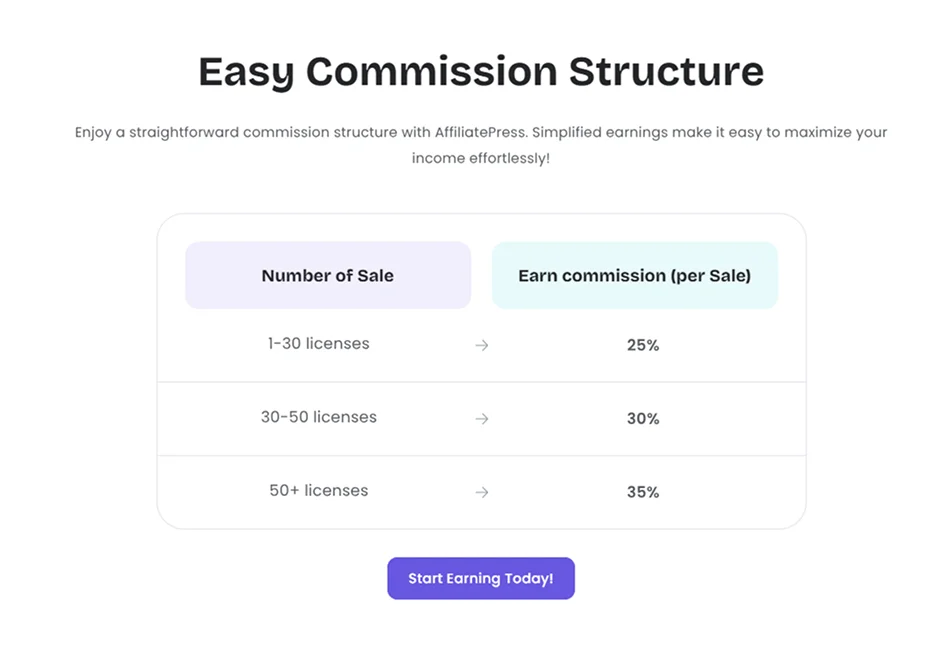
If you really want to manage affiliates – all of them – then stop offering all of them the same commission structure forever.
Almost every new affiliate program (Sometimes even growing ones) always goes with a flat commission rate. Just because it is easy to manage, doesn’t mean it’s efficient.
Afterall, there wouldn’t be multiple types of commission structure if just flat or percentage models were enough for surviving. Both of these basic commission models give affiliates very little incentive to increase their promotional efforts.
Top performing affiliates want something to work toward. And this is where performance-based or tiered-based commission tiers can be extremely effective.
A simple structure might look like:
- Starter Tier = 20%
- Growth Tier = 30%
- Partner Tier = 40%
- Strategic Partner Tier = Custom
As affiliates generate more sales, commissions, bonuses or exclusive perks can increase. The exact percentages matter less than the progression itself.
Affiliates like seeing a clear path to higher earnings. And you can show it to them by creating multiple smart commission structures using AffiliatePress.
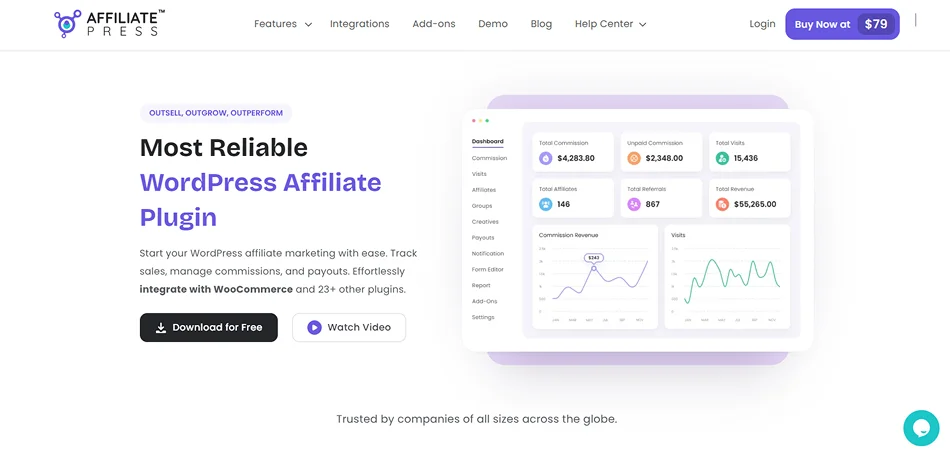
AffiliatePress is one of the most reliable WordPress affiliate plugins we’d vouch for. If you are planning to start your own affiliate program (or looking to migrate from another affiliate system that stops your growth), this plugin gives you complete control over your affiliate program.
You can create multiple flexible commission structures like:
- Product-wise commission model
- Group-wise commission model
- Lifetime commission model
- Recurring commission model
- Tiered-based commission model
- Multi-level affiliate commission model
Gamification works surprisingly well. Thus AffiliatePress lets you offer performance bonuses, and show affiliate leaderboards to create a sense of friendly competition.
In many cases, a well designed commission structure can generate more revenue than recruiting 100 of new affiliates.
Invest In Emerging Affiliate Partners

Most affiliate managers spend their time chasing established affiliates. And the problem? Every competitor is doing the same thing.
That’s why all senior affiliate managers spend time paying attention to:
- Growing blogs.
- Emerging YouTube channels.
- Expanding newsletters.
- Niche communities.
- Industry creators with increasing reach.
A creator doing $500/month today may do $50,000/month in two years. If you help them early, loyalty tends to be much stronger.
However, this doesn’t mean ignoring your current top performers. It means balancing today’s revenue with tomorrow’s growth opportunities.
The successful affiliate programs don’t simply identify successful affiliates. They identify future successful affiliates.
Treat Affiliate Recruitment As An Ongoing Process

Many businesses approach affiliate recruitment like a campaign. They recruit non-stop for a few weeks, onboard 100’s of affiliates, and then stop looking for new partners.
That’s a mistake.
Affiliate recruitment should be continuous. Just like sales pipelines need new leads, affiliate programs also need a steady flow of potential affiliate partners entering the ecosystem – always.
Every week, look for:
- New content creators.
- Industry bloggers.
- Review websites.
- Newsletter publishers.
- Niche influencers.
- Agencies serving your target audience.
Not every outreach effort will lead to a partnership. But consistent recruitment makes sure your affiliate program keeps growing and lowers dependence on a small group of affiliates.
The studies show affiliate programs that scale most successfully are usually recruiting all year long.
Avoid Overreliance On Top Affiliates

Top affiliates are valuable. Yet overreliance on them is dangerous.
Simply ask yourself:
“What percentage of affiliate revenue comes from the top 3 affiliates?”
If the answer is:
- 20% → Healthy
- 40% → Watch closely
- 60%+ → Dangerous
We’ve seen affiliate programs lose half their affiliate revenue because one superstar affiliate switched competitors.
In other words, if a large portion of your affiliate revenue depends on only a few partners, your business becomes vulnerable to factors outside your control. Why? Because affiliates may:
- Promote competitors.
- Change business models.
- Lose search rankings.
- Shift content strategies.
- Leave the industry entirely.
This is known as revenue concentration risk.
The healthiest affiliate programs have both star performers and depth.
Final Thoughts: Manage More Affiliates Without Creating More Work
Managing affiliates, whether you have 100 partners or 10,000, becomes much easier when the right systems are in place.
These days, smart affiliate managers and business owners are focusing on smart work, not hard. So you should as well switch from hands-on coordination to automated affiliate systems like AffiliatePress.
Focus your energy on smart automation, creating trending brand creatives and affiliate segmentation.
However, if you are still wondering how to manage affiliate effortlessly whiling keeping that same personalization, we’d recommend letting system handle the new and growing affiliates (80% of your total affiliates), while you focus and maintain personal affiliate communication with the rest 20% of top performing affiliates.
With the right systems, tools and strategies, you can grow your affiliate marketing program confidently while keeping affiliate management efficient and partner relationships strong.
Related articles: