



Affiliate Marketing for Online Course Platforms: Complete Guide


Selling online courses is easy until you realize getting consistent traffic is the real challenge.
Ads get expensive. SEO takes time. And relying completely on social media algorithms is unpredictable at best.
We’ve all been there. And that’s when we started exploring affiliate marketing.
Affiliate marketing for online course platforms lets online course creators build a network of promoters who earn commissions for every sale they generate. Done right, it actively drives enrollments for you, while you focus on improving your online course and delivering real value to your students.
In this guide, you’ll understand exactly how affiliate marketing works for online courses, why it performs so well, and how to set up a money-making affiliate system step by step.
Here’s how it goes.
TL;DR: Affiliate marketing for online course platforms lets you grow your online course sales by letting affiliates promote it in exchange for commissions. You can easily structure commissions, set up tracking, onboard affiliates, and make a profitable course affiliate program using tools like AffiliatePress.
What Is Affiliate Marketing for Online Course Platforms?

Affiliate marketing for online course platforms is a performance based marketing strategy where you reward individuals (affiliates) for selling your online courses.
Each and every affiliate earns a commission when any student or purchases a course through their unique tracking link.
Affiliates can be bloggers, influencers or even your former students. They sign up to promote your online course using unique affiliate links, and if someone enrolls in via that link, the affiliate gets commission.
In simple words, it turns your online course platform into a full-power revenue system powered by affiliate partners who actively bring in new students.
Why Affiliate Marketing Works So Well for Online Course Businesses

Why Affiliate Marketing Works So Well for Online Course Businesses
Affiliate marketing exceptionally works well for online course businesses as it offers:
- Low risk
- High reward
- Performance-based model
What makes it different from paid advertising is real results. You as an online course creator only pay for real conversions (sales). As for affiliates, they get to earn a small amount of commission for driving that sale.
Here’s how the affiliate marketing process works for online course creators:
Step 1: Course Is Created and Published
The online course is built and made available on your platform or LMS
Step 2: Affiliate Program is Activated
You set up an affiliate program where creators, influencers, students or partners can join and promote your course
Step 3: Unique Tracking Links are Assigned
Each affiliate receives a unique referral link that accurately tracks clicks, leads, and course sales..
Step 4: Affiliate Drives Traffic (Content, Email, Social)
Affiliates promote your course using blogs, YouTube videos, email campaigns, social media content, communities, or reviews
Step 5: Conversion is Tracked and Commission Is Paid
When someone buys via that affiliate referral link, the affiliate system tracks the conversion and automatically assigns the commission
For accurate commission and referral tracking in real time, AffiliatePress is the best. This WordPress affiliate plugin gets your affiliate program launched and running in just a few minutes, even for beginners.
How to Set Up Affiliate Marketing for Your Online Course (Professional Framework)
1. Define Commission Architecture (Business Logic Layer)
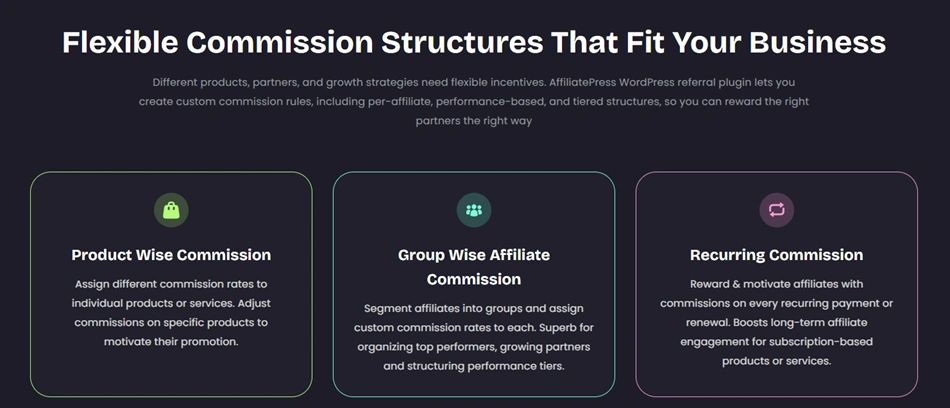
Before launching an affiliate program online courses, you first gotta decide how commissions will actually work inside your online course business.
This is the business logic layer behind your online course affiliate marketing program. It sets who earns, how much they earn, when payouts happen and what actions qualify for commissions.
A poorly planned commission structure can quickly drop your profits or attract low quality affiliates. On the other hand, a well designed commission structure motivates affiliates while keeping your online course business growing.
Thus here are the key things to define:
Choose Your Commission Type
Most online course affiliate programs use one of these models:
- Percentage based commission
- Example: Affiliates earn 20% from every course sale.
- Fixed rate commission
- Example: Affiliates earn $30 for each enrollment.
Percentage commissions are more common for online courses because they grow naturally with pricing.
Set Default Commission Rates
You’ve to decide the standard payout affiliates will get across your online courses. Many online course businesses mostly offer:
10% to 30% for low ticket courses.
Higher commissions for premium or subscription based programs.
Your pricing, profit margins and customer lifetime value are the only factors that should guide this decision.
Create Flexible Commission Rules

Not every online course needs the same commission structure.
You can:
- Offer higher commissions for flagship courses.
- Less commissions on discounted products.
- Run limited time affiliate bonuses during launches.
- Reward top performing affiliates with custom rates.
Worth noting, AffiliatePress lets you create flexible commission structures such as recurring, tiered-based, lifetime, product-wise, group-wise, and multi-level affiliate commission models.
Decide Cookie Duration
Cookie duration sets how long an affiliate gets credit after someone clicks their referral link. You can set your cookie duration as:
- 30 days
- 60 days
- 90 days
Longer cookie windows are more attractive to affiliates for higher priced online courses where buyers take longer to decide.
Decide When Commissions Are Approved
You should also think about when affiliate earnings become eligible for payout.
We’ve seen most online course creators add:
- Refund waiting periods.
- Manual approval checks.
- Fraud prevention reviews.
This protects your business from invalid or refunded sales. Just to let you know, AffiliatePress comes with a refund protection that delays the commission approvals until the refund window closes.
Think Beyond “Just Commissions”

The best online course affiliate programs are designed as long term partnership systems. That’s why when it comes to top performing affiliates, you have to make them stay active by providing:
- Transparent tracking.
- Reliable payouts.
- Promotional assets.
- Performance rewards.
- Better affiliate communication.
Don’t forget your commission structure shapes the complete affiliate experience. So, if you ever plan to create your own affiliate program, look for a WordPress affiliate plugin like AffiliatePress that lets you create multiple smart commission structures.
2. Build Affiliate Program Infrastructure (System Layer)
After your commission structure is ready, the next is creating the actual affiliate program infrastructure.
This is the system layer that manages affiliate registrations, affiliate dashboards, referral links, payouts, tracking and integrations with your online course platform.
In short, you can say this is far most the most-important step for setting up a successful affiliate marketing program for your online course.
And this is exactly why many course creators use dedicated affiliate management plugins like AffiliatePress to automate the complete process right inside their WordPress.
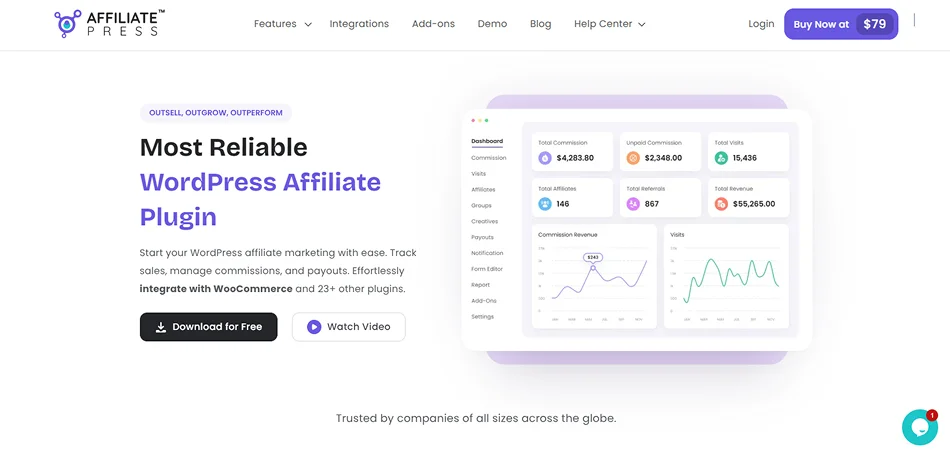
AffiliatePress is the most reliable WordPress affiliate plugin for online course platforms, integrating with over 25+ WordPress plugins including multiple LMS, membership tools, WooCommerce, etc.
Because when you sell courses using platforms like WooCommerce, LearnDash, LifterLMS, or membership plugins, choosing a system with native integrations becomes extremely important.
From smooth affiliate onboarding via custom signup form to managing affiliates, commissions and automating payouts, this WordPress affiliate plugin handles all with full precision.
Furthermore, the reason we recommend AffiliatePress for creating your online course affiliate marketing program is its rich feature set that includes:
- Smart fraud detection
- Multiple smart commission structure
- Real time commission tracking
- Powerful affiliate panel
- Unlimited creatives
- 1-click or automating payouts
- Easy affiliate management
And a lot more!
The goal is simple: create a smooth experience for both you and your affiliates with zero confusion.
3. Configure Tracking and Attribution (Technical Layer)

As we discussed earlier, tracking is the backbone of affiliate marketing for online course platforms.
If clicks, referrals or conversions are not tracked properly, affiliates lose trust and your complete affiliate system becomes unreliable.
This is why the technical layer matters just as much as the marketing strategy itself.
At this stage, your goal is to make sure every single affiliate referral is accurately assigned from the first click to the final course sale.
Using reliable tools like AffiliatePress, each one of your affiliates get a unique referral link, coupon code and QR code connected to their account.
So, when a visitor clicks that link or uses the coupon, the system stores tracking information in real time using:
- Browser cookies
- URL parameters
- Session tracking
The best way to settle with this technical layer without diving into too much technical stuff is by giving your affiliates their own dedicated affiliate dashboard where they can track all their earning, performance and access all your brand assets.
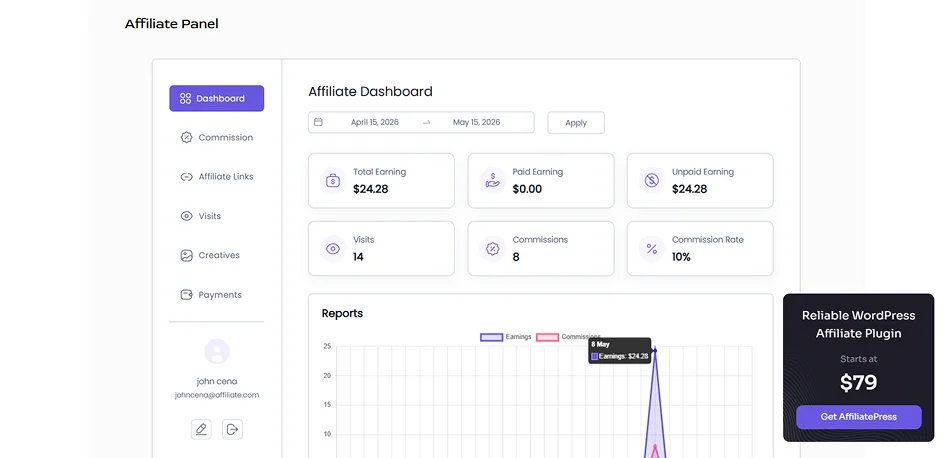
This gives both you and your affiliates transparent reporting and reliable performance data.
4. Design Affiliate Enablement System (Activation Layer)
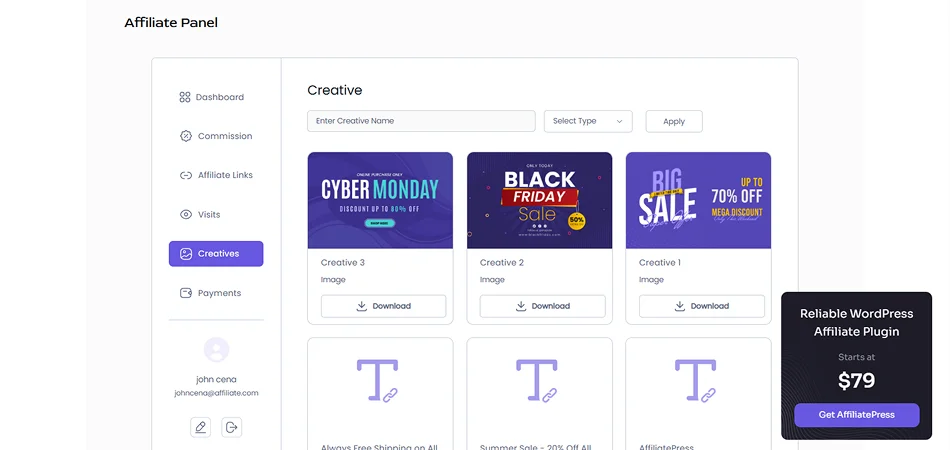
Even the best affiliate program can fail if affiliates do not know how to promote your online course effectively.
That’s why the activation layer matters. Its goal is simple. Help affiliates start promoting faster and generate results sooner.
The easier you make promotion, the more active your affiliates become.
Start by giving affiliates the right promotional assets, such as:
- Banners and graphics.
- Email swipe copy.
- Social media captions.
- Course descriptions.
- Video creatives.
- Pre-built referral links.
Furthermore, you should also educate affiliates about:
- Your target audience.
- Course outcomes and benefits.
- Best performing marketing channels.
- Common objections from buyers.
Till now you know you can offer endless creatives to your affiliates by using AffiliatePress.
But did you know you can also offer unique coupon codes and QR codes to your affiliates? Offering coupon codes is the best when most of your affiliates are mostly influencers.
Furthermore, you can offer them:
- A dedicated affiliate dashboard
- Unique QR code
- Coupon code
- Unlimited creatives like text links, banners, etc.
- Affiliate landing page
The easier affiliates can promote your course, the faster your affiliate program grows.
5. Launch, Monitor, and Optimize (Scaling Layer)
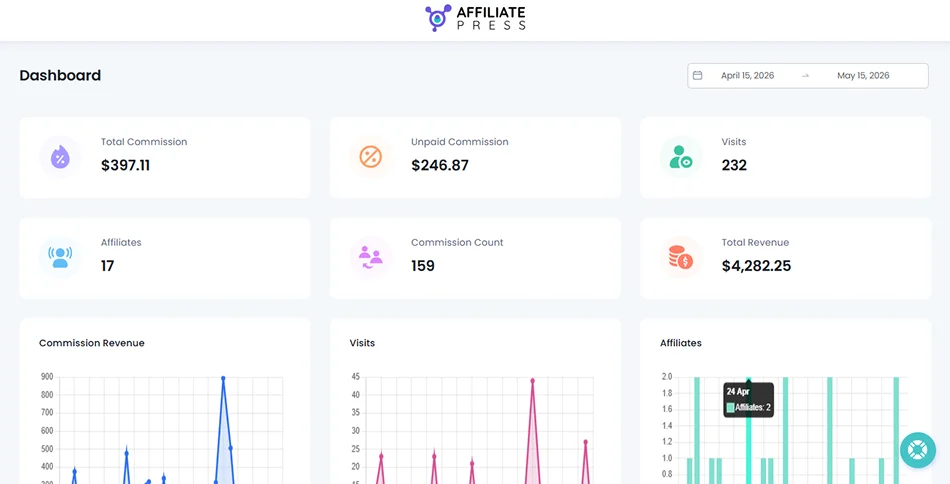
At last, once your affiliate system is fully ready to go, it’s time to launch your affiliate marketing program and start growing it strategically.
But launching is only the beginning.
Most of all, the most successful online course affiliate marketing programs we’ve come across always keeps an eye on their program’s performance and optimize based on real data.
So, you can start by tracking:
- Top performing affiliates.
- Best traffic sources.
- Conversion rates.
- Refund rates.
- Highest selling courses.
- Affiliate engagement levels.
This way you can identify what is driving actual enrollments.
As your online course affiliate program grows, you also have focus on things such as:
- Increasing commissions for top affiliates.
- Running seasonal campaigns.
- Offering performance based bonuses.
- Testing new creatives and landing pages.
- Improving affiliate onboarding.
Affiliate marketing works best when treated as a long term growth system. So, remember the more you optimize your affiliate relationships and tracking infrastructure, the more predictable and scalable your online course revenue becomes.
Your Next Step Toward a High-Performing Course Affiliate Program
Affiliate marketing has completely changed how online course creators grow their businesses today.
No more expensive paid ads just for clicks. No spending hours after SEO. No more unpredictable social media reach.
You can create your own affiliate marketing online course platform in just a few minutes on WordPress using a dedicated plugin like AffiliatePress.
This WordPress affiliate plugin, alone, makes the entire setup process much easier.
Integrating with WooCommerce and 25+ LMS, membership tools, and eCommerce plugins, it lets you manage affiliates, commissions, tracking, creatives and payouts from one centralized dashboard.
Most importantly, it removes much of the manual work that mostly slows affiliate program growth.
At the end of the day, affiliate marketing is about making a sustainable growth for your online course business. And the earlier you build the right system, the faster your online course affiliate program can grow.
Related articles:
- How To Start Affiliate Marketing To Promote Coaching Business
- 45+ Important Affiliate Marketing Statistics for 2025
- Affiliate Marketing vs. Influencer Marketing: Which is Best for You?
FAQs
Most online course affiliate programs offer between 10% and 50% commission. The factors that decide commission rate are pricing of your course, profit margins and whether the online course uses subscriptions or one time payments.
Yes, Of Course! Most of all online course businesses let their existing students become affiliates as they already understand the course experience and can recommend it more easily.
AffiliatePress is the best WordPress affiliate plugin for creating your own affiliate marketing online courses program. It integrates with WooCommerce and 25+ WordPress plugins including LMS, membership tools, eCommerce and more.
More enrollments, lower advertising costs and growth via trusted recommendations are all the benefits of affiliate marketing for online courses.