



The Hidden Risk of Recurring Commissions for Affiliates


Many brands that sell software subscriptions or membership packages don’t offer recurring commissions for affiliates. Browse affiliate-dedicated pages of the big companies you know. What do you see? One-time rewards – yes. Performance rewards – yes. A commission per first signup – sure. However, only a few dare to offer recurring commissions.
Thinking of whether a one-time or recurring commission is the way to go for your product or service? What are the hidden risks of recurring commissions? Then, we suggest first learning the pitfalls of the recurring commissions you may offer to affiliates. In this article, we’ve put together a lot of very interesting information covering this topic.
TL;DR. Recurring affiliate commissions boost growth but risk long-term revenue leakage, rising costs, and reduced control. Balance them with caps or limits to protect profitability and predictability.
What is a Recurring Affiliate Commission?
A recurring affiliate commission occurs when you pay affiliates again and again for as long as the customer they referred continues to pay you (monthly, yearly, etc., depending on your billing cycle). Typically, you motivate affiliates to build passive income over time by offering such a commission structure. The main benefit for you is that affiliates are focused on bringing long-term customers, not just quick sales.
Companies sometimes pay recurring, especially when they are looking for:
- attracts more affiliates.
- increases promotion intensity.
- enables paid traffic.
- accelerates growth.
For Which Business Types Is a Recurring Affiliate Commission Viable?
Which businesses try this model? Many rely on customers with long lifetime value.
SaaS (Software-as-a-Service)
Typically, customers pay monthly or yearly, and there are high profit margins after initial setup.
Membership Platforms & Subscriptions
Online communities, premium content, and learning platforms. Users pay continuously to access content or features, revenue is predictable, and retention is often strong if the content is valuable.
Hosting & Website Services
In this niche, customers rarely switch providers, and monthly/yearly billing cycles work great for affiliates. There is a high lifetime value per customer.
Financial & Business Tools
Accounting software, CRM systems, and payment tools also often rely on this model. Switching costs are high – low churn. Companies can afford to pay ongoing commissions.
Streaming & Digital Content Services
Music, video, or digital libraries are typical subscription-based model services that have a massive user base and can offer continuous engagement, thus, afford recurring payments.
Why can this model be viable for businesses?
- You know how much a customer brings in over time (LTV), so they can safely share a portion with affiliates.
- Recurring commissions encourage affiliates to bring better-quality users who stick around.
- No big upfront commission, they spread the cost across months.
- Affiliates act like a performance-based sales team – you only pay when revenue comes in.
The Hidden Risks of Recurring Commissions for Affiliates

Surely, you understand the main pitfall – instead of paying once, you pay many times to your affiliates. But let’s understand that simple statement in more marketing details. There are a few true structural downsides of recurring commissions you should know about.
1. Long-term revenue leakage (the biggest one)
With recurring affiliate commissions, affiliates keep earning as long as the customer stays. This means, over time, that percentage you offer becomes a permanent revenue share. Many businesses, no matter their niche, permanently give up margin on that customer. With a one-time payment (e.g., a signup-only percentage), the cost is capped at acquisition only.
2. High LTV customers become disproportionately expensive
Your best customers become the most expensive customers. For example, if a user stays a long time:
- Month 1: $6 payout
- Month 24: $144 total payout
That same customer becomes very costly in hindsight.
3. Harder to model CAC predictably
While one-time rewards are fixed and known upfront, recurring affiliate commissions depend on more factors:
- Retention
- Upgrades
- Churn timing
4. Profit margin compression over time
Even if margins are fine initially, recurring commission certainly eats into future profit streams. So as business matures, affiliate cost base keeps growing, and margins shrink on older cohorts.
5. Long-term payout obligations
Recurring behaves like a “financial snowball” with more affiliates, meaning more customers and more ongoing payouts, as a result obligations.
6. Less control over customer economics
A company controls unit economics per acquisition. With recurring affiliate commissions, affiliate success directly impacts long-term CAC and LTV margin. You may lose tight control over per-customer profitability.
7. Opportunity cost of reinvestment
When you pay long-term to affiliates, this same money cannot be reinvested into ads, products, hiring, SEO and other marketing activities. Recurring creates a permanent revenue split, not a one-time marketing cost.
8. It makes your finances harder to understand and predict
You keep paying affiliates over time, so it’s less clear how much profit each customer brings. This can make investors less confident when valuing your business.
9. “Forever dependency” on the affiliate channel
With recurring affiliate revenue, affiliates become structurally embedded in revenue. So even if you stop affiliate acquisition later, you still keep paying past affiliates indefinitely. Stops cleanly when the campaign stops.
10. Harder to switch monetization strategy later
If the business decides to change pricing and restructure plans, change margins. Recurring affiliates are tied to historical pricing.
Even being very attractive to affiliates, recurring affiliate commissions have many downsides:
- uncapped long-term cost per customer
- margin erosion over time
- harder CAC predictability
- compounding payout obligations
- reduced financial flexibility.
Case Study – How Popular Brands Do It
After some research, we’ve managed to find companies that offer recurring commissions for their affiliates. Let’s take a look at how they do it and what benefits/cons they can face.
1. Moosend
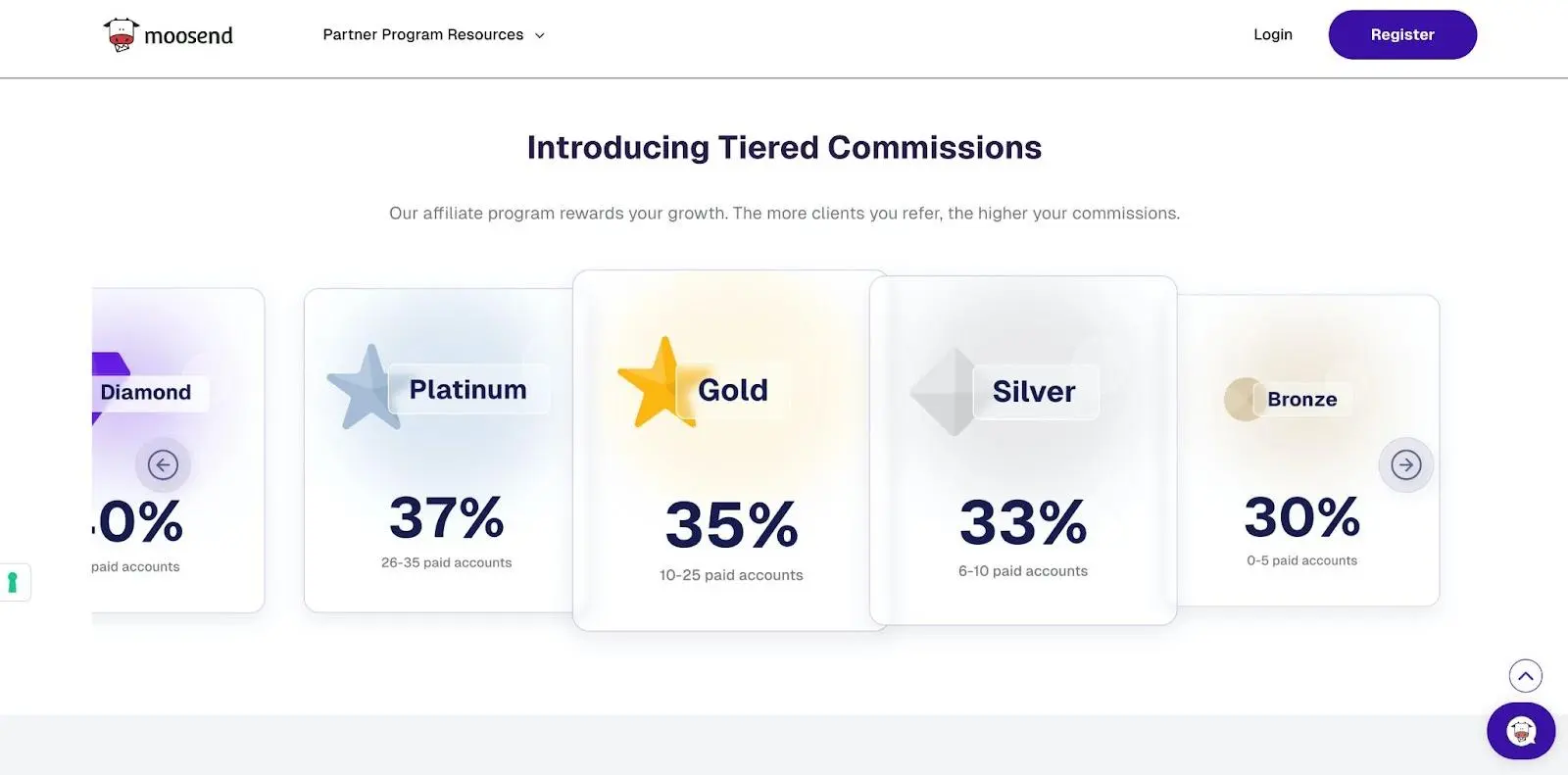
Moosend’s affiliate program page explicitly states that their affiliates keep earning commissions from a referral for as long as the referral stays a paying Moosend customer. They also offer tiered commissions as affiliates grow and bring more signups. Affiliates can earn up to 40% recurring commission for every paying customer they refer.
Affiliate program strengths:
- True lifetime recurring commissions (up to 40%)
- Tiered system incentivizes scaling and long-term promotion
- Strong alignment with SaaS economics (high margins + retention).
Business benefits:
- Encourages affiliates to bring high-quality, long-retention users
- Builds a loyal affiliate base invested in long-term growth
- Lower churn impact if affiliates educate users well.
Potential pitfalls
- High commission rates may compress margins early
- Risk of affiliates focusing on volume over quality
- Lifetime payouts can become financially heavy liabilities
- If churn increases, ROI on affiliates drops quickly
- Tiered incentives may attract aggressive or misleading marketing tactics.
2. Lodgify
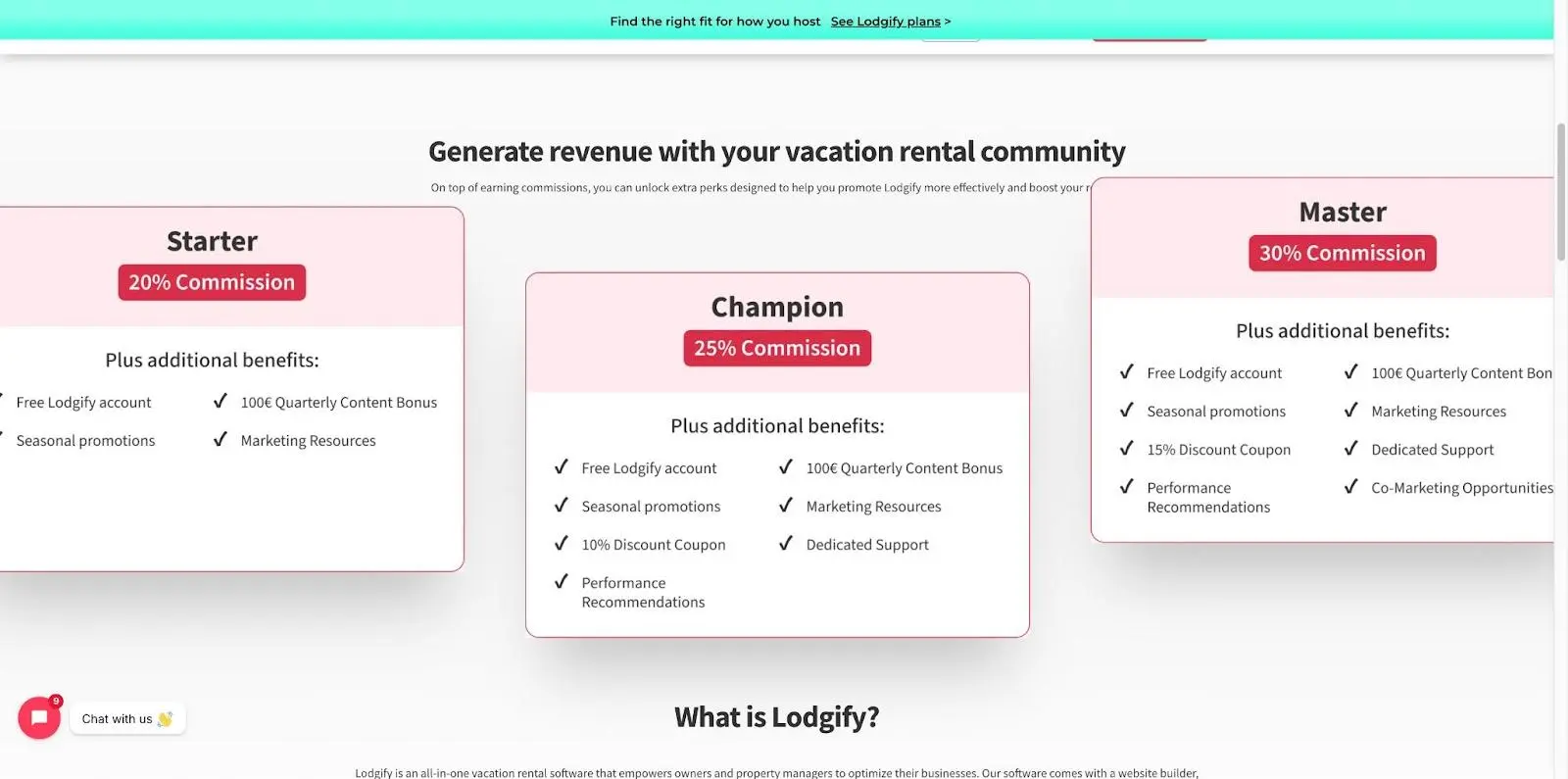
Next example: the Lodgify Affiliate Program, which offers recurring commissions, paying 15% to 20% on referred customers’ subscription payments (monthly, yearly, or bi-yearly) for up to one year.
Commissions are paid via PayPal once a minimum of $200 in credited commissions is reached. Commission rates start at 15% and can increase up to 20% based on performance.
Affiliate program strengths:
- Recurring commissions (15–20%) capped at 1 year (better controlled cost structure)
- Performance-based tiers encourage growth but limit risk
- Aligns with typical SaaS payback periods (12 months).
Business benefits:
- Predictable CAC (customer acquisition cost)
- Reduces long-term financial exposure vs lifetime models
- Appeals to content creators in travel/property niches.
Potential pitfalls:
- Lower commission vs competitors may reduce initial affiliate motivation
- A $200 payout threshold could slow early engagement
- Affiliates may lose interest after 12 months (no lifetime upside)
- Less incentive to nurture or support referrals post-sale
- Could struggle to compete with higher-paying SaaS affiliate programs
3. Mango Languages
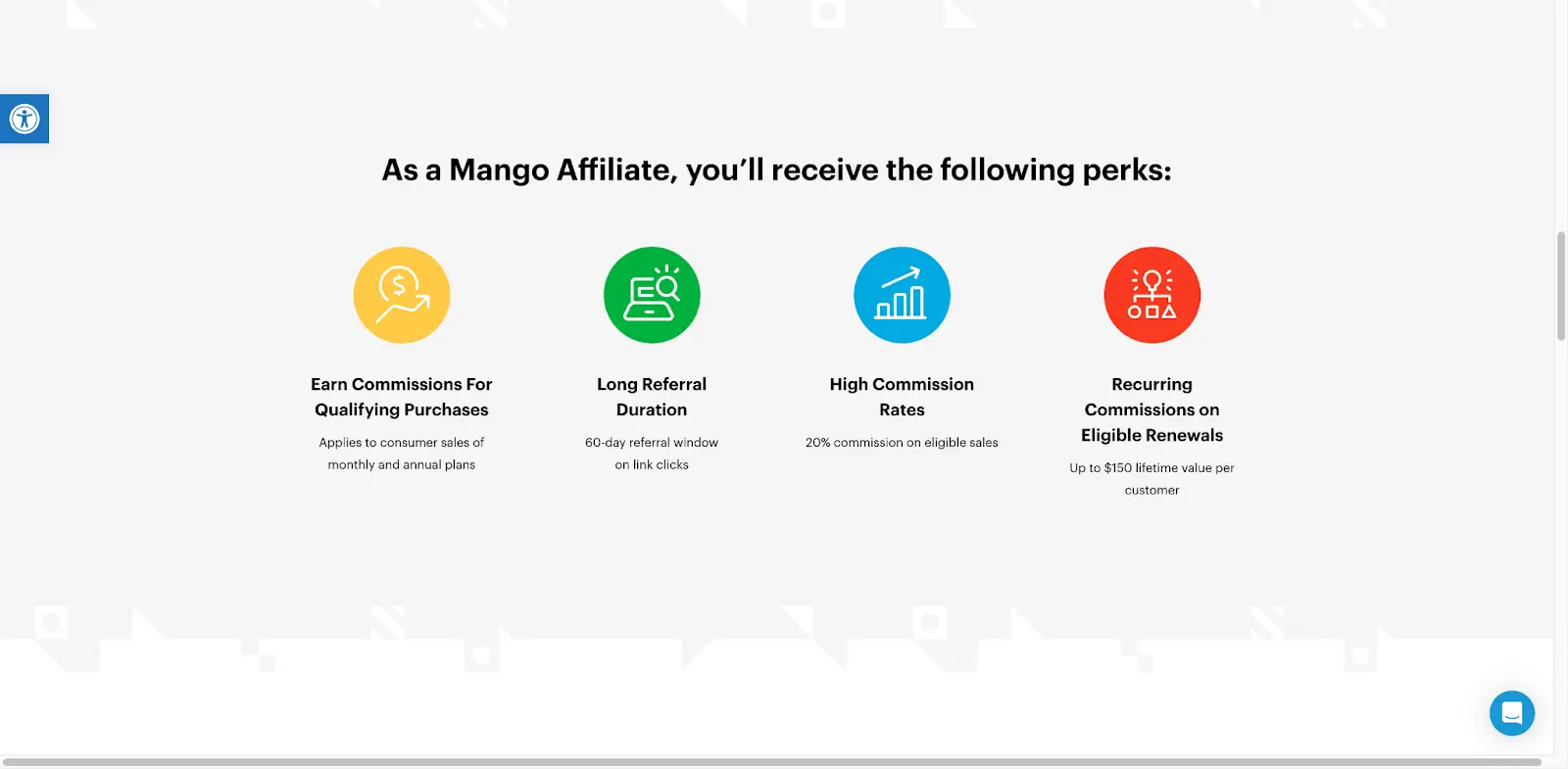
Affiliates earn at least 20% commission on qualifying subscription purchases, and since Mango offers monthly subscription options, it’s easy to continue earning on any renewals up to $150.
Affiliate program strengths:
- Recurring commissions on renewals (20%)
- Monthly subscription model supports repeat earnings
- Earnings cap ($150) helps control costs
Business benefits:
- Encourages affiliates to target engaged learners
- The subscription model increases predictable revenue streams.
Potential pitfalls:
- Earnings cap may discourage high-performing affiliates
- Lower ticket size
- Affiliates may shift focus to higher LTV programs
- The cap reduces the incentive to bring long-term loyal users
- Risk of attracting coupon/deal-focused traffic rather than committed learners.
So, what recurring commission approaches do we see here? Let’s summarize:
- Moosend: Aggressive growth + affiliate-first (high risk, high reward).
- Lodgify: Balanced, sustainable CAC control (middle-ground strategy).
- Mango Languages: Conservative, cost-controlled recurring model (safe but less competitive).
Concluding: The Best Way to Offer Recurring Commissions
As you see, no big company’s affiliate program is like another’s – all seem to be very custom-made, with very nuanced and specific rules, bonuses, and commission structures. Recurring commissions are a big commitment for companies, so they have to find a balanced way to offer them based on their goals and marketing budgets.
The most balanced, zero-risk-of-overpaying example for recurring affiliate commissions is:
- Pay only a % of revenue
- No upfront cost or reward
- Limit recurring commissions to a certain billing cycle.
Whether you choose one-time or recurring commissions for your affiliate programs, AffiliatePress is ready to support you.
Related articles: