


Build or Join? The Benefits Of Creating Your Own Affiliate Program


Should you build your own affiliate program or join an affiliate network? And if building one makes sense, how do you actually get started?
No doubt, this decision can have a bigger impact than it looks. An affiliate network is an easier choice when you want existing infrastructure and access to a pool of affiliates. But running your own affiliate marketing program lets you decide your commission structure, create your own promotional rules, work directly with affiliates, and see how your program is performing.
The bigger question is whether your business is ready to manage those things yourself.
Let’s look at the benefits of creating your own affiliate program, when it makes sense, and how you can start one.
TL;DR: Creating your own affiliate program gives you more control over commissions, affiliate relationships, branding, data, and incentives. An affiliate network can be easier if you want access to an existing pool of affiliates and outsourced infrastructure. If you run a WordPress business and want long term control over your affiliate channel, you can create and manage your own program with an affiliate management plugin like AffiliatePress.
Should You Build Your Own Affiliate Program or Join An Affiliate Network?

Too many choices, not sure what to pick? Let’s make it easy. First things first, there are many benefits of affiliate programs, whether it’s running on your server or someone else’s.
An affiliate program allows you to pay a commission to anyone who sends a new customer to your site, and buys a product or service. With the global affiliate marketing industry valued at $18.5 billion, one thing is clear: Affiliate marketing industry is booming so have no second thoughts.
As for the decision whether to join a network or launch your own affiliate program completely depends on your:
- Budget
- Tech Skills
- Brand recognition
- Internal resource capacity
- Growth Goals
Thus, evaluate both options carefully before launching your marketing strategy.
Creating Your Own Affiliate Program

Building an in-house affiliate marketing program gives you complete flexibility and lower long-term overhead costs. Some of the top examples of independent affiliate programs are:
- Shopify
- Elementor
- Fiverr
- BookingPress
- Etsy
One of the common misconceptions we want to clear right now is you don’t need to build your own affiliate tracking system from scratch (which almost nobody does anymore due to high coding costs). You can simply use a WordPress affiliate plugin to run an independent program directly on your WordPress site.
This is also what most people do. SaaS companies, niche creators and established eCommerce brands with an existing audience create an affiliate program of their own.
And the reason it works so well is you pay a flat yearly system fee only. No middle man commissions means you save thousands as you grow. Plus, you have 100% control over your affiliate relationship data and branding.
The main roadblock? You start with zero affiliates. Here you are completely on your own, responsible for finding, recruiting, onboarding and paying out your partners every month.
Joining An Affiliate Network
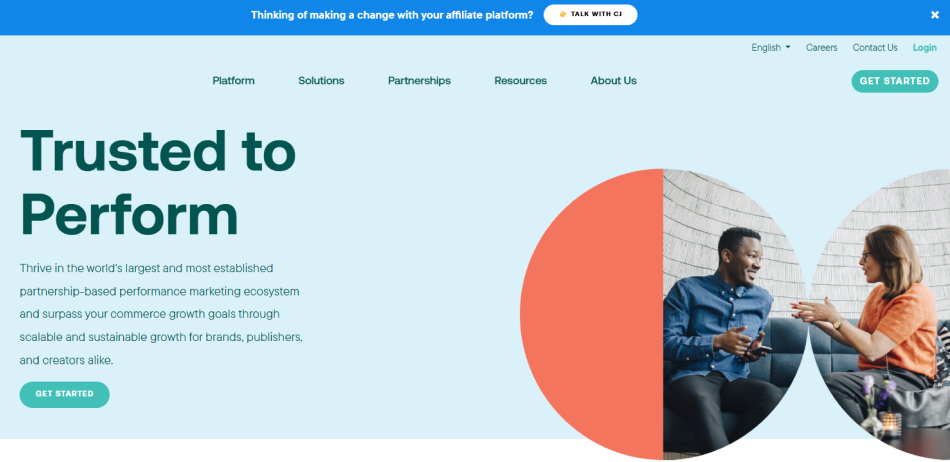
Joining an established affiliate network provides immediate reach and handles tracking, billing and compliance for you. In other words, an affiliate network acts as a middleman marketplace. They list your business in their directory, and their pre-existing pool of approved publishers, influencers and bloggers can apply to promote you.
Some of the top affiliate platform networks are
- ShareASale
- CJ Affiliate
- Impact
- Awin
- Rakuten Advertising
What most beginner and new eCommerce brands looking for immediate exposure generally do is choose this path because 85% of digital publishers use these networks to find products (Although there’s no guarantee they’ll pick you).
And the reason it works so well is you get an instant directory of affiliates, automated tracking, infrastructure, and the network to handle complex global tax documentation and affiliate payouts for you.
The hidden cost no one talks about? Networks are expensive. Although they give you quick exposure to a number of affiliates, they typically charge a massive upfront setup fee (often $1000-$3000), plus a “network override” fee of 20% to 30% on top of whatever commission you pay your affiliates.
In other words, this path is only a good choice if you’re a beginner or new brand with a lot of budget (which is mostly not the case).
Below is a quick comparison table to help you get it right at a glance:
| Factor | Your Own Affiliate Program | Affiliate Network |
| Affiliate access | You recruit affiliates yourself | Access to an existing affiliate network |
| Control | High control over program rules | Subject to network policies |
| Affiliate relationships | Direct | Managed through the network/platform |
| Branding | Full control | Network requirements may apply |
| Data | Greater control over affiliate data | Data access depends on the network |
| Costs | Software and management costs; mostly low | Network/setup/transaction fees may apply; mostly expensive in long run |
| Management | You handle recruitment, support, and payouts | Network handles some infrastructure and operations |
| Best for | Businesses wanting long-term control | Businesses prioritizing reach and simpler setup |
The final verdict? Creating your own affiliate program gives you complete control over your brand, commission structure, and customer data , making it the best long-term choice for growing your product-based or service-based business.
What Are the Benefits Of Creating Your Own Affiliate Program?

So, you’ve finally decided to build your own affiliate program. What do you actually get in return for managing it yourself?
The biggest advantage is control. You decide how much affiliates earn, how they promote your products, what data you can access, and how you want to grow your affiliate relationships. You’re not limited by a third party network’s rules or structure.
When you shift from being a standard promoter to launching your own platform, the advantages become crystal clear. Thus here are the main benefits of affiliate program ownership that can turn your business growth from a slow crawl to an automated revenue stream:
You Have Full Control Over Commission Rates

When you run your own affiliate program, you decide how much your affiliates earn.
You can create fixed or percentage based rates for every successful referral, have different commission rates for different products, or introduce tiers based on affiliate performance. Apart from these, you can even offer bonuses when affiliates reach a certain number of sales.
Overall, you can change the commission structure when your business needs change, rather than working around a network’s predefined rules.
You Build Direct Relationships With Your Affiliates

When you build your own affiliate network, there is no network sitting between you and your affiliates.
You can communicate with your partners directly, understand what they need, answer their questions, and give them the resources (brand assets) they need to promote your products better.
This can be even more useful when you work with a smaller group of high-value affiliates.
Being in the affiliate industry for too long, we can tell you will eventually discover that one affiliate performs better with product tutorials, while another gets better results from discount codes or comparison content. When you work directly with both of them, you can support each partner based on what actually works.
Over time, these direct relationships can become valuable long-term partnerships, not just simply another affiliate transaction.
You Control Your Brand And Promotional Rules

Your affiliates are representing your brand, so you probably want some control over how they promote it. And your own affiliate program gives you exactly that.
An in-house affiliate marketing program lets you set your own promotional rules. You can decide whether affiliates can use paid advertising, which keywords they can bid on, how they can use your brand name, whether coupon sites are allowed, and what type of promotional content is acceptable.
Moreover, you can even offer your own banners, product details, affiliate links, screenshots, and other marketing resources, making it a lot easier to keep your affiliate promotions consistent with your overall brand.
You Get Greater Control Over Your Affiliate Data

Affiliate data is another important reason to run your own program.
You can see which affiliates are sending visitors, which links are generating conversions, how much revenue each partner is bringing in and how much you are paying in commissions.
This gives you a clearer picture of what is actually happening inside your affiliate channel.
With a third party network, the data and reporting you can access depends on the platform you use.
You Can Create Custom Affiliate Incentives

Not every affiliate needs the same incentive.
Sometimes a standard commission is enough. But if you want to encourage more sales, recruit high-performing partners, or promote a particular product, you can create incentives around your own goals.
One of the biggest perks of affiliate marketing program ownership is you can offer:
- Higher commissions after affiliate reach a sales target
- Performance-based bonuses
- Sign up bonus to attract more affiliates (This overcomes the main drawback of in-house affiliate program)
- Special commissions for selected products
- Limited-time affiliate campaigns
- Bonuses for bringing in new customers
The important part is that you can create these incentives around your business.
You Can Build a Long-Term Affiliate Community

An affiliate program doesn’t have to be just a system for tracking referrals and paying commissions.
You can use it to make a community of people who understand your product and actively want to promote it.
As your program grows, you can easily recognize your best affiliates, give them early access to new products, share marketing resources, and keep them updated about upcoming promotions.
This is particularly useful for SaaS companies, WordPress products, online services, and other businesses where affiliates can continue recommending the product over a long period.
Thus you can gradually build a reliable group of affiliates who already know your product and audience.
You Lower Long-Term Affiliate Costs

Running your own program does not mean there are no costs. You still need affiliate software, payment processing, management, recruitment, and other resources.
But you may avoid some of the additional fees associated with affiliate networks.
For a growing affiliate program, this difference can become more noticeable over time.
Furthermore, you have more control over where your money goes. So you can invest more directly in the things that help your own program grow such as affiliate commissions, bonuses, content, and partner support.
The trade-off ? You take responsibility for managing the program yourself.
Is Your Business a Good Fit For An Affiliate Program?

Creating your own affiliate program sounds attractive, but it isn’t automatically the right choice for every business. Thus in this guide, we’ll show you affiliate program benefits from every angle.
The first thing to think about is whether people can realistically, actually recommend your product or service to their audience.
If your business already has an online sales process, healthy margins, and a product that others can easily explain or recommend, an affiliate program can be a good fit.
It can work well for:
- SaaS products and software
- WordPress plugins and themes
- Online courses
- Membership businesses
- Digital products
- Services with an online conversion process
- eCommerce products with healthy margins
You should also consider your internal resources.
Running your own affiliate program means someone needs to recruit affiliates, answer their questions, review performance, manage commissions, handle payouts, and keep the program organized.
Another benefit of affiliate marketing is when you have the resources to manage these tasks and want affiliate marketing to become a long term acquisition channel. Afterall, it can lower your overhead marketing cost as even the market statistics show:
- Advertisers in the United States are spending $13.81 billion on affiliate programs in 2026, an 11.3% increase from the prior year
- Companies average an impressive return of $12 to $15 in revenue for every $1 spent on affiliate marketing
- Nearly 74% of brands generate between 11% and 30% of their total annual revenue through affiliate partnerships
However, again, if you mainly want immediate access to an existing pool of affiliates (with no plan for future) and don’t want to handle as much of the infrastructure yourself, an affiliate network may be worth considering.
All in all, the decision comes down to a simple question: Do you want more control, or do you want more of the work handled for you?
How Do You Start Your Own Affiliate Program?
Wondering how to start your own affiliate program? When you’ve decided to create an affiliate, the next question is how to actually get it running.
As mentioned, you don’t need to develop an affiliate tracking system from scratch, nor need a developer. If your website runs on WordPress, you can use an affiliate management plugin such as AffiliatePress to handle the core parts of your program.
Here’s how the process works.
1. Choose An Affiliate Management System
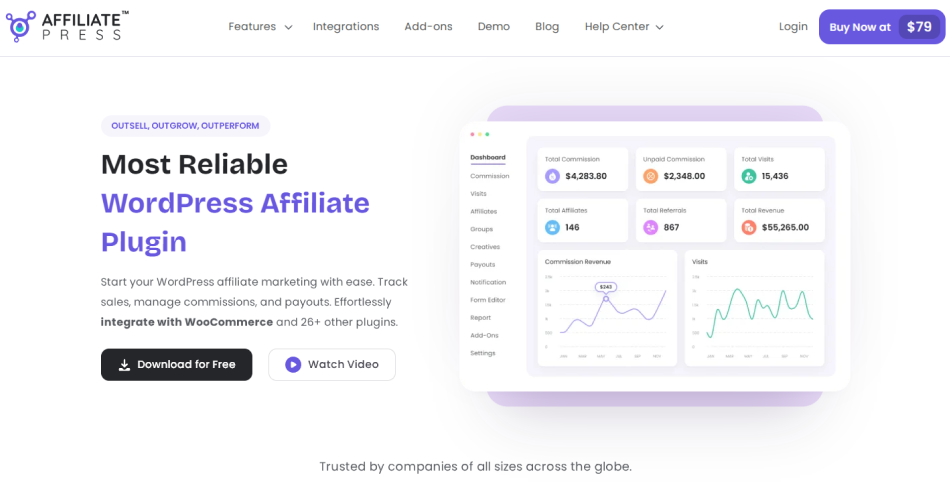
First of all, choose the system you will use to manage your affiliate program completely. If you ask us, one of the most trusted affiliate plugins for WordPress is AffiliatePress.
Why? Because it integrates smoothly with WooCommerce and 25+ other WordPress platforms. Multiple commission structures, automated payouts, smart fraud detection and user friendliness are all its core parts.
So, if you run your business on WordPress, AffiliatePress lets you create and manage an affiliate program directly from your WordPress dashboard. No middle man commission. No hidden costs. No higher renewal plans (Unlike other popular plugins that charge almost 2X the first year price, forcing you into a lock-in)
Once the system is in place, you can move on to setting your actual affiliate program.
2. Set Up Your Affiliate Program
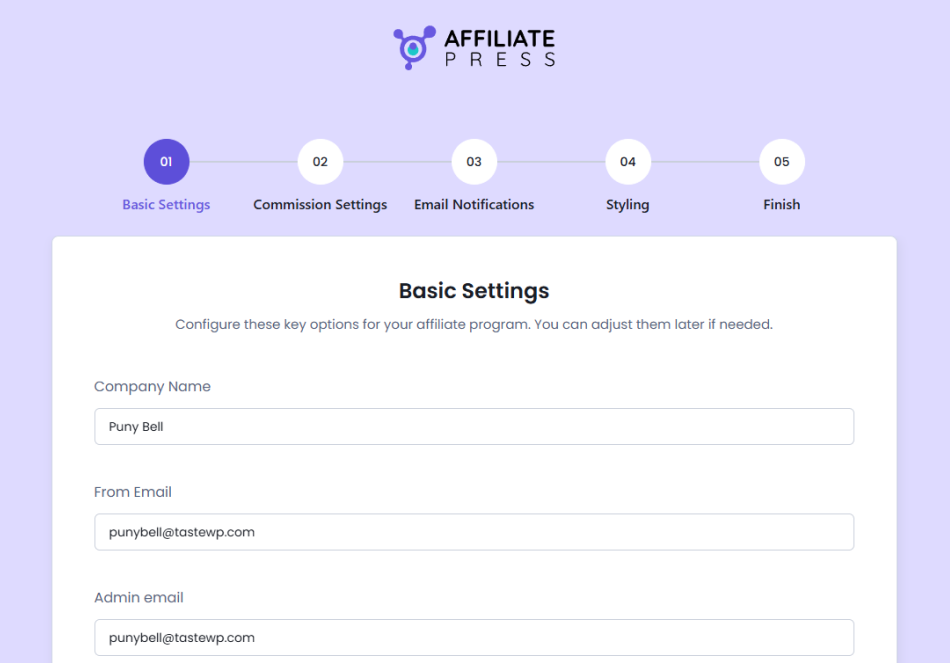
Now set the basic settings of your affiliate program such as affiliate registration, tracking, commission rules, payout options, and other program settings according to how you want your program to work.
Using AffiliatePress? The process will barely take 15-20 minutes thanks to its guided smart setup wizard. You can onboard affiliates automatically, let the system give them a dedicated affiliate panel with links, and manage commissions and payouts, all from one place.
3. Choose Products And Commission Rates
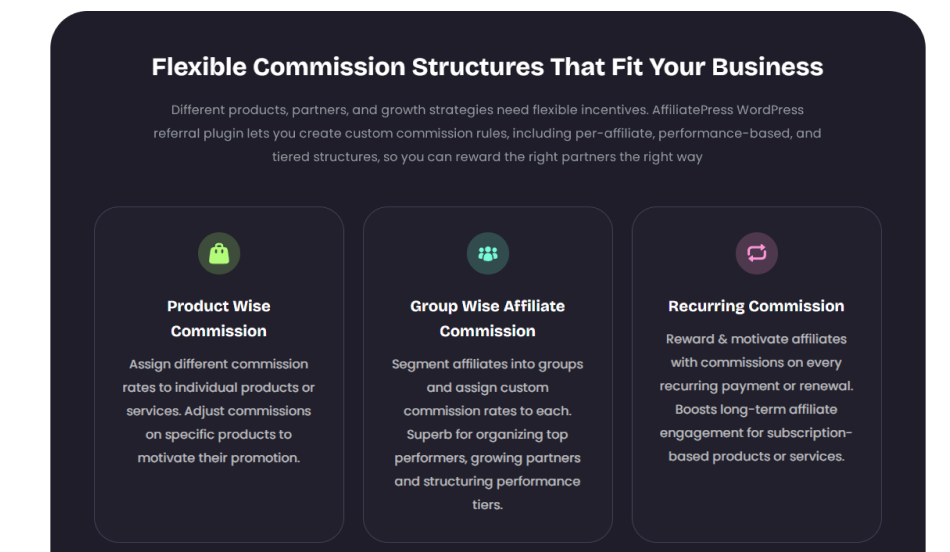
Decide what you want affiliates to promote and how much they should earn.
Firstly, Just start with your main product or service, and a simple commission structure. If you have multiple products, you can always introduce different commission rates or affiliate program benefits later.
The good news? AffiliatePress lets you create flexible commission structures such as:
- Recurring commission model.
- Group-wise commission model.
- Product-wise commission model.
- Tiered-based commission model.
- Multi-level affiliate commission model.
- Lifetime commission model.
4. Set Your Affiliate Rules
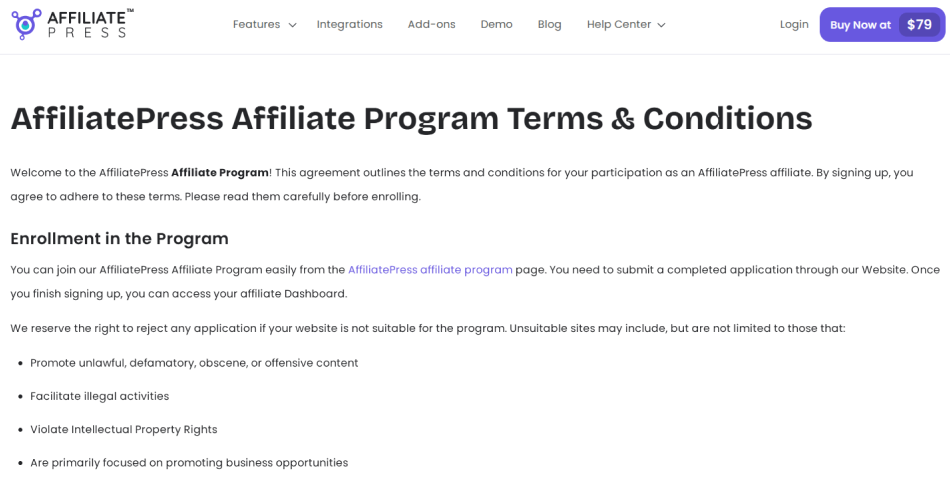
Before recruiting affiliates, set some basic rules for how they can promote your business.
For example you can have specific rules around:
- Paid advertising.
- Brand keywords.
- Coupon websites.
- Email marketing.
- Promotional claims.
- Use of your brand assets.
5. Recruit Affiliates

Here now comes one of the biggest challenges: finding people who actually want to promote your product.
For this, you can start with people who already know your business. Your customers, industry bloggers, content creators, influencers, educators and even business partners can all be potential affiliates.
6. Track And Optimize Performance
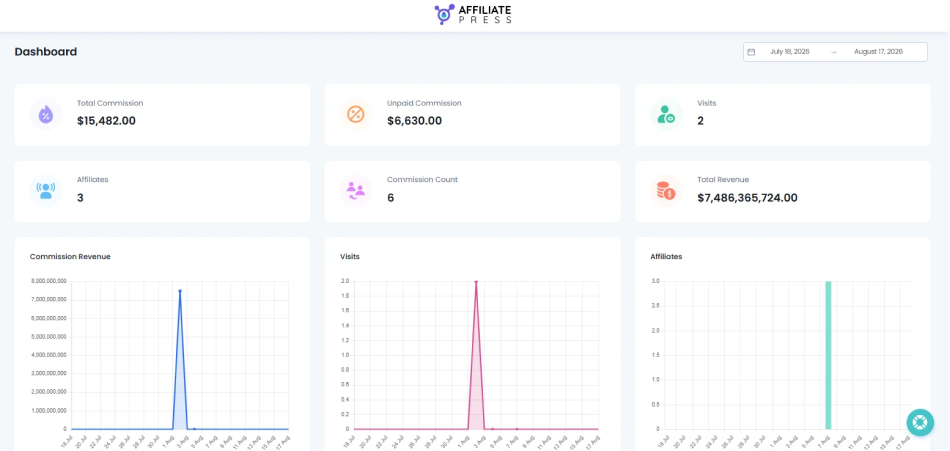
Your job is never over even after your program starts running. In fact, here comes the important part. You must keep an eye on which affiliates are generating clicks, conversions and revenue.
Furthermore, using AffiliatePress system you can track:
- Which affiliates are always generating sales?
- Which products are being promoted the most?
- Are some affiliates sending traffic but not converting?
- Are your commissions attractive enough to keep your best partners engaged?
That is one of the biggest advantages of owning your affiliate program: you can see what is happening and change the program when your business needs it.
Final Thoughts
So, that’s it for today.
No doubt, there are many benefits of affiliate program. The question is whether to build your own affiliate program, or simply join an affiliate network with an expensive fee cut?
By now it should be obvious. If you have a simple business site built on WordPress, you can easily create an affiliate program with zero coding using WordPress affiliate plugins like AffiliatePress.
So what are you waiting for? Start your own affiliate program today with AffiliatePress, and take your sales to the next level.
Related Articles:
- Affiliate Marketing Pros & Cons Every Business Should Know
- 11 Affiliate Marketing Tips to Boost Affiliate Sales
- Affiliate Marketing vs. Referral Marketing: See The Difference
FAQs
You can start your own affiliate marketing business by creating an in-house affiliate program with affiliate management plugins like AffiliatePress. Once your affiliate system is set, start recruiting affiliates, and let them promote your business.
No, you don’t legally need an LLC (Limited Liability Company) to start or run an affiliate marketing program. You can start as a solo business owner using your personal name and Tax ID.
If you have no money to even create an affiliate program or to join an affiliate network, you can start by using a free WordPress affiliate plugin like AffiliatePress Lite. This free WordPress affiliate plugin gives you all the features you need to get started in the initial stage of your business.
AffiliatePress is the best WordPress affiliate plugin due to its modern user interface, 25+ integrations, and reliable real-time commission tracking. Apart from this, it comes with advanced fraud detection and refund protection to avoid commission loss.