


How To Reduce Commissions Without Losing Your Affiliates

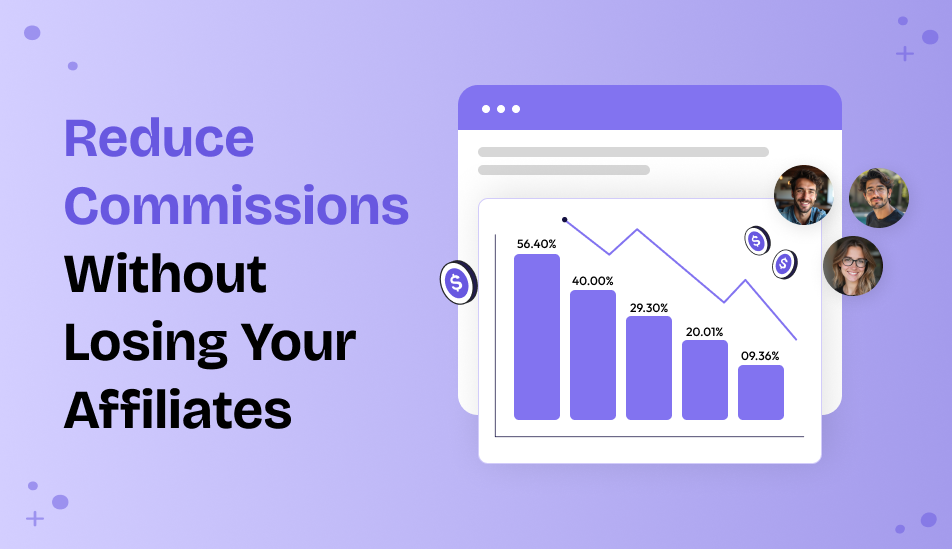
Reducing affiliate commissions is sometimes necessary when margins tighten. But when you do it the wrong way, you risk losing your highest-performing partners overnight.
Many affiliate marketing programs overpay without realizing it in the early days. But when costs go up, and prices stay the same, keeping your commission rates the same is like trying to fill a bucket with a hole in the bottom. You’re working harder, but the “profit” is just stuck.
The solution isn’t simply cutting affiliate payouts. It’s optimizing them strategically.
Done right, you can lower commission costs, retain high performing affiliates, and build a more sustainable affiliate program without damaging partner trust.
In this guide, you’ll learn exactly how smart brands reduce affiliate commissions without losing the affiliates that drive real revenue.
TL:DR. Affiliate commissions can be reduced without hurting your program if you reward performance instead of paying flat rates. Use tiered commissions, bonuses, and hybrid payouts to lower costs while keeping top affiliates motivated.
When Should You Reduce Affiliate Commissions?
Reducing affiliate commissions only makes sense when your current affiliate payout structure is no longer profitable.
Think of it like this: You sell a pizza for $10. It costs you $4 to make. You give the delivery driver $2, so your profit is $4. Suddenly, the cost of making rises and costs you $7. Now, if you still give the driver $2, you only get to keep $1 (your profit). And raising the cost of pizza is never the option.
In the end, if you don’t change that $2 commission to the driver, you’re doing all the work for almost nothing!
This isn’t about paying partners less. It’s about ensuring your program remains profitable as your business grows and the market changes.
Before making changes, look for clear financial or performance signals rather than reacting to short-term pressure. Commission cuts should be data-driven, not panic-driven. That’s why, only consider reducing your commission rates if:
- Profit margins are shrinking
- Customer acquisition costs (CAC) are increasing
- You’re overpaying low-value affiliates
- Your affiliate program has grown, but payouts haven’t changed.
Make sure to treat commission adjustments as a strategic optimization; one that protects margins without undermining the partnerships that fuel your revenue.
Strategic Ways to Reduce Affiliate Commissions (Without Triggering Affiliate Churn)
If lowering commissions would destroy your program, your program was fragile to begin with. All you have to do is use the right way to reduce your commission rates, which are as follows.
1. Replace Flat Rates With Tiered Commissions
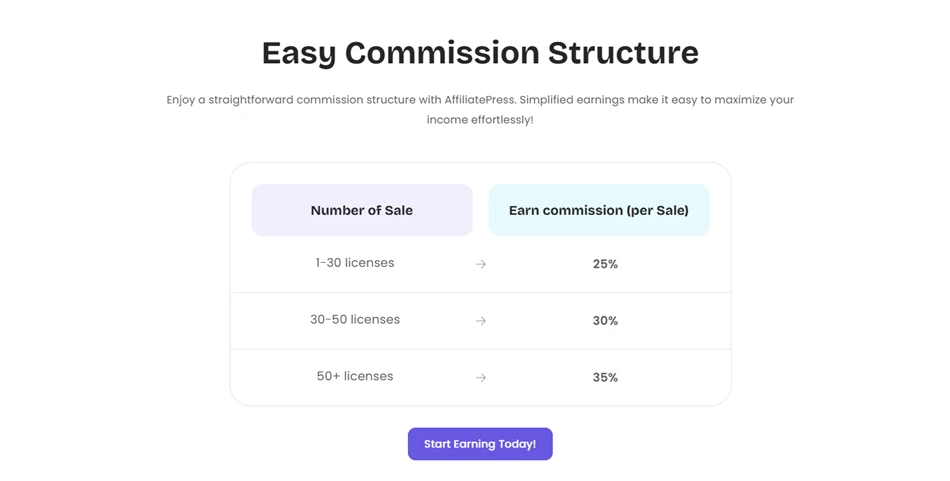
Flat commission structures are simple, yet they often lead to overpaying low performers while limiting upside for your best partners.
A tiered-based commission model solves both problems at once. It aligns the payouts directly with results based on affiliate performance. For example:
- Base tier: 10% commission for entry level performance.
- High performers: 15% once affiliates hit a defined revenue threshold (After 15-25 sales).
- Elite tier: 35% for top partners driving consistent, high-quality sales. (After 50 sales).
This tier-based commission lowers your overall affiliate commission cost without making it feel like a downgrade. It makes affiliates see a clear path with more earning potential, rather than focusing on what they might lose.
Tiered commissions also create natural motivation among new affiliates. Partners who want higher payouts know exactly what targets to hit. This turns a potential commission cut into a performance-driven growth opportunity.
2. Lower Base Rates, Increase Performance Bonuses

The best way to decrease affiliate commissions and lower the base rate is while introducing performance-based bonuses at the same time.
This quickly shifts the conversation from “reduced earnings” to “more ways to earn”. And speaking from experience, this will far more likely make affiliates respond positively.
Let’s say you lower the commission rate from 15% to 10%. But offer bonuses when affiliates cross specific revenue milestones or deliver a set number of affiliate conversions. Now, high-performing affiliates will surely maintain or even increase their income, while your overall payout becomes more predictable.
This works because of a simple psychological principle: Affiliates focus more on upside than base rate. When partners see a clear opportunity to earn extra (Aside from base rate), the change feels motivating rather than restrictive.
It also naturally filters your affiliate program toward performance. Casual affiliates will earn a little less, but serious affiliate partners will lean into the incentives, strengthening your revenue engine.
3. Pay More for New Customers, Less for Returning Ones

Not every sale carries the same business value. New customers expand your revenue and create long term earning potential. while, on the other hand, returning buyers mostly need less marketing effort.
Thus, adjusting commissions to reflect this difference is one of the fastest ways to boost your profits without fully lowering payouts.
For instance, you can offer 12-15% for new customer acquisitions but reduce the affiliate commission rate to 5-8% for returning customers. Affiliates still see attractive earning opportunities, yet your business avoids overpaying for conversions that may have happened anyway.
Thus, paying more for new customers makes sense because it:
- Drives incremental growth instead of rewarding existing demand.
- Improves the lifetime value (LTV) to commission ratio.
- Aligns affiliate payouts with real acquisition costs.
- Reduces overpayment on repeat or branded traffic.
At the same time, offering a lower commission for returning customers protects margins without feeling punished, especially when affiliates understand the reason.
4. Shorten Cookie Windows
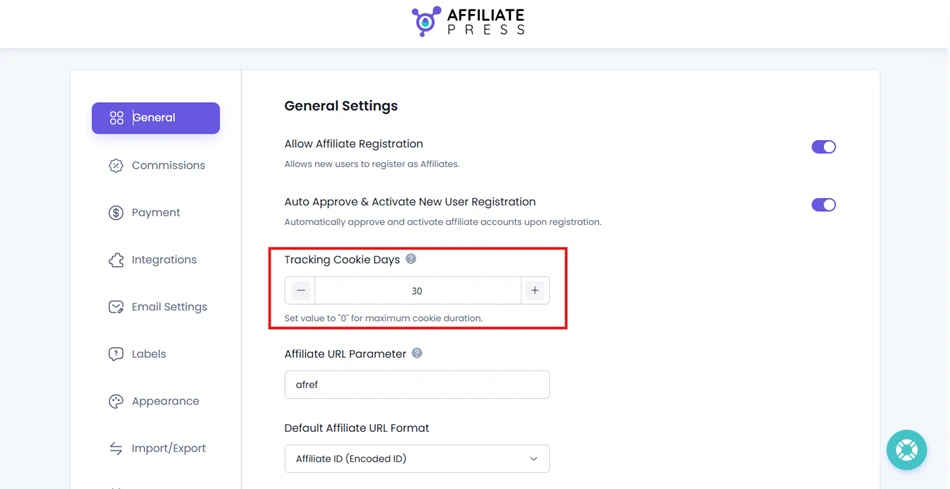
Shortening your affiliate cookie window is one of the most effective yet underused ways to reduce affiliate commission costs without directly cutting rates.
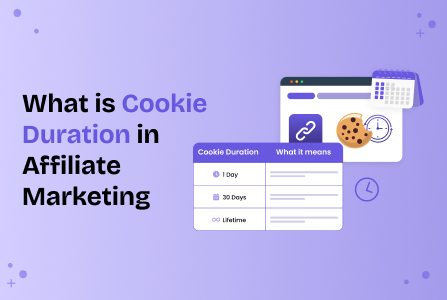
Cookie duration decides how long an affiliate gets credit for a conversion after a user clicks their link. The longer the window, the higher the chance you may paying for customers who were already close to purchasing.
But don’t forget it’s also one of the most important factors affiliates consider when looking for a new affiliate program to join. That’s why this tactic works best when your sales cycle is short and purchase intent is high.
Why shortening cookie windows makes sense:
- Improves attribution quality: Shorter cookie duration makes sure commissions are paid for real influence, not last-touch luck.
- Reduces overpayment: Long cookies mostly pay out affiliates for conversions they didn’t actively make, so shortening cookie duration saves you a lot of money.
- Protects margins quietly: You lower payouts without announcing any commission cuts.
- Discourages opportunistic behavior: Limits credit for coupon or deal sites that appear late in the buyer journey.
- Aligns rewards with intent: Affiliates earn rewards for driving traffic that’s ready to make a purchase, not just for getting random clicks.
This keeps your program fair while controlling costs. Here’s how you can set a cookie.
- Content partners: 30-45 days.
- Coupon/deal sites: 7-14 days.
- High intent promotions: shorter windows with higher bonuses.
This way, affiliates who actively influence buying decisions will still earn as always. And the payouts for delayed or low impact conversions simply go off.
5. Shift to Hybrid Models
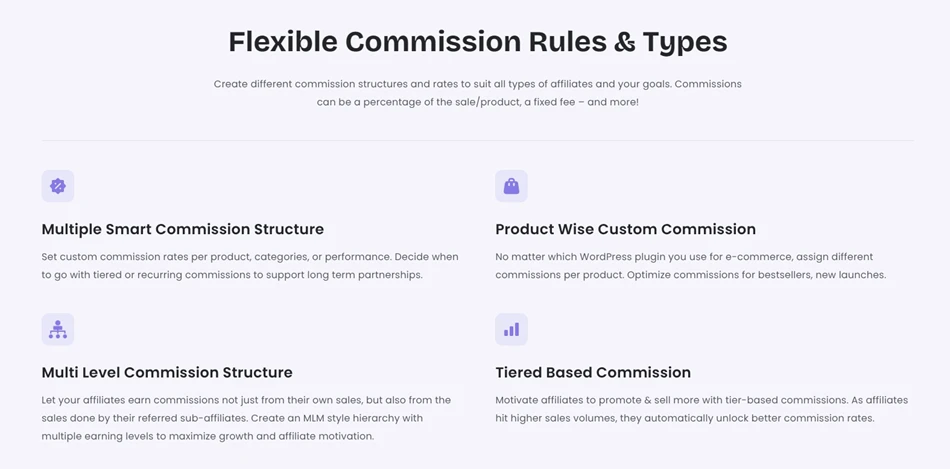
Hybrid commission models combine two payout structures to create more predictable customer acquisition costs. Typically, it’s a mix of both commission structures: a lower percentage plus a fixed bonus
It doesn’t make affiliates feel underpaid and work more to earn a bonus. This commission model with more than one commission structure balances risk while still keeping the program attractive.
Here’s an example of a hybrid commission structure:
- 8% commission + $10 bonus for every qualified sale.
- Lower % + milestone reward after a set number of conversions.
- Fixed payout for leads + commission on closed sales.
This approach works especially well if your order values fluctuate or your margins vary across products. Plus, it also lets you:
- Stabilize CAC to make financial planning much easier.
- Prevent overpaying on high-ticket items with a slightly lower percentage to protect margins.
- Encourage affiliates to promote better with performance bonuses.
- Allow affiliates to see added opportunities instead of just reduced rates.
6. Announce Commission Changes Clearly
At last, if you have finally decided to lower affiliate commissions, it’s time for an announcement. How you communicate with your affiliates regarding commission change matters more than the change itself.
We’ve seen many brands’ affiliate programs making changes in their commission structure. And affiliates rarely leave because payouts drop. They leave when the adjustments are too sudden, unclear, or unfair.
So, have a clear, proactive communication with your affiliates to build trust and prevent unnecessary churn. Here’s how to make this simple:
- Lead with context: Explain to every affiliate that this change supports long term growth of the program, which is good for both affiliates and your brand.
- Be transparent about the reason: Whether it’s rising costs, scaling operations, or refining payouts, clarity is a must everywhere.
- Highlight the upside: Show your affiliates the bright sides of commission changes, such as new bonuses, tiers, or earning opportunities.
- Give advance notice: Approx. 30 days or more, so affiliates can adjust their strategy.
- Reassure top partners: Tell your high-performing affiliates that they are still your top priority. Plus, it’ll benefit them more than others.
- Invite conversation: Let your affiliates reach out to you with questions and doubts to personalize the affiliate experience.
When affiliates understand the why, they’re far more likely to stay aligned with your affiliate marketing program.
Expert tip: Avoid framing it as a “commission reduction.” Present it as a program optimization designed to reward performance and support long term growth.
Final Verdict: Turn a Commission Cut Into a Program Upgrade
A commission reduction doesn’t have to feel like bad news. The most successful affiliate programs don’t present it as a payout cut; they position it as a strategic upgrade designed to reward performance and support long-term growth.
The narrative matters more than most businesses realize. Instead of saying “We are lowering commissions.” Say “We are restructuring our program to better reward high-performing partners.”
This subtle shift changes how affiliates interpret the update. Rather than focusing on what they might lose, they see a clearer path to earning more.
Perception drives retention. When affiliates understand that the program is evolving, not shrinking. They are far more likely to stay engaged.
You May Also Like:
- One-Time vs Recurring Affiliate Commissions: What Actually Works?
- How to Attract Top Affiliates for Your Affiliate Program
- Pros & Cons Of Lifetime Commissions Affiliate Program
Frequently Asked Questions
A “good” commission rate attracts high-quality affiliates and keeps your business profitable. Most affiliate programs fall into these ranges:
– Digital products / SaaS: 10-30% (often recurring or hybrid)
– Physical products: 5-15%
– High ticket services: Flat payouts or lower % + bonuses
No, you should never match your affiliate program competitor’s commission rates, as it’s the most common mistake that leads to:
– Margin erosion.
– Attracting “rate chasers” instead of loyal partners.
– No real differentiation.
Yes, it is, but only if paired with smart incentives. A flat 10% with no upside feels limiting to most affiliates. Thus, try to make a 10% base commission with tiers, bonuses, or higher payouts to motivate affiliates.
There is no single “best” commission structure, but the most popular commission structure among affiliate programs is a tier-based commission structure. It ensures higher payouts for higher performance.