



What if your affiliates worked harder, not for more money, but to win? Welcome to the new era of affiliate marketing: Gamification.
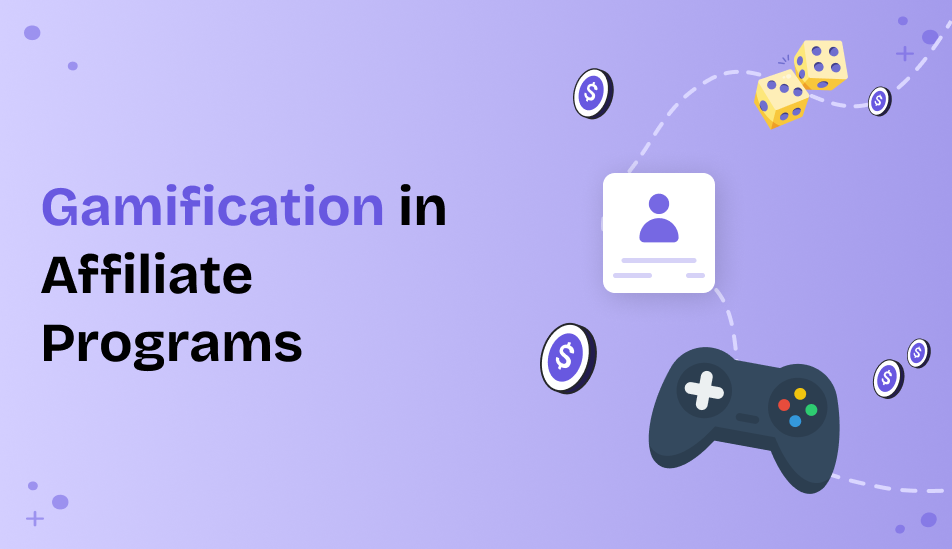
Gamification in affiliate programs refers to the use of game-like elements such as points, leaderboards, badges, and tiered rewards to boost your affiliate engagement and performance.
In traditional affiliate marketing, performance is driven only by commissions. However, this is changing as gamified marketing becomes more popular. Now, affiliates don’t just want to earn anymore; they want to compete, win, and be seen. That’s where gamification changes everything.
Gamified systems make things more fun and visible. They use rewards and friendly competition to keep affiliates active. Because of this, gamification is now a big part of modern affiliate marketing strategies. When affiliates stay engaged, businesses can grow faster. Continue reading to find out how gamification in affiliate programs reshapes affiliate success.
TL;DR: Gamification in affiliate marketing turns your simple affiliate program into a fun and interactive experience for all affiliates. It adds game-like elements such as leaderboard, badges, tired-based commission, and milestones to drive more affiliate engagement and sales.
First: Stop Running “Flat Motivation” Affiliate Programs
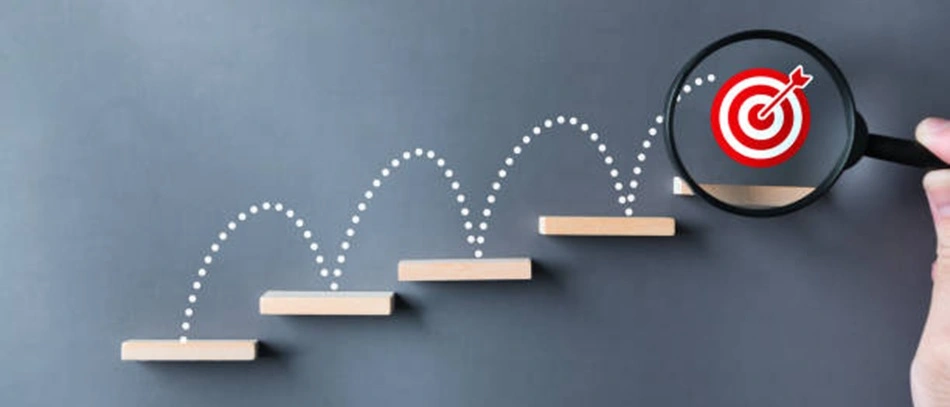
Most affiliate marketing programs fail at the structural level, not the payout level. The issue is not “low commissions,” but lack of behavioral design. When every affiliate is treated the same, performance naturally becomes uneven, unpredictable, and passive.
Flat commission models create a simple pattern: Affiliates promote occasionally, prioritize easy conversions and disengage when momentum drops. Why? Because there is:
- No visibility into progress.
- No competition pressure.
- No reason to push beyond basic.
Gamified affiliate systems fix this by replacing static incentives with performance-driven layers.
What “flat motivation affiliate programs” typically looks like:
| Element | Resulting Problem |
| Same commission for all affiliates | No differentiation in effort |
| No ranking or visibility | Low competitive drive |
| No milestones or progress tracking | Early disengagement |
| No time-based campaigns | Slow or inconsistent output |
| No reward variation | Reduced motivation over time |
This structure limits affiliate marketing strategies because it removes the psychological triggers that make affiliates participate more.
Why This Becomes a Growth Bottleneck
In performance marketing, outcomes depend fully on behavioral response loops. Without reinforcement mechanisms, affiliates operate in isolation rather than in a system.
As a result:
- Top performers feel under-recognized.
- Mid-level affiliates lack direction.
- New affiliates fail to build momentum.
And your affiliate marketing campaign’s performance becomes inconsistent. Because at the end, even strong affiliate engagement strategies fail when the system does not offer breaks.
The Shift: From Payouts to Progression Systems

Gamified marketing replaces static rewards with dynamic structures such as:
- Performance tiers that unlock higher rewards.
- Leaderboards that create visible competition.
- Missions that define short-term targets.
- Achievement badges that signal status.
- Bonus pools for top performer affiliates.
This is where gamification in affiliate programs starts to straight off influence affiliate behavior, not just reward it after the fact.
Rather than asking “How much will I earn?”, affiliates start thinking:
- “What rank am I currently?”
- “How do I move to the next tier?”
- “What do I need to outperform others?”
That psychological shift is what transforms passive affiliates into active growth drivers.
Core Gamification Elements in Affiliate Programs
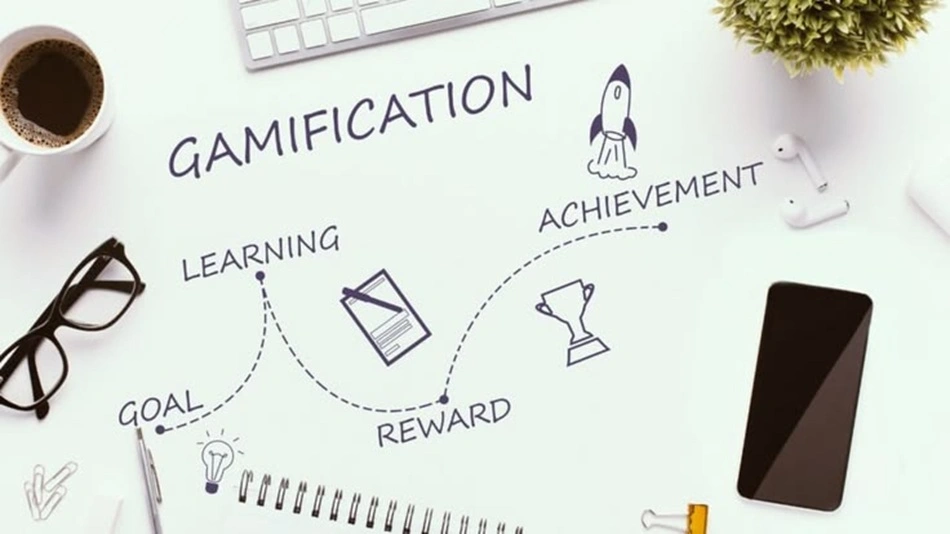
Gamification in marketing adds simple game-like elements to your affiliate program. It makes progress visible and creates friendly competition among affiliates. Plus, adding gamification in affiliate programs gives your affiliates clear goals to move forward.
Look at these core elements used in modern gamified marketing strategies.
Leaderboards (Competition-Based Engagement)
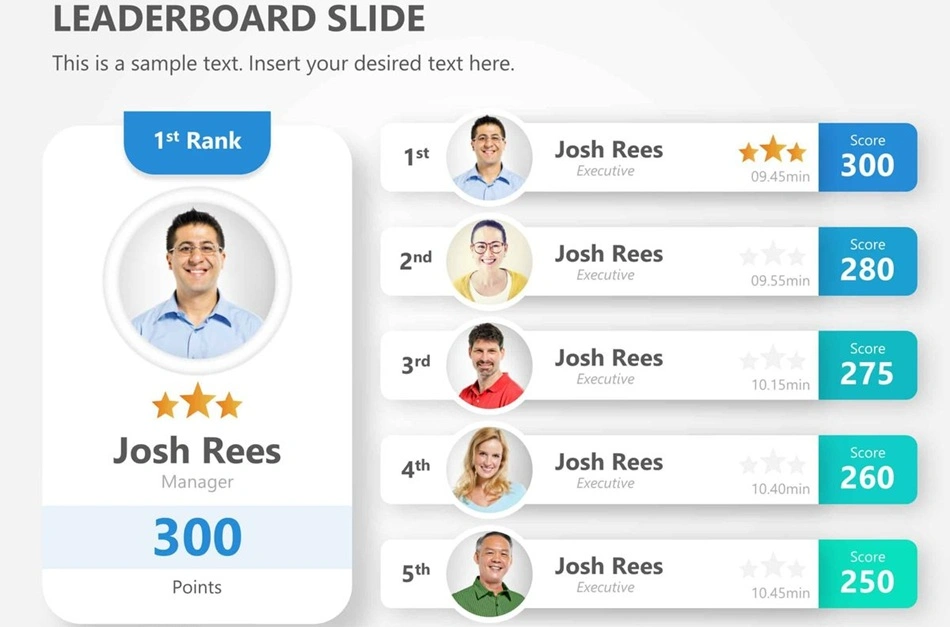
An affiliate leaderboard shows the list of all top performing affiliates, and ranks them based on metrics such as clicks, conversions, commission or revenue.
The best part is, it turns abstract performance into competitive insight, giving affiliates a clear picture of where they stand. If you use affiliate solutions like AffiliatePress, you can create affiliate leadership to inspire top performer affiliates.
Gamification Marketing Example for your Affiliate Program:
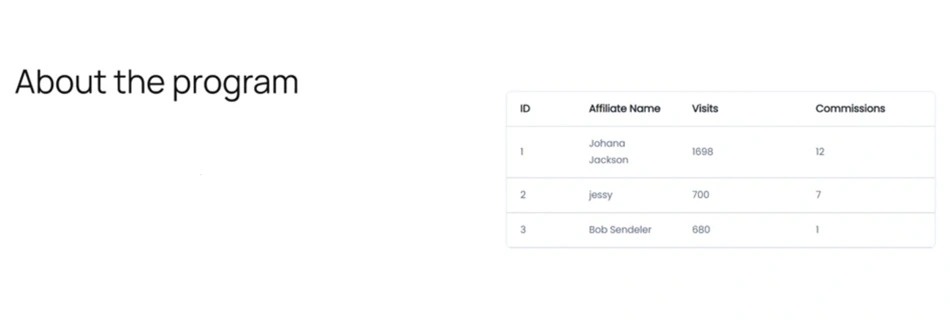
A SaaS company running a performance marketing campaign uses a monthly leaderboard like this.
- Top 10 affiliates by trial-to-paid conversions are displayed inside the affiliate dashboard.
- Top 3 receive tiered bonuses + featured placement in partner newsletters.
- New affiliates are ranked separately to avoid discouragement.
The Results? Mid tier affiliates boost efforts and bring more conversion thanks to visible progression paths, while top affiliates maintain consistency to protect ranking.
Expert insight: Leaderboards fail when they only reward the top 1–3 affiliates as they unintentionally demotivate 90% of participants.
High performing gamified systems don’t just highlight winners. They also give spotlight to progress potential. This makes sure every affiliate sees a realistic path upward.
Points System (Performance Tracking Layer)

In affiliate marketing programs, having a point system gives your affiliates a clear way to track their activities.
Every action your affiliate takes, whether it be a successful sale, lead or click earns points. And these points show progress and motivate affiliate’s effort for better promotion .
Here’s how it goes:
- Affiliates earn points for specific actions such as sales, clicks or signups.
- Points add up over time as well as tracked in affiliate dashboards.
- Points can be exchanged for rewards, higher commissions, or status upgrades.
Gamification Marketing Example for your Affiliate Program:
An e-learning platform gives:
- 10 points per new course sale
- 5 points per newsletter sign-up
- Bonus 50 points for reaching 100 points in a month
Top point earners appear on a leaderboard, and points unlock tiered rewards.
Expert insight: A points system works best when it is simple to understand. Too many rules or complicated calculations confuse affiliates and lowers affiliate engagement.
Next, you can add Tiered Rewards to turn points into visible progression and bigger incentives.
Tiered Rewards (Progression System)
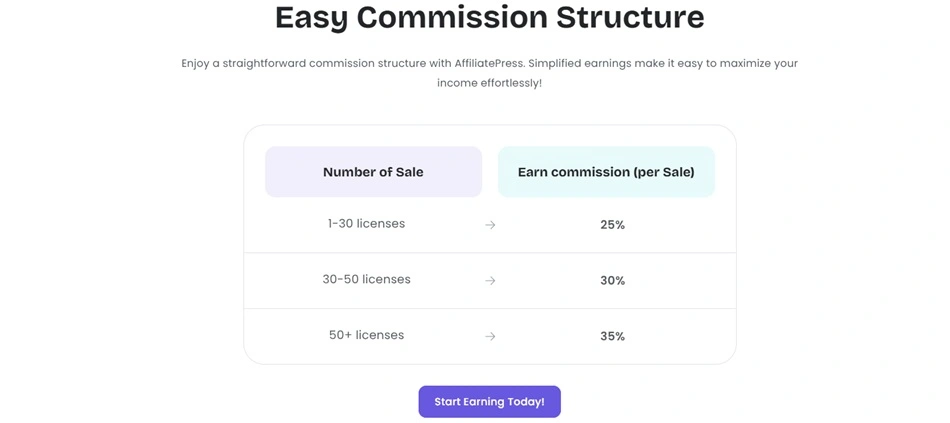
The tired-based commission structure increases affiliate rewards based on performance milestones.
This introduces the three core drivers in gamified affiliate ecosystem:
- Status.
- Urgency.
- Continuous motivation.
With WordPress affiliate management plugin like AffiliatePress, you can set performance threshold based on commission count or affiliate earnings.
Thus, more sales = more earning for affiliates.
Gamification Marketing Example for your Affiliate Program:
The best example of this type of commission model being used is the AffiliatePress affiliate program.
If you are any SaaS, eCommerce, online course or membership business, you can try creating a tiered-based commission model like this:
- Tier 1: 10% commission (0 to 10 approved sales).
- Tier 2: 15% commission (11 to 30 approved sales).
- Tier 3: 20% commission (31+ approved sales).
Each affiliate can view their progress inside the dashboard. Once a threshold is reached, the system automatically upgrades their commission tier.
To further enhance engagement:
- Top-tier affiliates receive a monthly performance bonus.
- Mid-tier affiliates receive a progress milestone bonus.
- New affiliates receive a signup bonus after first conversion.
Expert Insight: Tiered commission systems perform best when thresholds are clearly visible in dashboards, plus achievable but progressively challenging.
Challenges & Campaign Missions (Time-Based Motivation)

Designed to create urgency and keep affiliates activity high, challenges and campaign missions are perfect. These short tasks are only for a fixed time period yet show high-impact in your revenue.
You can try these during off-seasons when there’s low sales in the year.
Challenges and campaign missions are short tasks given to affiliates for a fixed time period. The best part is, they are designed to create urgency and keep activity levels high.
In this, you give your affiliates small yet clear goals like:
- “Get 5 sales in 7 days”.
- “Bring 10 new signups this week”.
- “Earn 100 points this month”.
These missions work like mini-games inside your affiliate program.
Why it works the best for gamifying your affiliate marketing program:
- People act faster when there is a deadline.
- Small goals are easy to achieve
- It keeps affiliates active every week, not just sometimes.
Gamification Marketing Example for your Affiliate Program:
A software company runs a “7 Day Growth Challenge”:
- If an affiliate gets 10 sales in 7 days → they get a bonus reward.
- Top 3 performers get extra cash rewards – performance bonus.
- Every affiliate who completes the specific challenge gets a badge.
This creates excitement and makes affiliates work harder in short bursts, perfect to make affiliates work harder in festival seasons.
Badges & Achievements (Psychological Reward Layer)
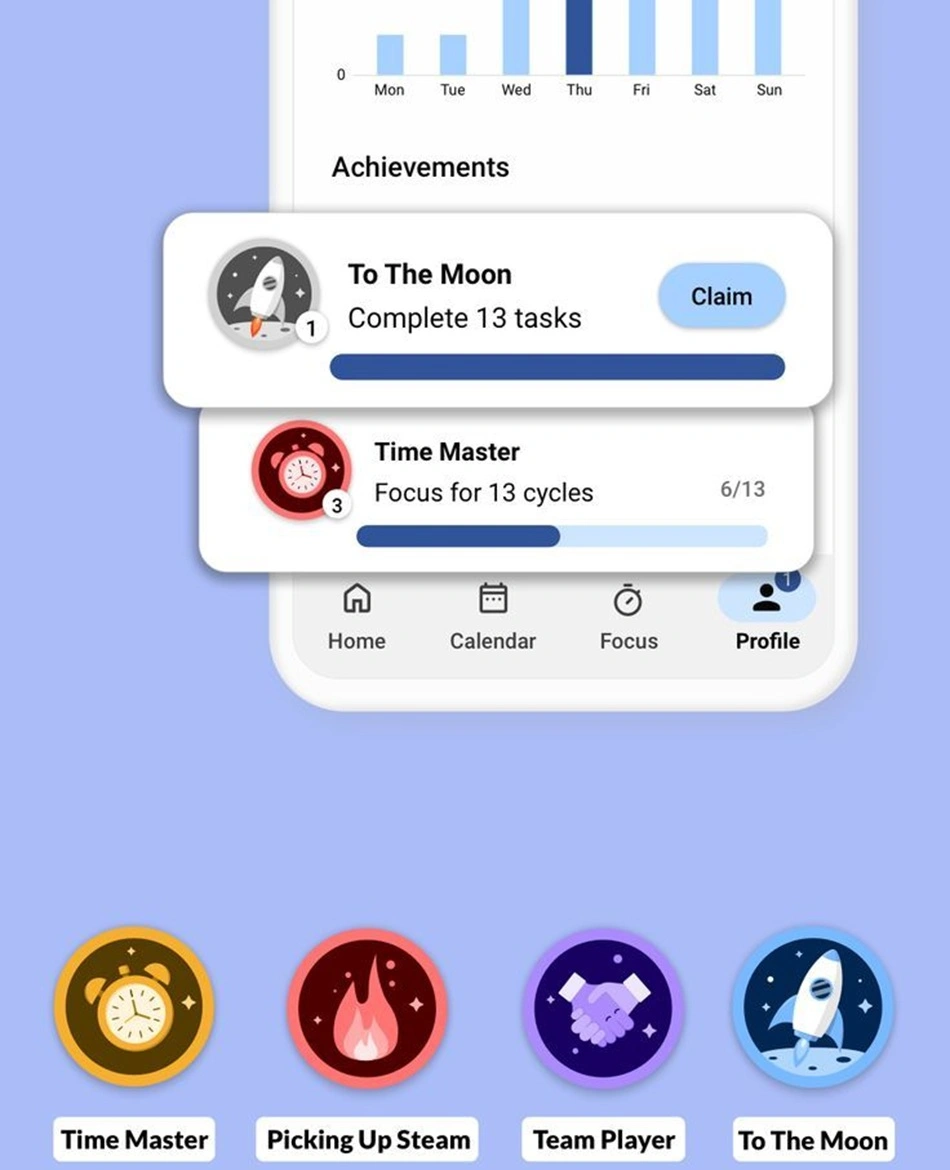
Badges and achievements are small rewards that show success. They do not give money, but they give pride and recognition. Think of them like trophies in a game.
Thus here are some of the best gamification marketing examples you can use for your affiliate programs:
- “First Sale Badge” → for making the first conversion.
- “Top Performer Badge” → for being in top rankings.
- “100 Sales Club” → for hitting big milestones.
Why it works
- People like to show progress.
- It makes work feel like a game.
- It builds motivation without extra cost.
Transforms Your Affiliate Program with Gamified Marketing
Gamification in affiliate programs is a performance system that influences how your affiliates behave, compete and grow.
When you move beyond flat commissions and introduce structured gamification elements such as leaderboards, points, tiered rewards, challenges, and badges, you are actively boosting affiliate engagement.
The best part is, AffiliatePress lets you implement these gamified systems easily. From tiered commission rates to performance based bonuses, everything can be automated to make sure your always affiliates stay engaged, rewarded and active.
If you liked this, you’ll love these reads too: