



Should You Use QR Codes in Affiliate Marketing? Pros and Cons


If you are looking to understand if a QR code works for your affiliate marketing, think about the type of content you create, the format you use, and what you help brands sell.
QR codes, thanks to their compact format, are best placed where:
1) It’s impossible to show a lot of the needed information to promote a brand.
2) They are well visible and recognized in online (video) and offline formats (printed materials).
3) They have a clear intention, and the story in your content naturally leads to QR codes.
But are there any pitfalls? Can you use them with peace of mind? Let’s find out by reviewing the pros and cons of QR codes in affiliate marketing.
Pros of Using QR Codes in Affiliate Marketing

QR codes are used in almost every type of real-life business, product, and service.
They are used by gyms and fitness studios (class booking, supplements, apps), retail, coffee shops, electronics, etc. QR codes are on slides, thumbnails, tables, tourist offices, rental shops, end screens, videos, and printed merch.
In some cases, QR codes are even irreplaceable, and this is one of the key pros of using them.
1. Instant intent capture for printed materials (flyers, posters, packaging, receipts)
When there is no clickable alternative, you need these codes. Without a QR code, you rely on:
- People typing long URLs (they won’t)
- Remembering a brand name (they won’t)
- Searching later (they won’t)
For affiliate marketing, this is crucial because people scan codes instantly at the moment of interest (QR actually stands for ‘quick read’). So QR codes replace the power of instant link clicks when the latter are impossible.
You control the next step behind a QR code (landing page, comparison, bonus). Many modern tools like AffiliatePress offer their affiliates QR code creation with the tracking embedded. This means you can direct your audience to the brand site without a middleman, your unique affiliate tracking attributes taking into account.
2. Perfect for video formats where links aren’t clickable
TV screens, conference presentations, digital billboards, video ads played in public spaces, embedded videos in apps or platforms with limited links – they all can benefit from affiliate links.
In these cases, QR is the fastest action path.
- Verbal URLs perform terribly.
- “Link in bio” doesn’t exist.
For example, if you promote specific retail apps, you can use QR codes to send people to outlet loyalty programs.
3. Effective for attention-short content (TikTok, Reels, Shorts)
If your affiliate content is often posted in a short video format like TikTok series, QR codes help catch attention.
Moreover, YouTube Shorts discontinued link embeds in the video description, but you still need a video to achieve your goal. Viewers often watch on mute, and attention windows are extremely short. A QR gives a visual action cue without breaking the video flow and without the need to click on the link in the video description.
When to use:
- Flash the QR after the value is delivered.
- Pair it with a reason: “Scan to see what I actually use”.
4. QR codes work psychologically
QR codes succeed because they have many technical and emotional benefits, including:
- Remove friction (no typing).
- Create a micro-commitment.
- Feel private and low-risk.
- Trigger curiosity (“what’s behind this?”).
Hard selling is not a perfect use case for using QR codes, but you can try them for service or product discovery.
5. Perfect if you need the scan to lead to one clear action
The story in your content leads to a discount, free guide, comparison page, or deal page? Awesome! This is when you can create a perfect intent-interest harmony. QR codes placed anywhere without an extra explanation or comment are unlikely to trigger any interest.
Cons of Using QR Codes in Affiliate Marketing

QR codes in affiliate marketing don’t work well when:
- Your audience is already online and clickable (blogs, email, newsletters).
- There’s no immediate incentive to scan.
- The QR just dumps people on a generic affiliate page.
So, when do QR codes increase your chances of spoiling your affiliate marketing funnel?
1. Technical problems – scan can fail
Low contrast (light gray on white, brand colors), too small size (especially on flyers), or curved/distorted placement can cause scanning issues.
The result is lost conversions with zero feedback because you might not even know it failed. Other common issues include:
- Broken or changed destination links.
- Tracking inaccuracies because of browsers blocking cookies.
- Platform blocking or warning screens.
- Offline caching problems.
2. QR codes don’t build memory
Without a smart marketing funnel or action points created at the beginning, people may scan and leave. Unlike email signups, bookmarks, or saved videos, QR codes are transactional and normally don’t build good memory. Moreover, when QR codes are everywhere, they might be ignored as nothing special. Some may even see it as a distraction.
3. Low intent of prospects
Many scanners are curious but not ready to buy, unless you clearly state that the content they’ll see is a comparison, checklist, or “how I use this” type. Sending people directly to a sales page on a brand website may even kill conversions.
If You are a Brand, Allow Affiliates to Use QR Codes with AffiliatePress
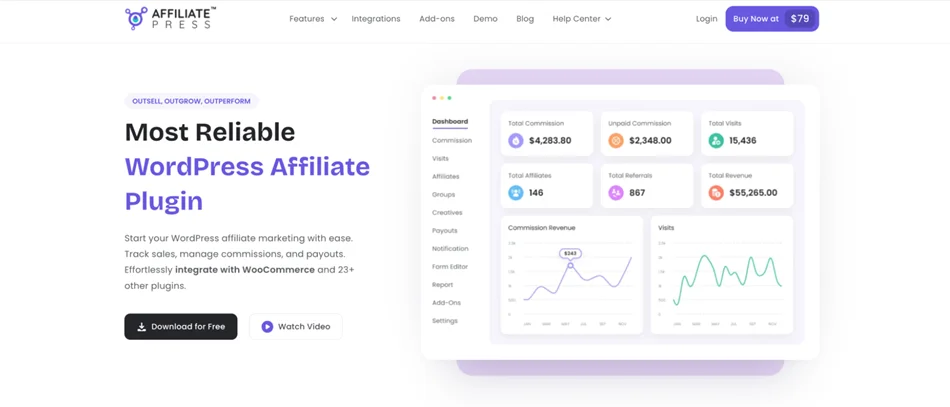
If you are using AffiliatePress to empower your affiliate marketing program on WordPress, simply activate the QR Code addon to enable partners to use it. Here are a few simple steps to perform:
- Make sure AffiliatePress Pro is active.
- Go to AffiliatePress > Addons.
- Activate the Affiliate QR Code Addon.
- Open AffiliatePress > Settings > General.
- Scroll to Affiliate QR Codes.
- Turn on Enable Affiliate QR Code.
- Click Save Changes.
After these steps, a unique QR code is automatically generated for each affiliate and shown in their dashboard.
What are the extra features of AffiliatePress QR codes?
- Enable or disable QR codes when needed.
- Mobile-friendly.
- Affiliates can download their QR code as a PNG.
- Each QR code is linked to the affiliate’s referral URL, make tracking easy.
In their accounts (Affiliate Links section), your affiliates can view their referral link, preview their auto-generated QR code, and download it.
Concluding: Should You Use QR Codes in Affiliate Marketing?
QR codes are non-negotiable when the content is offline, the link is not clickable, or you have less than 5 seconds to convert interest into action.
But if you have a choice, when do QR codes actually make sense in affiliate funnels? They are helpful for content-first assets, such as your real setups, discounts, checklists, and reviews. Here is a simple decision framework on how to choose your focus and promotional tools:
- If you can clearly answer “who I help + what problem”, focus on products.
- If you can’t, focus on content and positioning first.
- If you already have attention offline or visually > QR codes help.
- If not > QR codes are a distraction.
- Want to redirect to a brand website? Make sure it’s a discount, loyalty program, landing page, or something unique rather than hard selling.
Related articles: