


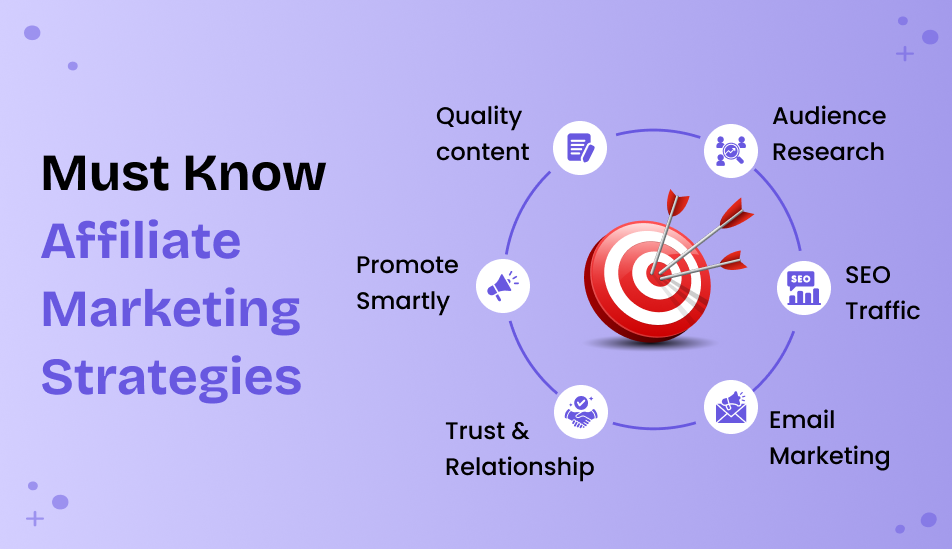
11 Must Know Affiliate Marketing Strategies Behind 7-Figure Campaigns

Affiliate marketing is mostly presented as a simple formula: choose a product, add an affiliate link, drive traffic and earn a commission.
In reality, profitable affiliate marketing is much more strategic than that.
You’ve got to understand the problems your audience is trying to solve, recognize searches that signal buying intent, handpick products that are genuinely worth recommending and optimize the buying journey from click to conversion. The goal in Affiliate marketing is all about helping the right person make the right buying decision, and earn a commission when they do.
The strongest affiliate marketers connect the entire system: demand → intent → content → click → conversion → commission → revenue.
That means building content around the questions people ask before buying, promoting offers that can realistically generate revenue from your audience, and continuously improving what already works.
Below are the 11 best affiliate marketing strategies you can use to attract the right audience, improve conversions and build toward a 6-figure affiliate marketing business.
TL;DR: Successful affiliate marketing goes beyond adding links; it’s about solving real audience problems, targeting high intent searches, recommending the right products and optimizing the path from click to commission.
1. Find a Problem Your Audience Is Already Trying To Solve

The best affiliate opportunities always start with a problem worth solving, not a product worth promoting.
People rarely search for something because they want to buy an “affiliate product.” They are trying to accomplish something: lower expenses, get better software, grow a business, automate a task, improve a website, replace a tool that no longer works for them or get better skin & hairs.
This distinction matters because a clearly defined problem gives you a strong foundation for both content and monetization. After you understand what your audience is trying to accomplish, you can easily recognize products and services that genuinely help them get there.
Start by finding problems your target audience repeatedly searches for, discusses or spends money trying to solve. As we said, this can be anything, for example:
- Health & Wellness: Losing weight, sleeping better or easing joint pain
- Personal Finance: Getting out of debt, investing for retirement or finding cheap insurance
- Home & aLifestyle: Organizing a small space, home decor, cooking quick meals or fixing leaky pipe
- Learning and Skills: Learning a new language, coding or passing a professional exam
So just look for problems where several products or services can provide a solution.
For example, instead of building a site around “email marketing software,” you could focus on helping small businesses build and automate their email marketing. That opens the door to tutorials, software comparisons, alternatives, integration guides, templates and product recommendations.
The key is to work backward from the customer’s needs. Don’t find a product and then try to manufacture a reason to promote it.
The takeaway: Start with a commercially valuable problem. The products you promote should naturally become part of the solution.
2. Go After Searches From People Who Are Ready To Take Action

Not all traffic has the same value.
Someone searching “what is email marketing?” is probably learning. Someone searching “best email marketing software for small business” is already evaluating solutions and may be close to making a purchase.
That difference in search intent can have a huge impact on affiliate revenue.
Look for searches that indicate the reader is comparing, evaluating or preparing to buy. Terms such as best, vs, alternative, review, pricing, discount, coupon, and for [specific use case] can reveal much better commercial intent.
But don’t treat these words as shortcuts. A keyword containing “best” isn’t automatically valuable. Look at what the searcher actually wants to accomplish and what they’re likely to do next. Then ask whether your content and affiliate offer can help them take that next step.
For instance, a web page attracting 2,000 visitors who are actively comparing products can be more valuable than one attracting 20,000 visitors who are only looking for general information.
You can use softwares like Google Keyword planners, Google Trends, Semrush and Ahrefs for this.
3. Build Content Around The Complete Buying Journey

Most people don’t go from discovering a problem straight to buying a product.
They mostly have several questions along the way:
- What exactly is the problem?
- What solutions are available?
- Which type of solution do I need?
- Which products should I consider?
- Is the product worth the price?
- How do I get started?
Your content strategy should cover those questions.
Create educational content for people discovering a problem, solution focused content for people researching their options, comparison and review content for people evaluating products, and specific buying content for people who are close to making a decision.
For example, let’s say an affiliate site is promoting project management software that could cover how to manage remote teams, best project management tools for small businesses, Tool A vs. Tool B, Tool A review, Tool A pricing, and how to set up Tool A.
Each page serves a different intent, but together they create a content ecosystem around the same buying decision. Internal links can then move readers naturally from one stage to the next.
The goal is just to understand the questions your audience asks before, during, and after evaluating a product.
The takeaway: Build content around the buying journey so your site can help people from initial research through the final decision.
4. Show Real Experience In Your Affiliate Content
Anyone can copy a product’s feature list and turn it into an affiliate article.
What is much harder to copy is real experience.
If you’ve tested a product, show what you tested and what you learned. Add screenshots, demonstrations, original comparisons, performance observations, pricing details or examples from actual use. Moreover, explain what worked, what didn’t, who the product suits and where its limitations become noticeable.
For example, saying that a tool has an “easy-to-use interface” doesn’t tell a reader much. Explaining how you used it to complete a specific task, what took longer than expected, and which features actually saved time gives the recommendation far more value.
The same applies to product comparisons. Don’t automatically declare the product with the highest commission the winner. If another product is genuinely better for a particular audience, say so.
That level of honesty can strengthen your affiliate business over time. Readers are more likely to trust recommendations when they can see that you’re evaluating products yourself. And one of the best examples of this is Wirecutter.

Wirecutter is a product review site owned by The New York Times to earn a commission when readers buy items through special affiliate links on their site. What makes readers trust their reviews and recommendations is the fact that their writers and testers don’t know which products or retailers have affiliate links. This keeps reviews honest and worth trusting.
5. Choose Affiliate Offers Based On Their Real Revenue Potential
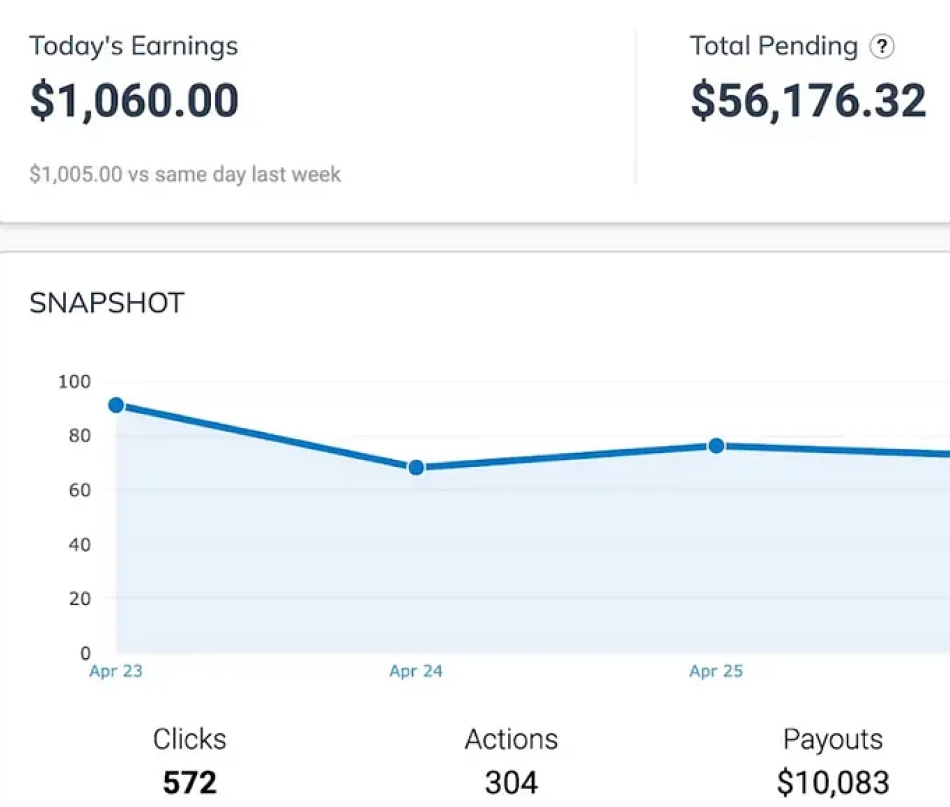
A 50% commission doesn’t automatically make an affiliate offer better than one paying 10%. Because what really matters is how much revenue the offer can realistically make from your audience.
Thus before joining an affiliate program, look beyond the advertised commission. Consider the commission value, conversion rate, average order value, EPC, recurring commissions, customer lifetime value, cookie duration, refund rate, merchant reputation and product market fit.
For example,
| Offers | Commission | Conversion Rate | Expected Commission per Referred Visitor |
| Offer A | $100 | 1% | $1 |
| Offer B | $40 | 5% | $2 |
If both conversion rates are measured against referred visitors, Offer B could generate twice as much expected commission per referred visitor despite paying less per sale.
This is why experienced affiliates don’t judge a program by commission percentage alone. They look at how the whole offer performs with their particular audience.
There’s also a simple question worth asking:
Would I recommend this product if I weren’t earning a commission?
If the answer is no, the offer doesn’t belong on your site. It’s as simple as that. A product that pays well but disappoints customers can damage trust, repeat traffic and future conversions.
6. Optimize The Affiliate Funnel From Click To Commission

Before understanding affiliate marketing strategies, you must know an affiliate click isn’t revenue. It’s only one step toward revenue. That’s why a simple affiliate funnel looks like this:
10,000 visitors → 1,000 affiliate clicks → 50 sales → $2,000 commission
From those numbers, you can calculate:
- Affiliate CTR: 10%
- Merchant conversion rate: 5%
- EPC: $2
- Revenue per visitor: $0.20
- Revenue per 1,000 visitors: $200
These numbers help you find where potential revenue is being lost.
If a page gets plenty of traffic but very few affiliate clicks, the problem could be the CTA, offer positioning, page structure or relevance of the recommendation.
If people click frequently but don’t buy, look further down the funnel. The problem could be product market fit, pricing, merchant conversion, landing page experience or the quality of the traffic you’re sending.
Thus the affiliate marketing tactics here is optimization shouldn’t stop at increasing affiliate clicks.
Test CTA placement, product recommendations, comparison sections, headlines, link positioning, tables, and page structure. Then measure whether those changes increase revenue, rather than simply producing more clicks.
A page generating fewer clicks but more revenue can be a much powerful asset.
The takeaway? Tracking the complete journey from visitor to commission and optimize the part of the funnel where you’re actually losing money is one of the best practices for affiliate marketing
7. Use Your Sales Results To Get Better Deals From Merchants

Your position with a merchant changes once you can consistently generate sales.
Before you have results, asking for a higher commission is simply a request. But once you can show (prove) that you’re bringing valuable customers, you have data to support the negotiation.
Instead of saying, “I can send you a lot of traffic,” show the merchant what you’ve already generated. For example:
“This page generated 420 referred clicks and 31 sales last month, with an EPC of $X. I’d like to discuss testing a higher commission for this traffic.”
That’s a much stronger conversation because you’re discussing measurable business results.
Now depending on the affiliate program, you may be able to negotiate:
- Higher commission rates
- Performance based commission tiers
- Exclusive discounts
- Custom landing pages
- Bonuses
- Increased recurring revenue share
- Early access to products
- Co-marketing opportunities
Apart from this, the relationship can help you create better content. A good merchant can give you product updates, customer insights, upcoming launch information, promotional opportunities and details that aren’t publicly available.
Just don’t let a better deal dictate your recommendations. A higher commission is valuable only when the product remains a good fit for your audience.
Best tips for affiliate marketing success? Your sales data is negotiating leverage. Prove that you generate valuable customers, then use that proof to improve the economics of your affiliate business.
8. Build An Audience You Can Reach Without An Algorithm

Getting traffic is important. Being able to reach those visitors again is even more valuable.
Search rankings, social feeds and recommendation algorithms can change without warning. If your complete affiliate business and affiliate marketing techniques are dependent on one platform continuing to send you traffic, a change in that platform can quickly affect your revenue.
This is the reason the next best strategy for affiliate marketing for experienced affiliates is to build an audience you can reach directly.
Email is one of the most useful channels for this. Instead of letting a visitor leave after reading one article, give them a reason to stay connected. You can offer useful resources, product updates, buying guides, deal alerts or educational content that brings them back when they’re ready to make another decision.
On top of that, you can also build owned or semi-owned audiences through communities, direct traffic, YouTube subscribers or a recognizable brand.
The objective isn’t to abandon SEO or social media. Those channels are excellent for discovering new audiences. The goal is to turn some of that rented attention into relationships you can reach again.
A visitor who discovers your site today and joins your email list can potentially become a customer referral months later. You don’t have to pay to reacquire that person every time.
The takeaway of this affiliate marketing idea is to use external platforms to attract attention, but build an audience you can reach directly so your affiliate business isn’t dependent on an algorithm.
9. Make Product Selection Easier With Interactive Tools

Sometimes the best affiliate content isn’t another 2,000 word list of products, but a tool that helps someone make a decision.
Product finders, recommendation quizzes, comparison tools, calculators and interactive selectors can turn a complicated buying decision into a simple experience.
Imagine an article titled “10 Best Accounting Software for Small Businesses.” It gives the reader information, but the reader still has to figure out which option fits their business.
A product selector could ask:
- What’s your business size?
- What integrations do you use?
- How many people are on your team?
- What’s your budget?
- Which features do you need?
Then it could recommend the most fitting options based on those answers.
This approach can make your affiliate site more useful while also creating a stronger reason for visitors to engage with your content. It can also generate valuable insights into what your audience actually wants.
The same principle works beyond product finders. You could build an ROI calculator, pricing calculator, commission calculator, comparison engine or another tool that helps visitors make a decision.
The real advantage is differentiation. A competitor can rewrite your product descriptions, but it’s much harder to replicate a useful tool backed by your data, logic and expertise.
One of the best real life examples of this is the PC Part Picker website. As we all know, building a custom computer is a difficult task. A buyer has to ensure CPU, motherboard, RAM, power supply and case are all physically and technically compatible.
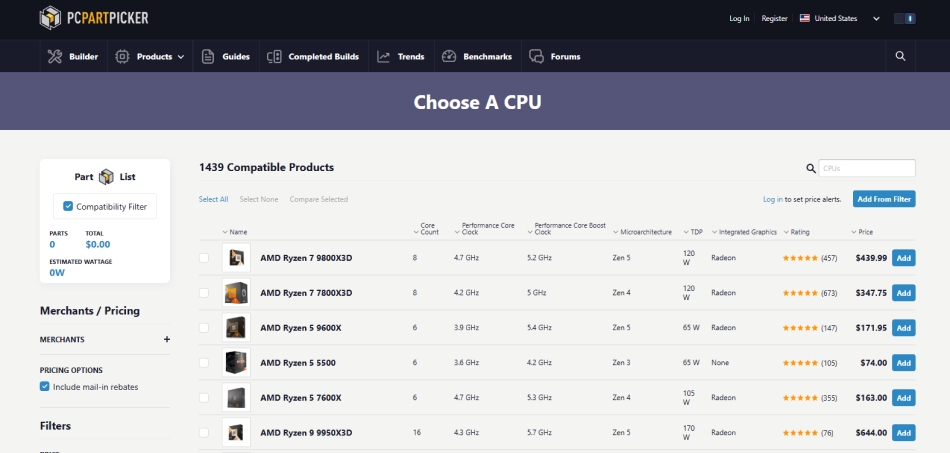
Thus, to solve this, instead of writing endless blog posts or making videos to explain these technicalities, PC Part Picker built an interactive system build and compatibility calculator. It works like this:
User Selects a CPU → Tool Filters and Hides Incompatible Motherboards → Total Cost & Wattage Automatically Calculates → Custom Affiliate Links Dynamically Generate
The takeaway: When a buying decision is complicated, build something that helps people make the decision instead of giving them another wall of product information.
10. Watch For New Markets Before They Become Crowded

You don’t always have to fight for established affiliate keywords as some of the best opportunities appear before a market becomes competitive.
One of the best affiliate marketing strategies is simply to keep an eye on new products, emerging technologies, software categories, changing consumer behavior, industry developments and new problems that people are beginning to search for.
The timing matters. After a category becomes commercially attractive, more publishers, brands and established websites mostly enter the market. Competition rises, and building authority becomes harder.
Thus getting involved earlier gives you more time to make useful content, earn links, develop expertise and establish your brand before the market becomes saturated.
However, that doesn’t mean chasing every new trend. Most trends won’t become meaningful markets and publishing content around every new product will scatter your resources.
So the best practices for affiliate marketing is to look for signals that suggest real demand is developing: increasing searches, growing communities, new competitors, product launches, investment in the category, or businesses actively trying to solve the emerging problem.
Then test the opportunity with a small amount of high-quality content before committing significant resources.
The takeaway: Watch where demand is going, not just where demand already exists.
11. Squeeze More Revenue From Your Best-Performing Pages

Publishing more content isn’t always the fastest way to grow an affiliate business. Sometimes the biggest opportunity is sitting inside the pages that are already getting traffic and generating revenue.
Let’s say one of your pages receives 10,000 monthly visitors but earns only $100. That’s just $0.01 in revenue per visitor.
Thus before creating another article, investigate whether that existing page can perform better.
Look at:
- Affiliate click-through rate
- Products being recommended
- CTA placement
- Search intent
- Comparison sections
- Internal links
- Offer positioning
- Content freshness
- Page experience
- Merchant conversion performance
You might discover that visitors are reaching the page but aren’t clicking your recommendations. Or perhaps they’re clicking but the offer isn’t converting well. Maybe a competing product has become a better fit since the article was originally published.
Small improvements can compound.
If you increase that page from $0.01 to $0.05 revenue per visitor, the same 10,000 visitors would generate $500 instead of $100.
That’s a 5× increase without acquiring another visitor.
This is why one of the best affiliate marketing strategies is to regularly review your highest traffic and highest revenue pages. Find the pages with strong demand but weak monetization, and the pages already performing well that could be pushed further.
The takeaway from this affiliate marketing tactic? Before chasing more traffic, make sure you’re extracting as much value as possible from the traffic you already got.
Conclusion
In a nutshell, affiliate marketing isn’t a “get rich quick” scheme. It’s a long term business that thrives on trust and value.
You’ll never see any successful affiliate marketers spam product links everywhere. Why? Because they focus on making a loyal audience by sharing honest reviews, helpful tutorials and genuine recommendations.
Thus to win at affiliate marketing race, keep these three simple affiliate marketing strategies in mind:
- Pick the right niche.
- Prioritize your audience.
- Be patient and consistent.
Putting your audience first and choosing your partnership wisely is some of the best affiliate marketing tips we can give you to turn your affiliate marketing from a side hustle into a highly profitable revenue source.
Related articles:
- Top 7 Affiliate Marketing Strategies For LearnDash Websites
- 5 Proven Ways to Promote Your Affiliate Program in 2025
- 11 Affiliate Marketing Tips to Boost Affiliate Sales
FAQs
An affiliate marketing strategy is a plan to promote other companies’ products or services via unique tracking links to earn a commission from their successful sales.
You can become successful in affiliate marketing only by promoting the products you genuinely trust through a dedicated content platform and prioritising high conversion rates, rather than commission rate.
You can easily start affiliate marketing from nothing by choosing a specific niche, signing up for free affiliate programs and publishing helpful organic content on free social media platforms like YouTube, Instagram or TikTok.
The best affiliate marketing strategies include creating a helpful content hub around a specific niche you know well and then recommending trusted products that solve real problems for your audience.