



Affiliate Landing Pages vs. Referral Links: Which Converts Better For Affiliates?

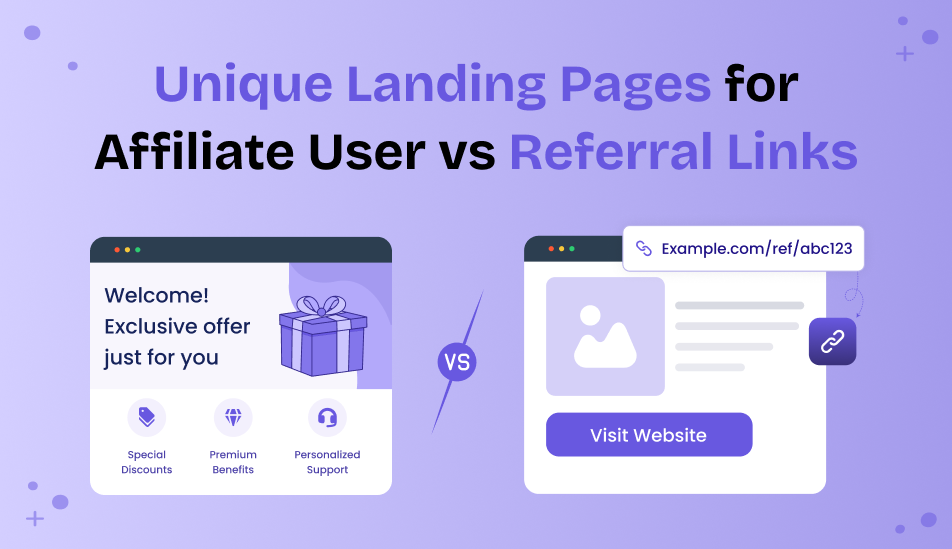
Here’s a debate I see affiliates get wrong all the time: “Should I use my referral link or create a landing page?”
The obvious answer is to assume the landing page will convert better because you get more space to explain the offer and build trust. But adding another page doesn’t automatically improve your funnel.
Sometimes you’re giving visitors exactly what they need. Other times, you’re just putting another click between them and the purchase.
The real question isn’t which link is better. It’s what your audience needs before they’re ready to buy.
Ready to find out what converts best for your audience?
Let’s dive in!
TL;DR: Affiliate landing pages work best when visitors need more info, trust or persuasion before buying, and direct referral links are better for high intent visitors who are already ready to act. The best approach is to match the funnel to your audience and use both when needed.
Affiliate Landing Pages vs. Referral Links: What’s The Difference?
Before deciding which one converts better, let’s get clear on what you’re actually comparing. A referral link and an affiliate landing page can both send visitors toward the same product, but they play very different roles in the buying journey.
What Is An Affiliate Referral Link?

An affiliate referral link is a unique URL that recognizes an affiliate and lets the merchant or affiliate system attribute a visitor’s conversion to that affiliate.
It mostly takes the visitor straight to the seller’s website, product page or offer.
For example:
example.com/?ref=affiliate123
The biggest advantage is simplicity. Someone clicks the link, reaches the merchant and can take action without going through another page first.
What Is An Affiliate Landing Page?

An affiliate landing page is a dedicated unique landing page that gives visitors extra context before they reach the final product or offer.
Here affiliates don’t send someone straight off to buy the product. They use the page to explain the recommendation, compare options, answer objections or tailor the message to a specific audience.
For example:
example.com/best-booking-plugin-for-salons
The affiliate can then guide the visitor toward the recommended product from that page.
One Important Distinction: a Landing Page Is Not Automatically a Better Funnel
This is where many affiliate marketers get it wrong.
A landing page only earns its place when it adds something the visitor actually needs.
Thus if your audience already knows the product, trusts your recommendation and is ready to buy, sending them through another page could simply add friction.
But when visitors are still asking, “Is this right for me?”, a well built unique landing page can do the persuasion that a direct referral link simply can’t.
So the question isn’t really landing page vs. referral link, but:
Does this visitor need more convincing, or do they just need a clear path to the product?
So, Which Converts Better: Affiliate Landing Pages or Referral Links?

There isn’t a universal winner.
I know mostly everyone will say that affiliate landing pages convert better. But a direct affiliate link can outperform a landing page when the traffic is highly motivated and already understands the offer.
A unique landing page, on the other hand, can outperform a direct link when visitors need more information, comparison, trust or audience specific messaging before they make a decision.
In other words, conversion will always depend more on the quality and intent of the traffic than on the type of URL you use.
That’s why an experienced affiliate manager wouldn’t tell every affiliate to use landing pages, or tell every affiliate to skip them.
Instead, you’d match the funnel to the visitor.
Why Affiliate Landing Pages Can Convert Better

A good affiliate landing page doesn’t just add another step between the visitor and the merchant. It gives the affiliate a chance to carry the recommendation, context and trust that generated the click into the next stage of the buying journey.
And there is evidence that this can make a meaningful difference.
CreatorCommerce reports that Cozy Earth saw a 214% average increase in conversion rate and a 67.37% increase in average order value after moving 600+ creators from standard links and promo-code-driven journeys to co-branded creator storefronts.
Now that doesn’t mean every affiliate landing page will produce a 214% lift. The Cozy Earth stats involved co-branded storefronts, creator curation and a personalized shopping experience, so it’s better treated as a case study than a universal benchmark.
Still we can’t deny the fact that it does show what can happen when the experience after the click actually matches the reason the visitor clicked in the first place.
So if you also want to give your affiliates a unique landing page, AffiliatePress is the best WordPress affiliate plugin. Its Affiliate Landing Page addon lets you assign WordPress pages/posts to affiliates as their own affiliate landing page.
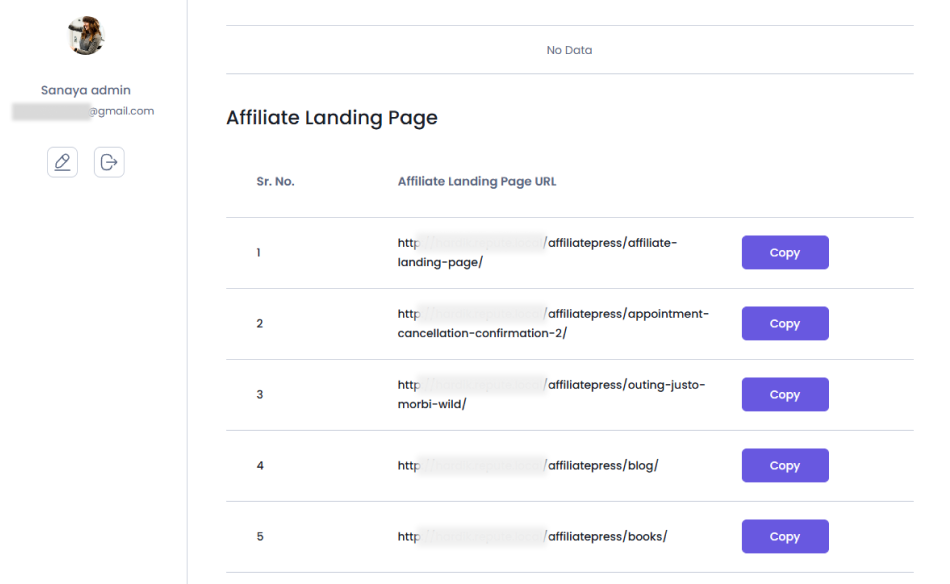
Affiliates can easily access the affiliate landing pages you’ve assigned to them via their own dedicated affiliate panel.
They Preserve The Context Behind The Affiliate’s Recommendation
Think about what happens after someone watches a creator’s video, reads a review or follows an agency’s recommendation.
The affiliate may have just spent several minutes explaining:
“Here’s what I use, why I use it, and why I think it’s a good fit for you.”
Then the visitor clicks the affiliate link and lands on a generic homepage.
A lot of that context disappears.
A dedicated landing page can keep the recommendation alive by connecting the affiliate’s message with the product experience. That matters because the visitor isn’t just buying a product; they’re acting on a recommendation from someone they already decided to listen to.
The Cozy Earth case study illustrates this idea particularly well: its creator storefronts carried the creator’s identity, story and product recommendations into the shopping experience rather than dropping shoppers onto a generic destination.
They Can Pre-Sell Rather Than Of Make Merchant Do All The Persuasion
A referral link essentially says, “I’ve recommended this. Now go to the merchant and figure it out.”
A landing page lets the affiliate do more of the work first.
You can explain the problem, show the product, compare alternatives, answer common objections and tell visitors exactly why this particular offer makes sense for them.
That becomes especially useful when the product has a longer consideration cycle or when visitors need more information before committing.
This is also why the strongest landing page case studies are not really about adding a pretty page. They are about rebuilding the buying experience around the recommendation. Healf, for example, reported a 40.8% higher conversion rate versus traditional homepage affiliate traffic after creating creator-curated storefronts; the implementation scaled to more than 1,700 storefronts and 2,000+ creator-curated collections.
They Let Affiliates Match The Message To The Audience
This is where landing pages become particularly powerful. A generic merchant page has one job: speak to the broader market. An affiliate can have a much narrower audience.
A WordPress agency might promote:
“The booking setup we recommend for client websites.”
A salon-focused affiliate might promote:
“A booking system built for salons using WordPress.”
A creator might promote:
“The tools I use to manage bookings for my business.”
The product can be exactly the same. The message doesn’t have to nup bonus is recor be.
That kind of audience to message alignment is one reason personalized affiliate experience can outperform generic destinations. In the Healf case, creators were able to curate products around their own recommendations and wellness routine rather than simply sending followers to the company’s general catalog.
They Give Creators, Agencies, And Partners a Dedicated Destination
There’s also a practical affiliate-management advantage here.
Instead of giving every partner the same referral URL, you can give individual affiliates a destination built around their audience, campaign, or recommendation.
For example:
example.com/john
example.com/salon-booking
example.com/agency-name
That makes the affiliate promotion easier to remember and gives the merchant more control over the experience after the click.
More importantly, you’re turning the affiliate’s destination into a campaign asset, rather than treating the affiliate link as nothing more than a tracking mechanism.
But Here’s Where Direct Affiliate Links Can Beat Landing Pages

Landing pages have their place, but don’t fall into the trap of thinking that more pre-selling automatically means more conversions.
Sometimes, the smartest thing an affiliate can do is get out of the way.
If the visitor already trusts the recommendation and knows what they want, adding another page just creates unnecessary friction. In those situations, a direct affiliate link can give you the cleaner and faster path to conversion.
Your Audience Already Knows The Product
If someone has already researched the product, watched your review or used it before, they probably don’t need another page explaining the basics.
For example, if your email says:
“This is the WordPress booking plugin I use. You can check it out here.”
that subscriber may be ready to click and buy.
Sending them to another affiliate landing page with five more sections of product information doesn’t add much value. It may simply delay the action you want them to take.
The Affiliate Has Already Done The Selling
This is particularly important for content driven affiliates.
Imagine you’ve published a 15-minute YouTube tutorial showing exactly how you use a product. By the time someone reaches your affiliate link, they’ve already seen:
- what the product does
- how it works
- why you use it
- what the setup looks like
- whether it solves their problem
Your job as the affiliate may already be done. Thus at that point, the referral link is the handoff. So, adding a pre-sell page can actually repeat information rather than strengthening the decision.
The Product Itself Has a Strong Conversion Page
Don’t underestimate your own landing page.
If you have a highly relevant product page with strong messaging, demonstrations, reviews, pricing, FAQs, trust signals and a clear CTA, sending traffic through another page will not improve the experience.
In fact, you’re potentially competing with a page that was specifically designed to convert.
The better question is,” Can my affiliate page do something meaningfully better than your own existing page?”.
If the answer is no, the direct referral link may be the smarter choice.
The Audience Is Highly Warm
Traffic temperature is one of the biggest factors in this whole debate.
A person who discovers your recommendation through a cold Google search is very different from someone who has followed you for three years and opens every email you send.
That second person may already have:
trust + product awareness + problem awareness + buying intent
Here, you don’t need to manufacture more trust. You just need to make the next step easy.
This is why direct affiliate links can work particularly well with existing email subscribers, loyal communities, retargeted audiences, product tutorials, webinars and highly engaged followers.
The real lesson, a direct affiliate link isn’t the “less sophisticated” option. Sometimes it’s the better-optimized funnel because it removes friction at exactly the point where the visitor is ready to act.
The mistake isn’t using a referral link but to use the same funnel for every type of affiliate traffic.
When Should You Use an Affiliate Landing Page vs. a Referral Link?
The right choice depends mainly on traffic intent and how much persuasion the visitor still needs. Thus to help you make the right choice, here’s when you should use a referral link or affiliate landing page for affiliate marketing programs.
| Factor | Affiliate Landing Page | Direct Referral Link |
| Visitor intent | Best when visitors are still researching or evaluating options. | Best when visitors are already ready to act. |
| Product awareness | Useful when visitors don’t know the product well. | Ideal when visitors already understand the product. |
| Audience temperature | Works well for cold to warm traffic. | Works best for warm to hot traffic. |
| Need for education | Strong choice when the product needs explanation. | Better when little or no explanation is needed. |
| Pre-selling | Let the affiliate explain and sell before the merchant page. | Relies more heavily on the merchant to complete the sale. |
| Trust building | Can add testimonials, proof, experience, and recommendations. | Depends mainly on the trust already established by the affiliate. |
| Product comparison | Excellent for comparing alternatives before recommending one. | Not ideal when visitors are still deciding between products. |
| Audience targeting | Allows messaging for a specific niche or audience. | Sends traffic directly to the merchant’s standard experience. |
| Creator campaigns | Useful for dedicated creator pages and personalized recommendations. | Works well when the creator has already established strong buying intent. |
| Agency partnerships | Excellent for agency specific recommendations and campaigns. | Suitable for simple partner referrals. |
| Niche promotions | Strong for pages targeting salons, coaches, agencies, tutors, etc. | Better when the niche audience already knows exactly what they need. |
| Content type | Reviews, comparisons, guides, tutorials, educational content. | Product demos, purchase-focused reviews, emails, direct recommendations. |
| Long buying journey | Can help visitors move through consideration stages. | Better once most of the consideration is already complete. |
| Short buying journey | May be unnecessary if the extra page adds little value. | Usually preferable because it removes friction. |
| Merchant homepage | Useful when the merchant’s homepage is too generic for the affiliate’s audience. | Works well when the merchant has a highly relevant product page. |
| Merchant product page | Useful when the affiliate can add meaningful context before sending traffic there. | Ideal when the product page already does the selling effectively. |
| Campaign customization | High! Page can be built around a specific campaign | Limited. Affiliates generally control the promotion, not the merchant destination. |
| Personalized messaging | Strong. Messages can reflect the affiliate’s audience and expertise. | Limited. The merchant page usually has one standard message. |
| Dedicated URL | Can provide a memorable, campaign specific destination. | Uses a referral URL or tracking parameter. |
| Extra click | Yes, which can add friction if the page doesn’t provide value. | No additional intermediary page. |
| Speed | Slower because visitors load and engage with another page. | Faster and more direct. |
| Conversion risk | Can improve conversion if the page adds value; can hurt it if it only adds friction. | Can perform better when simplicity is more important than persuasion. |
| Affiliate control | Higher control over the pre-sale experience. | Lower control after sending the visitor to the merchant. |
| Best strategic use | Persuade, educate, qualify and personalize. | Capture existing buying intent and remove friction. |
All in all, the rule is simple:
- Use an affiliate landing page when the visitor needs more convincing.
- Use a direct referral link when the visitor is already convinced.
Final Verdict: Can You Use Both an Affiliate Landing Page and a Referral Link?
Yes, and in many scenarios, using both is the smartest approach. Afterall, they don’t have to compete with each other.
A common funnel looks like:
Affiliate content → Affiliate landing page → Referral link → Merchant
The landing page handles the education, context, comparison and pre-selling, and the referral link handles the affiliate attribution and handoff to the merchant.
This works especially well when the visitor needs some convincing before they’re ready to buy. For highly motivated visitors, you can still skip the landing page and send them directly through the referral link.
The best part? with a platform like AffiliatePress, you can take this a step further by assigning specific WordPress pages or posts to affiliates as their unique landing page. That lets your affiliate partners promote a dedicated destination plus keeps visitor attribution tied to the assigned affiliate.
So what are you waiting for? Give each traffic source the shortest path that still provides enough value to convert.
Related Articles:
- Affiliate Marketing vs. Referral Marketing: See The Difference
- Digital Marketing vs. Affiliate Marketing: Which is Better?
- How To Make Effective Affiliate Creatives That Convert
FAQs
Affiliate landing page in affiliate marketing is a standalone web page where visitors arrive after clicking an affiliate ad, social media post or email link. This unique landing page for affiliates warms up the visitors and guides them to click your special affiliate link to buy a product.
You can create an affiliate landing page, assign them to affiliates and track them using WordPress affiliate plugins like AffiliatePress. Its Affiliate Landing Page addon lets you assign new or existing WordPress pages/posts to any affiliate. Later, affiliates can access these unique landing page URLs from their dedicated affiliate panel.
An affiliate link is a URL that has a unique ID Code. Thus when a person clicks this link and buys a product or service, the affiliate earns a commission.
As an affiliate program owner, you don’t need to manually create an affiliate link if you’re using affiliate management systems like AffiliatePress. This WordPress affiliate plugin lets you launch and run your own affiliate program with ease.