


Beginner’s Guide to Affiliate Marketing (For Brands & Creators)


So you want to dip your toes into affiliate marketing but don’t know where to start? Don’t worry, we are here to help.
Affiliate marketing sure sounds exciting…until you Google it and get hit with thousands of strategies and “gurus”. Every successful affiliate you ever heard of was once a confused beginner Googling the same thing you’re searching today.
Thankfully, we’ve got you covered with a clear path ahead.
In this beginner’s guide to affiliate marketing, you’ll get to learn what and how to do it in the right way, what things you have to do, and what to avoid. We’ll show you exactly how to turn affiliate marketing into real revenue.
So, without any further ado, let’s begin!
What Is Affiliate Marketing?

Affiliate marketing is one of the marketing strategy where businesses/brands pays a commission to individuals (affiliates) for promoting their products.
In simple words, it is a marketing strategy based completely on performance. Businesses only have to pay commission if the affiliate manages to drive results.
For affiliates, it’s a way to earn money online by recommending products they already love. On the other hand, it’s a profitable way for businesses to get more sales and promotion.
How Affiliate Marketing Works Actually Behind the Scenes?
Let’s break it down in the simplest way possible for you. At its core, affiliate marketing runs on a three way partnership:
- The Business (Merchant): They create and sell the product or service.
- The Affiliate (Any individual): They promote the product through their content, website, social media, email list, or any online platform.
- The Customer: They click the affiliate link and make a purchase.
Now let’s look at what’s happening in the affiliate marketing model:
- First of all, businesses create and promote their affiliate program using the WordPress affiliate program plugin or any SaaS solution.
- Individuals see the promotion and join the affiliate marketing program, turning into affiliates.
- Now, all affiliates are given some creatives and unique affiliate links, which are later used by businesses to track the commission and sales. After this, affiliates start promoting the products to their followers and people via blog, social media, email, or more.
- Now comes the customers. When a customer sees that affiliate’s promotional blog and clicks on the affiliate’s unique link, they are redirected to the product/business site.
- Once they land on the website, tracking immediately kicks in behind the scenes. A tiny browser cookie gets stored automatically, which tells the business, “Hey, this visitor came from Affiliate X.”
From this point forward:
- If the customer buys something.
- Signs up for a plan.
- Downloads a product.
- Or completes any tracked action…
…the affiliate software, which businesses use, records that action to the affiliate who sent the visitor.
If the customer completes the required action (usually making a purchase), the affiliate earns a commission.
Meanwhile, the business gets a new customer without paying in advance for ads or marketing campaigns. They only pay when results come in. That’s why affiliate marketing is so powerful and complete. It’s a win-win-win system.
- The business wins > more sales, more reach.
- The affiliate wins > earns money by recommending helpful products.
- The customer wins > discovers a product through someone they trust.
And all of this is managed automatically by the affiliate software or plugins like AffiliatePress.
AffiliatePress is a business oriented WordPress affiliate plugin that handles tracking, cookies, payouts, clicks, dashboards, and everything else a beginner friendly setup needs.
Beginner’s Guide to Affiliate Marketing: How to Start From Zero
If You’re a Business Owner (Starting Your Own Affiliate Program)
Starting an affiliate marketing program is the smartest and fastest way to turn your customers, followers, influencers, and niche creators into your own powerful sales team
Here’s our beginner’s guide to affiliate marketing for businesses that wanna start from scratch.
1. Decide What You Want Affiliates to Promote
I know it sounds like “duh, of course!” or “too obvious”, but trust me, so many businesses just get started without any proper planning and end up in losses instead of profit.
Start by choosing the products, plans, or services you want your affiliates to push. This could be:
- A flagship product
- A digital course
- SaaS plans
- Memberships or subscriptions
- Addons or bundles
The clearer your offer, the easier it is for affiliates to promote it.
Remember why selecting a product for affiliate marketing is important in the first place. You shouldn’t put all your products (especially low margin ones) for affiliate marketing because in the end, you have to give a percentage (%) of that to affiliates as commission for each sale.
2. Choose Where You’ll Host Your Affiliate Program
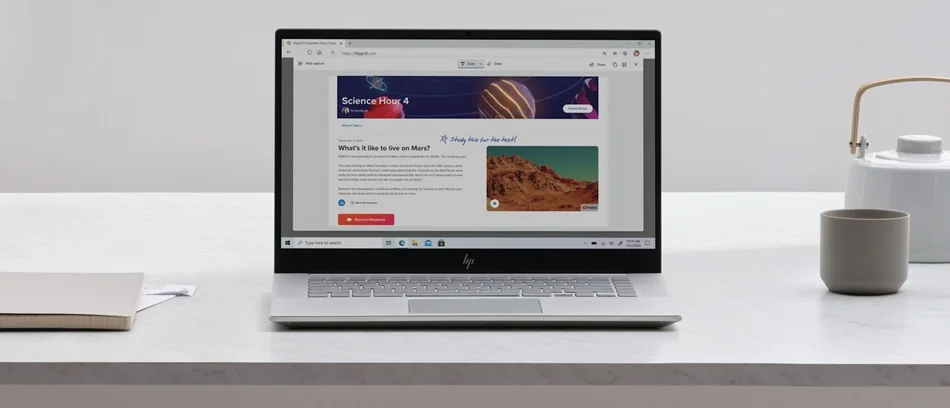
If your website runs on WordPress, you’ll need an affiliate program plugin to host everything, from signups, tracking, commissions, analytics, payouts, to affiliate management with unique affiliate links.
This is where tools like AffiliatePress come in handy. They let you run an affiliate program right from your WordPress dashboard without hiring developers or setting up complex systems.
And if you have custom-built websites, then choose SaaS based affiliate management tools.
3. Set Your Commission Rules
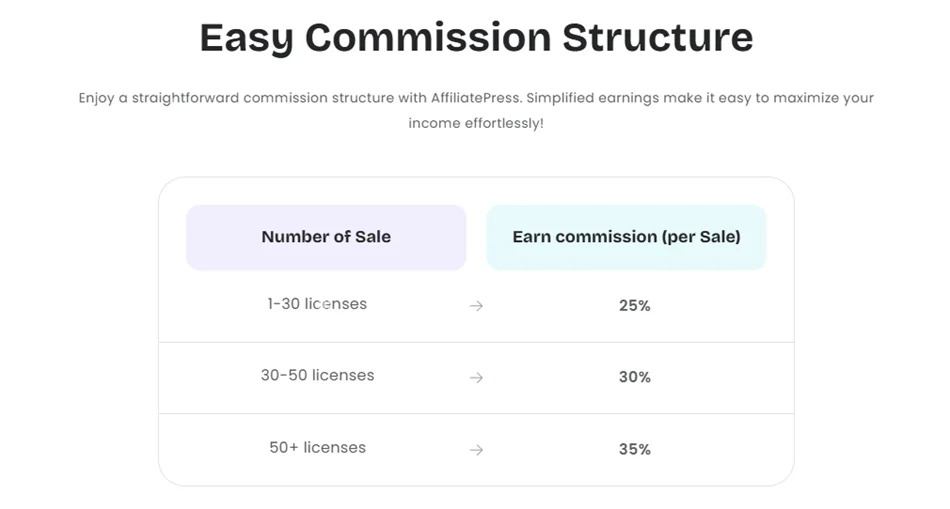
Next, decide how much you’ll pay affiliates and when. As we discussed earlier, you have to pay a percentage of commission on each sale. Thus, now’s the time exactly for that:
If you are a beginner, we recommend that you start simple, then upgrade as your affiliate network grows. There are multiple smart commission structures, such as:
- Product Wise Commission
- Group Wise Commission
- Recurring Commission
- Lifetime Commission
- Tiered Based Commission
- Multi level Commission
And if even these terms appear kind of complicated to you at first, no worries. As we told ya, you can become an expert anytime, but first start with the simple commission structures such as:
- Percentage based (e.g., 20% per sale)
- Flat rate payouts (fixed rate for all products)
- Recurring commissions for subscription products
- Tiered commissions to reward top performers
Here, we remind you to make sure your commissions are attractive but still profitable.
4. Recruit the Right Affiliates
Now here’s another expert affiliate marketing strategy for beginners. You don’t need thousands of affiliates to make good sales; you just need the right ones.
Ever you ever scroll through Instagram reels and see an influencer promoting a product? Well, that product can be yours too. All you have to do is find those kinds of people who you think can promote your product the right way.
You can recruit:
- Existing customers
- Influencers in your niche
- Bloggers and YouTubers
- Partners or collaborators
- And newsletter creators, too
Pro Expert Tip: We understand that as a beginner in affiliate marketing, you wish to accept every single affiliate who comes by themselves and see no reason to reject them.
But, Affiliates are the ones who represent your brand, so it’s better to choose the ones who are actually interested rather than those who just want a few quick bucks.
5. Give Affiliates What They Need to Succeed
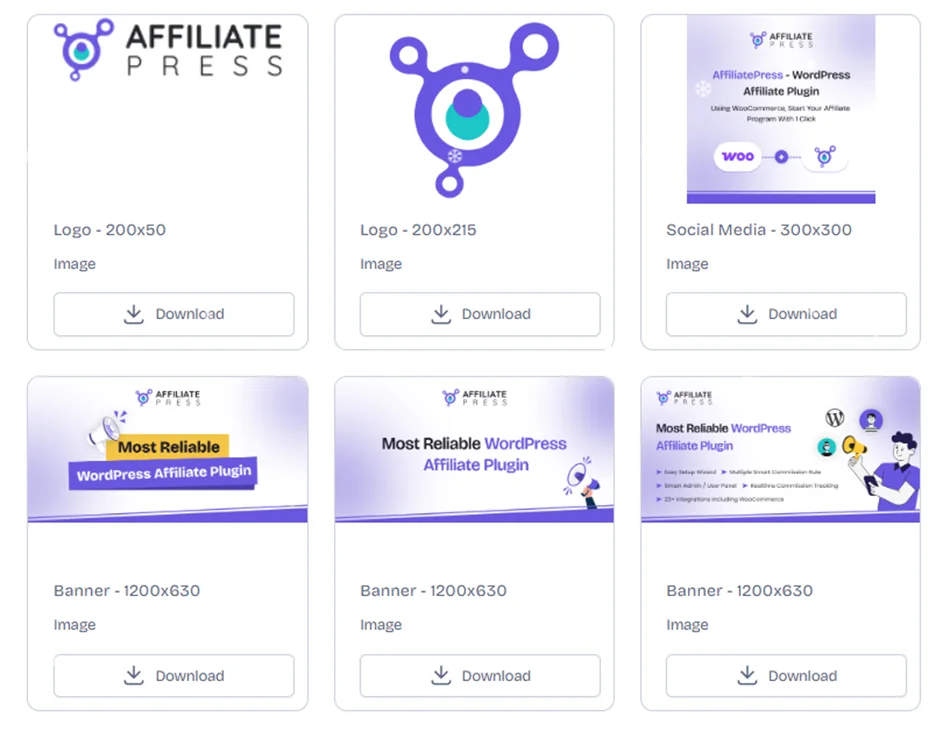
Affiliates promote better when you make their job easier by giving out some creative affiliate creatives. Apart from this, giving your own brand assets to affiliates helps you maintain your brand message and images.
The good news? AffiliatePress allows you to create and give countless creatives to your affiliates to promote your product and power up your sales.
You can offer:
- Ready made banners
- Social post templates
- Personalized coupon codes
- Product details and benefits
- Tutorials or demo videos
The more resources you give, the faster they start giving more sales to you.
6. Track Sales and Payouts
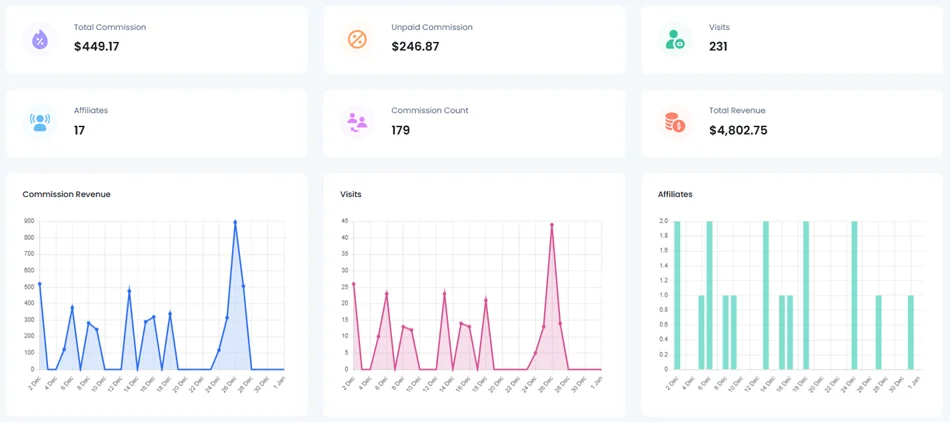
This is where affiliate programs either run smoothly or turn into chaos.
Thankfully, modern affiliate tools automate everything from clicks, conversions, cookies, sales, refunds, to payouts with ease.
For Example, with AffiliatePress, you can track sales, commission, and referrals in real time with accuracy from its user-friendly dashboard. Beyond that, you can pay all your affiliates in just one click or do automatic payouts via secured payment gateways such as PayPal and Stripe.
With tracking and payment sorted, you can finally focus on growing your affiliate marketing program instead of managing spreadsheets.
If You’re a Beginner Affiliate Partner (Promoting Other Brands)
Now, if you are an individual who wants to grow and make some good income out of this, you are most welcome!
Here are some affiliate marketing strategies for beginners who want to kick-start their affiliate journey as affiliates:
1. Pick a Niche You Actually Enjoy
Start with a topic you genuinely are interested in. It can be anything, such as fitness, beauty, finance, gaming, WordPress… anything! The world of affiliate marketing is endless across all niches.
However, commission rates are different, depending on brand to brand. Still, if you want to do a really good start, you can take a look at this list of over 20 best affiliate programs to find your best.
Just remember, the more you enjoy the niche, the easier it becomes to create content for it.
2. Join Affiliate Programs That Fit Your Niche
Once you’ve picked your niche, the next step is simple: join the right affiliate programs. Don’t just join anything randomly, look for brands that:
- Fit your niche.
- Have products you’d actually use or can sell like hotcakes.
- Offer good commissions.
- Provide good marketing assets.
- Have reliable tracking and payouts.
Your audience will trust you more when the products feel natural and actually useful. If the commission is too good but the product is not, you won’t be able to pitch it to your audience, no matter what.
If you can’t find the product you are pitching to be worth buying, how can your audience? That’s why look at products that are actually good and useful for your audience as well.
3. Choose Where You’ll Share Your Recommendations

Never promote a product on all platforms. Pick one platform and start your journey. Here are some top platforms where you can give a try to promote your affiliate products as a beginner affiliate:
- Blog/website
- YouTube
- Instagram or TikTok
- Email newsletter
Now you can either try all or stick to one platform that you feel good on. The key is to be consistent and go with the trends according to each platform.
4. Create Helpful Content That Solves a Problem

Once your niche, affiliate program, and platform are all decided, it’s time to create the content to drive some clicks.
People don’t click affiliate links or any kind of links just because they exist. They click because your content helps them decide.
Try creating content like:
- “Best X for beginners” lists.
- Tutorials (“How to use xyz product”).
- Honest product reviews.
- Comparisons (A vs B).
- Real experiences (“I tried ___ for 30 days…”).
- Step by step guides and so much more.
Your job is simple. You have to solve a real problem, make the decision easier, and guide readers or viewers toward the product with a strong CTA (call to action).
Thus, you are supposed to think like a helpful friend, not a salesperson.
That’s the actual difference between being a salesperson and an affiliate. Both earn commissions from the sales they make, yet affiliates are more trusted compared to others because of their friendly recommendations.
No hard pitching! Get value first, then the rest clicks will follow.
5. Add Your Affiliate Links Properly
Even the best content won’t convert if your links are not drawing attention. You must make your affiliate link shine and eye-catching by placing it where they feel natural and useful:
- Buttons (“Try This Tool” / “Check Price”)
- Text links
- Product boxes
- Pinterest pins
- YouTube descriptions
- Social media stories
- Story swipe ups
- Link in Bio
And always add disclosure:
“This post contains affiliate links. So I may earn a small commission at no extra cost to you.”
6. Track What’s Working
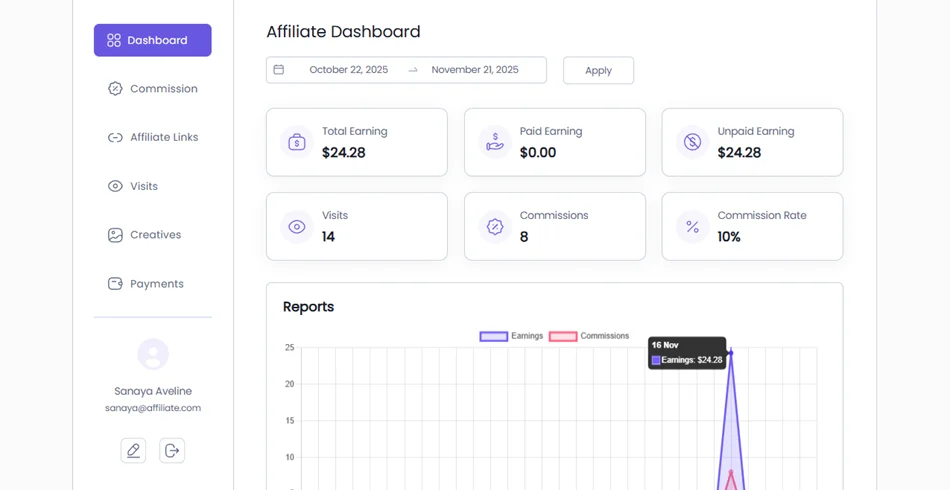
Last but not least, Affiliate marketing is never just “publish and pray”! You need to keep track of every link, even as a beginner affiliate, to learn from your mistakes and grow.
Here’s what you need to track:
- What content brings clicks?
- Which posts make sales?
- What platform gives the best results?
- What’s not performing at all?
If your brand uses a powerful affiliate plugin like AffiliatePress, its user friendly affiliate analytics dashboard also shows:
- Clicks.
- Conversions.
- Sales.
- Commission earned and so much more.
Even simple tools like Google Analytics, YouTube Insights, or built-in affiliate dashboards are enough when you’re starting.
Final Take: Start Smart, Adapt Quick & Grow Strong
In a nutshell, Affiliate marketing for beginners is never a “get rich quick scheme” for either businesses or affiliates. It’s more of a partnership where affiliates and businesses work together to drive more sales, as it’s a win-win for both.
Affiliate marketing is one of the smartest ways to build long term income, whether you’re a brand or a solo creator. All you gotta do is start with the basics, stay consistent, test what works, fix what doesn’t and keep showing up.
If you are a business owner, AffiliatePress is exactly what you need to boost your sales. It offers everything you need, from a user friendly setup, easy yet powerful affiliate management to unlimited creatives for affiliates.
You May Also Like: